Alberello and Steel Tank
Production
For centuries, heat determined how wine was made in Apulia, and mostly not for the better. Without cooling, fermentation in the blazing sun often burned through within a few hours. The yeasts died of exhaustion, leaving behind a must with residual sugar and little aroma. Only temperature-controlled stainless steel tanks, which became widespread from the 1980s onward, finally brought fermentation under control.
The low alberello training has an effect even before any cellar work begins. A free-standing bush carries few, small bunches. Small berries bring more skin relative to juice, meaning more color, tannin, and aroma compounds before a single drop has even fermented. Those who harvest large yields have to compensate for this shortfall later in the cellar. Those who harvest little never face it in the first place.
With Primitivo, maceration on the skins usually lasts ten to fourteen days – the time during which skins and juice ferment together. That's short enough to keep the already-soft tannins from turning bitter. Negroamaro often tolerates longer, sometimes three weeks, because its skin has more structure to offer. Macerated too briefly, Primitivo stays pale by its own standards; macerated too long, it turns broad and heavy instead of fruity.
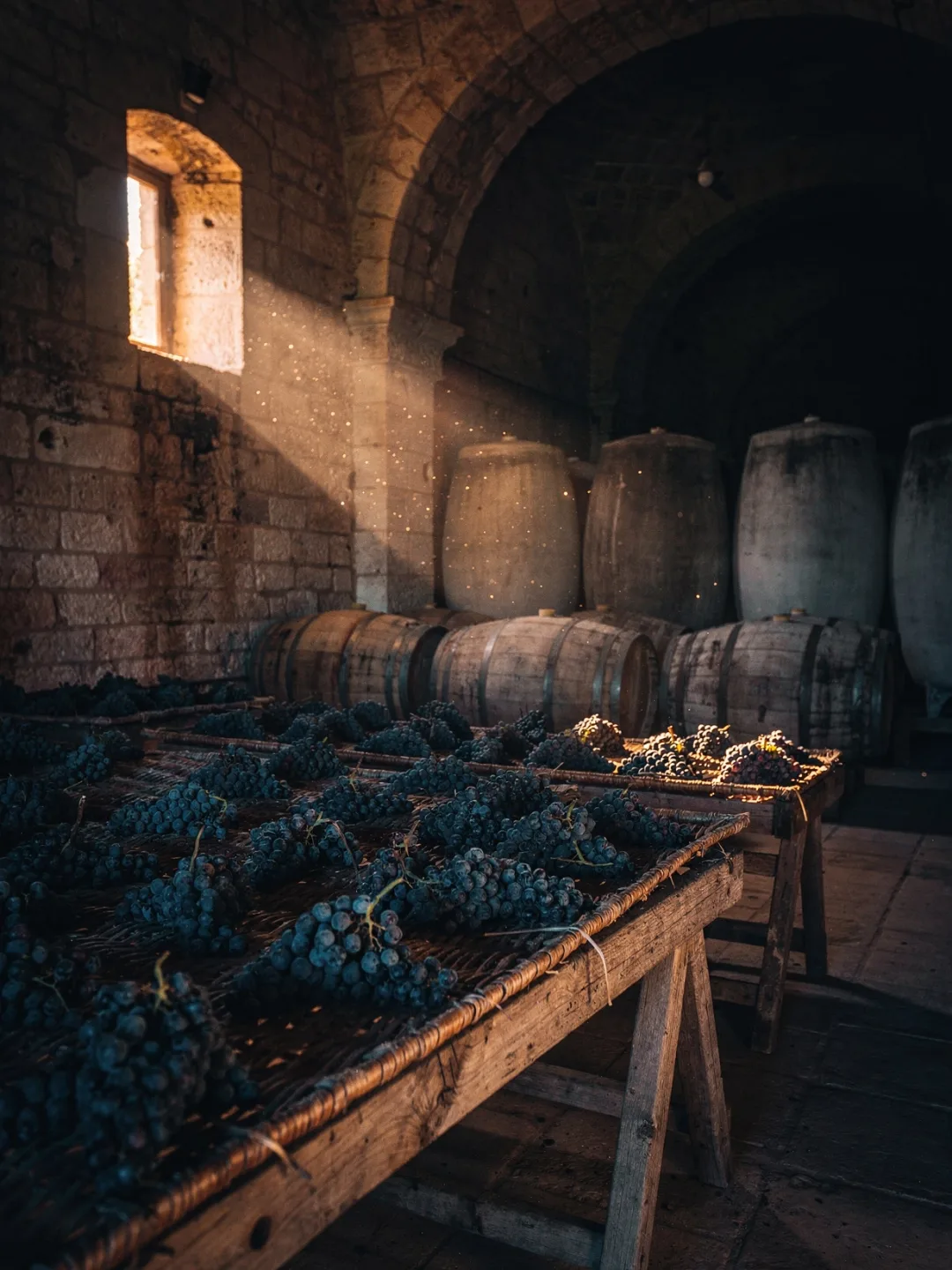
One specialty goes even further. For Primitivo di Manduria Dolce Naturale, its own DOCG since 2011, the grapes are allowed to continue drying on the vine or on racks after harvest. The water evaporates, the sugar concentrates. The result is a sweet wine with at least sixteen percent natural alcohol by volume, mandated by the disciplinare, the rulebook of the appellation, not merely recommended. It's usually drunk with dessert, in small glasses, since a large one would already be plenty after the first sip.
Opinions differ when it comes to aging. Traditional producers let Negroamaro and Primitivo mature in large concrete vats or neutral casks that give off almost no aroma. Others rely on small barriques, two-hundred-twenty-liter barrels of French oak that add vanilla and toasted notes – for wines that already bring plenty of fruit and alcohol, a flavor that quickly becomes too much. The region's best estates have since learned restraint.