Between Two Seas
Climate
Apulia is both the arch and heel of the Italian boot at once, a narrow strip of land between two seas. To the east lies the Adriatic Sea, to the west the Ionian. Over the Salento, the southern tip, their winds meet. Nowhere in the region is the coast far away. That's exactly what saves the vines from heat that would be almost unbearable further inland.
According to a recent analysis by Sole 24 Ore, Bari has the best climate in Italy, with an average of 8.6 hours of sunshine a day. Rain is rare. Between four hundred fifty and six hundred fifty millimeters fall per year, with only slightly more in the Salento, on the Gargano, and in the northern Subappennino Dauno. For the vine, that means stress. It has to make do with little water, concentrating sugar and aromas into small berries.
Altitude makes a noticeable difference in Apulia, even though the region as a whole looks flat. On the Murge plateau, the best vineyards sit between three hundred and four hundred fifty meters. During the day the sun blazes there; at night cool air flows down off the limestone. Castel del Monte itself stands at five hundred forty meters. This shift between daytime heat and nighttime cool holds acidity in the grape, while in the hot valley it disappears much faster.
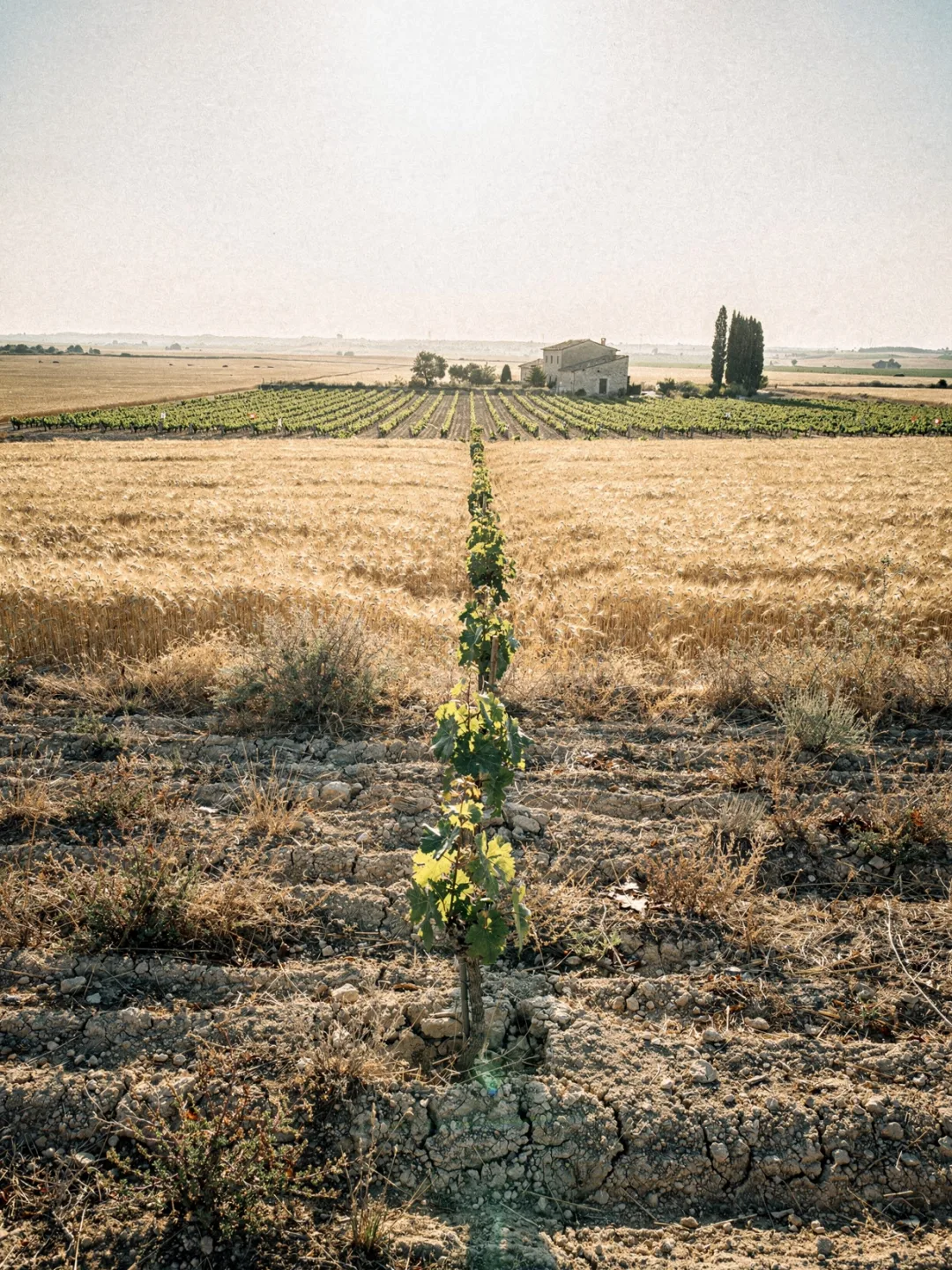
In the north, the landscape is different. The Tavoliere delle Puglie, Italy's second-largest plain after the Po Valley, lies almost flat and very warm, better suited to wheat than to fine wine, even though vines grow there too. Anyone who wants quality in that heat has to rein in yields. That's why, across large parts of Apulia, the old alberello training still survives today – a small, free-standing bush without a wire trellis: it keeps the grapes low and shaded and needs little water.
These contrasts explain why Apulia has two faces. On the plain, large volumes are produced, robust and uncomplicated. On the Murge and in the hills of the Salento, the other Apulia emerges: more concentrated, ripened in cooler nights, with an acidity that holds together the pure fruit sweetness of the varieties.