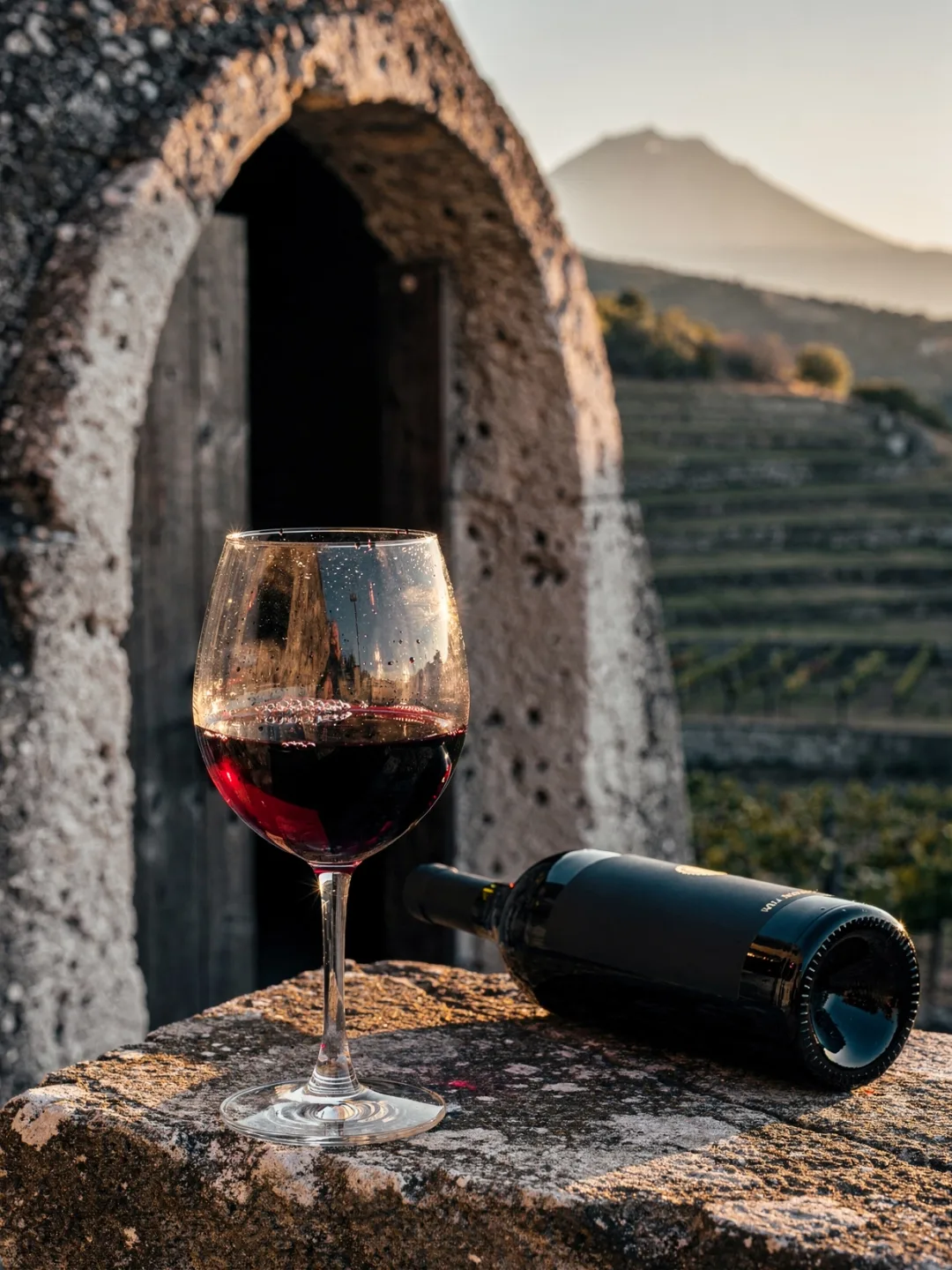
Balloon glass for Aglianico
Glassware
Aglianico is a special case in the glass: dark as ink, yet with tannin and acidity that can even surpass powerful reds like Nebbiolo from Piedmont. A glass that's too narrow only intensifies that sharpness. Anyone wanting to drink the wine soft needs to give it room to breathe.
That's why you reach for a large, round-bellied glass, similar to the so-called balloon glass used for full-bodied Burgundy. The broad surface at the base exposes plenty of oxygen to the wine, noticeably rounding out Aglianico's dense tannin before the first sip even reaches the tongue. The narrowing opening above collects the aroma instead of letting it escape immediately. With Aglianico that means a bouquet of dark cherry, tobacco, and a smoky, almost mineral note that many associate with the Vulture itself.
Serving temperature is often too warm. Sixteen to eighteen degrees Celsius is right for Aglianico del Vulture — noticeably cooler than what many people today consider room temperature. At twenty degrees and above, the alcohol becomes more prominent, and the already powerful tannin turns additionally bitter rather than velvety. A quarter of an hour in the fridge is enough to fix that.
A young Aglianico del Vulture, just released onto the market, handles half an hour of air in a decanter well. A Riserva, with its minimum of five years' aging, practically demands it. After so long in the cellar — often aged in the region's cool tuff caves — the aroma is downright locked behind the cork. Only a full hour in an open glass unlocks it completely again.
The Greco from around Matera, the region's only distinct white wine, is treated quite differently. It's served chilled, around eight degrees, in a noticeably smaller, slimmer glass. This concentrates its delicate aroma of blossom and peach instead of losing it in a large bowl. Two wines from the same region, two completely opposite glasses.