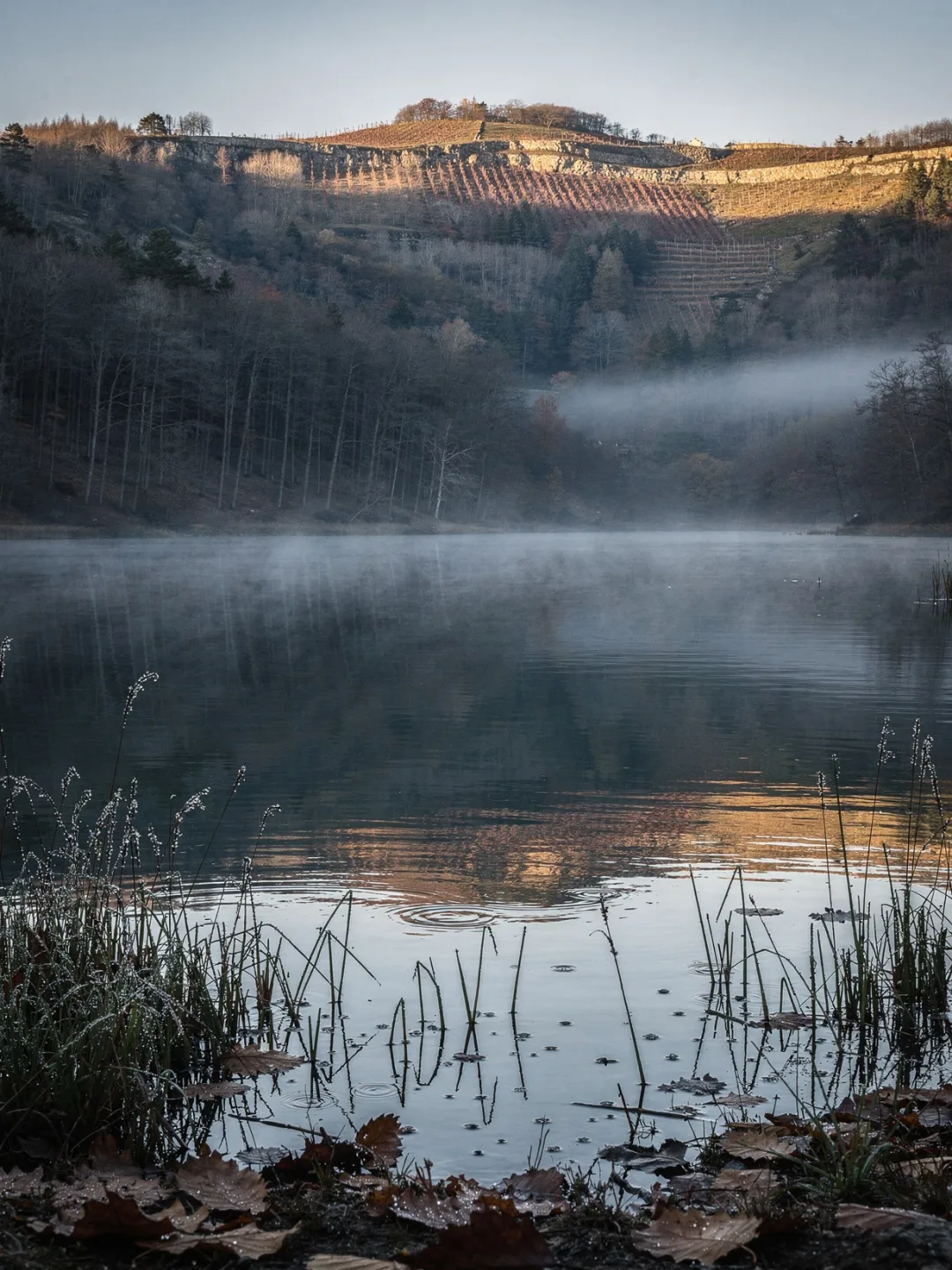
Elevation trumps latitude
Climate
Basilicata lies as far south as Naples, and yet you don't drink a typically southern wine here. The reason isn't latitude but altitude. The vineyards around the Vulture sit between two hundred and seven hundred meters, some even higher. Up there, the climate feels more continental than Mediterranean.
Summer is dry and warm; in July and August almost no rain falls. June and September feel milder, and it doesn't turn wetter until October and November — precisely when the grapes are still hanging on the Vulture. This shift is no coincidence but a consequence of the altitude. What's already ripe in the Po Valley or Tuscany by September needs several more weeks here.
What matters most is the swing between day and night. During the ripening phase in late summer and autumn, daytime temperatures on sunny slopes can climb well above twenty degrees Celsius, while nights drop to sixteen degrees or lower — a swing of twenty degrees or more is not unusual. For Aglianico, this is crucial: during the day the berry accumulates sugar and color, while at night the acidity is preserved rather than evaporating in the heat. Without these cool nights, the wine would taste flabby despite all the sunshine.
The harvest begins correspondingly late. Picking usually takes place between mid-October and the first week of November, and even later in cooler years. Just a few hundred kilometers east, in Apulia, the Primitivo harvest is often already two months over by this point. Same sun, almost the same closeness to the sea — and yet two utterly different harvest calendars, all because of a few hundred meters of elevation.
In the middle of the extinct crater area, near Monticchio, lie two small lakes filling the old volcanic throat, surrounded by dense beech forest. They cool the air on the nearby slopes. They also create a humidity you wouldn't otherwise expect this far south. Anyone traveling through the Vulture quickly notices: this landscape doesn't follow the map of southern Italy, but the contour lines of altitude.