Aglianico and its neighbors
Grape Varieties
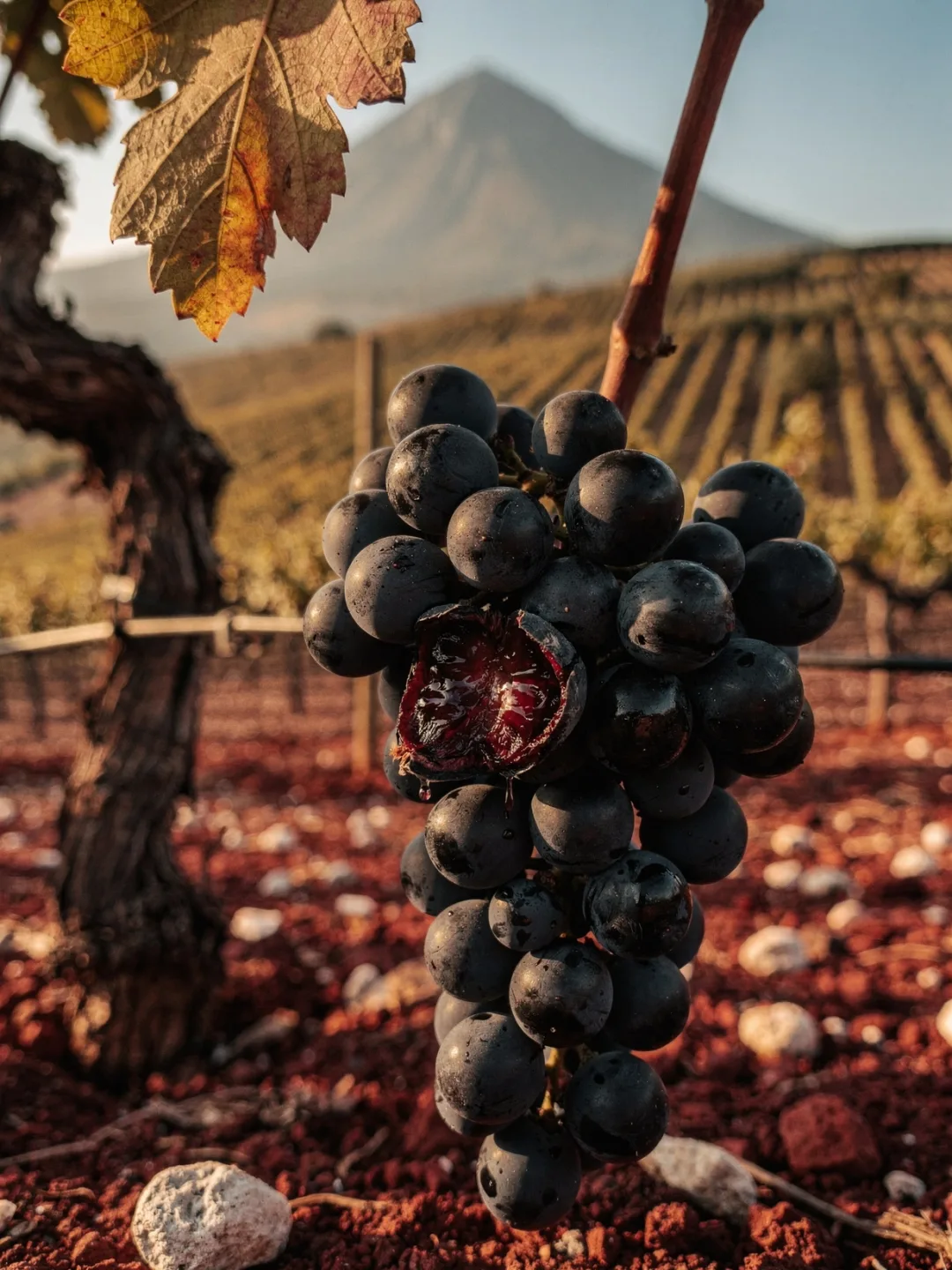
A single grape variety carries almost the entire wine region. Aglianico accounts for more than sixty percent of Basilicata's planted area and delivers around ninety percent of the wines bearing a protected name. Anyone seeing the grapes for the first time finds them unremarkable — medium-sized, dark, thick-skinned. What becomes of them in the glass is anything but.
Where the name Aglianico comes from is still not entirely settled. The most common explanation traces it back to Ellenico, the Neapolitan word for 'Greek,' shaped by centuries of linguistic blending. A second theory derives it from the ancient city of Elea on the coast of Campania. Both explanations tell the same story: a vine arrived in southern Italy with Greek settlers, long before Rome became a world power.
Aglianico buds late and ripens even later — on some slopes not until early November, a good two months after neighboring Primitivo in Apulia. That's why it grows almost exclusively around the Vulture, between two hundred and seven hundred meters in elevation, where the nights stay cool enough to keep ripening from rushing ahead. The berry's thick skin holds plenty of color, plus abundant tannin — that furry coating you feel on your gums after a sip. Add to that an acidity that keeps even warm vintages fresh.
Things look quite different in the south, around Matera. There, Primitivo dominates — the same variety that made Apulia famous — usually vinified as a single varietal into robust reds with notes of raspberry and black pepper. Alongside it there's a second, more international-style red made mainly from Cabernet Sauvignon and Merlot, with only a small proportion of Primitivo blended in. White wine here comes chiefly from Greco, the best-known among Basilicata's few white appellations.
A third, much smaller patch lies near Roccanova in the southeast of Potenza province. Since 2009 it has carried its own, young appellation. Red and rosé wines here consist of sixty to eighty-five percent Sangiovese, with the rest split between Malvasia Nera, Montepulciano, and Cabernet Sauvignon. Three zones, three completely different answers to the same question: which grape suits which soil.