Ruby, tannin, length
Tasting
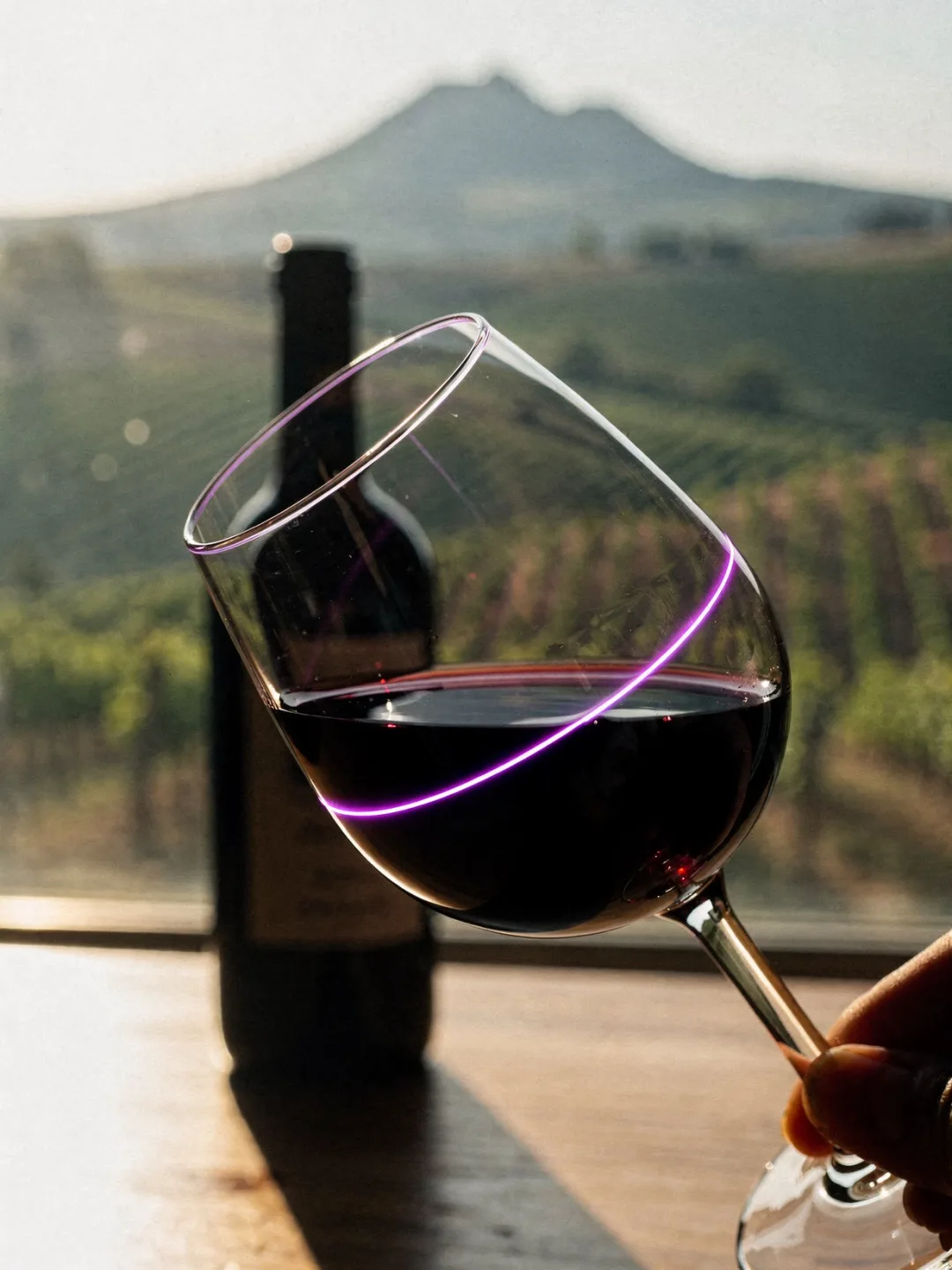
Hold a glass of Aglianico del Vulture at an angle against something white. The color is deep, dark ruby red, in some vintages almost opaque, and only at the very rim does it thin out and reveal its age: violet in a young wine, garnet to orange in one that's already spent ten years in the cellar.
Smell twice — once with the glass still, once after swirling. In the still glass, dark cherry and plum usually rise first, since these lighter aromas evaporate first. After swirling, the rest follows: tobacco, roasted cocoa bean, sometimes a hint of graphite. Add to that an almost smoky, mineral trace that many tasters associate with the Vulture's volcanic soil. But the soil doesn't send it straight into the glass — it only gets there by way of water and warmth.
In the mouth, pay attention to two things separately. You feel the acidity along the sides of the tongue; it gets the saliva flowing and keeps the wine fresh despite its density. The tannin, on the other hand, settles as a dry, almost dusty coating over the tongue and gums — in a young Aglianico this can feel downright harsh. Only after years in barrel and bottle does it turn into the velvety texture for which a mature Aglianico del Vulture is known.
The body is full, almost dense. It's not for nothing that some call Aglianico the Barolo of the south, echoing the equally tannin-rich wine from Piedmont. At the end, count how long the flavor lingers after you swallow. With a simple wine, that's two or three seconds. With a good Aglianico del Vulture Riserva, you can often count past twenty. This very length is what separates a great wine from one that's merely powerful.
Worlds separate a young Aglianico from a ten-year-old one, even though both come from the same grape. Anyone who tastes only the young version and finds it hard and closed off should have patience. That very tannin is the reason the wine can survive two decades in the cellar without ever growing tired.