Sand Instead of Stone
Soils
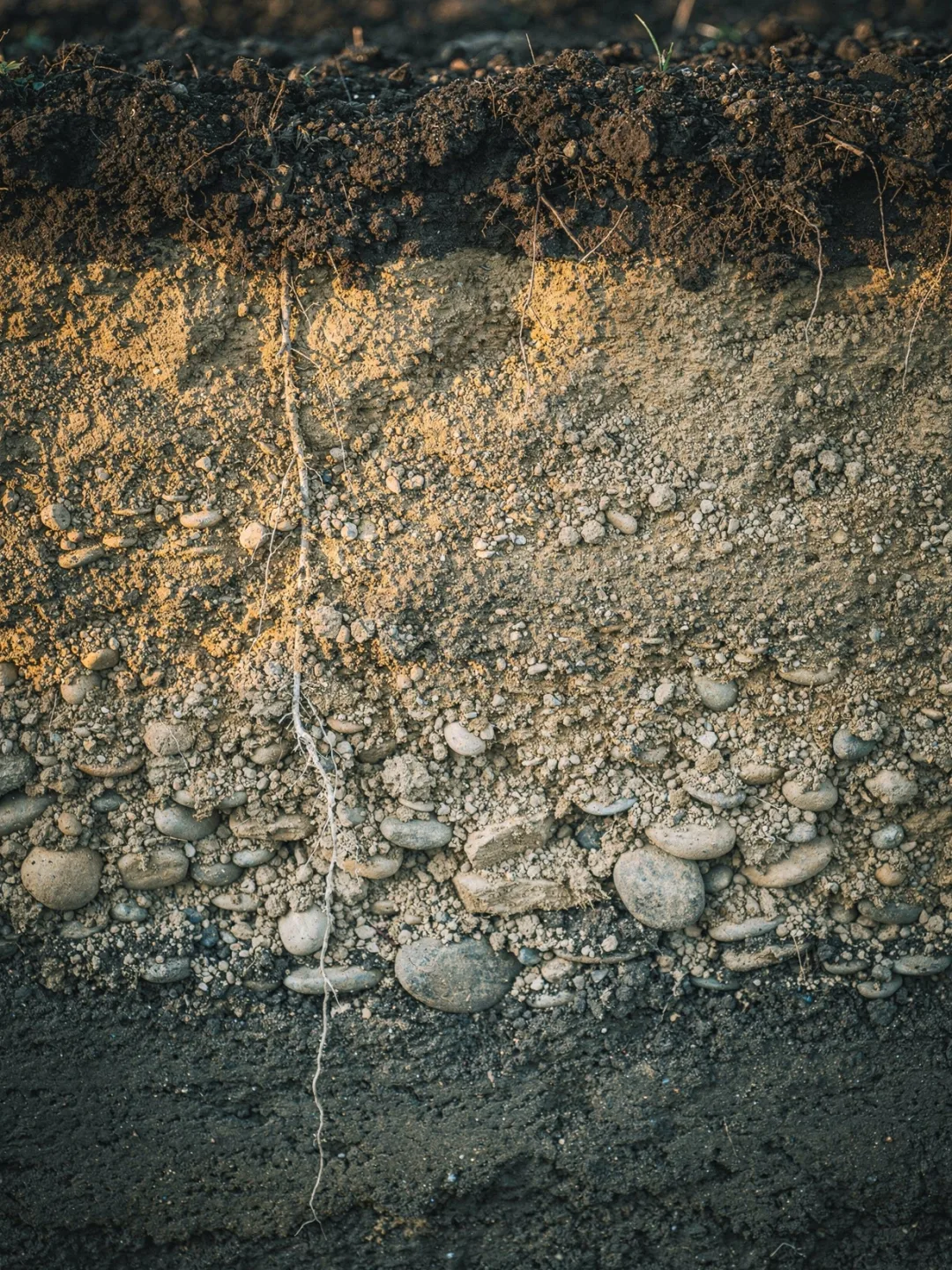
Dig a hole in a vineyard near Sorbara, and you won't hit a single stone. Beneath the thin, dark layer of humus comes sand. Fine, loose sand, just like on a beach — even though the coast is fifty kilometers away. That's the legacy of two rivers.
Over thousands of years, the Secchia and Panaro have built up this plain with gravel, silt, and, yes, sand. Flood after flood, layer after layer. In the strip between the two rivers, the classic zone of Lambrusco di Sorbara, sand dominates so completely that winemakers there simply speak of "sand wine."
Sandy soil lets water drain straight through, holds almost no nutrients, and reins in any vine tempted to grow too lushly. That sounds like a drawback, and here it's an advantage. The roots have to work, yields stay naturally low, and what does ripen comes through concentrated. That's why Lambrusco di Sorbara, despite its pale, almost translucent color, is the most acid-driven and aromatic of the whole family.
A few kilometers on, in the hills of Castelvetro, the sand gives way to clay. Where Grasparossa grows, the soil is heavy, calcareous, and water-retentive — the opposite of Sorbara. Heavy clay produces thicker skins, more color, and more tannin, that rough grip drawn from the berry's skin. You can taste exactly that: Grasparossa is by far the darkest and most tannic Lambrusco of all, while Sorbara remains the palest.
Further south, in the Sangiovese hills around Bertinoro, other rock types come into play. Marine limestone marl at Bertinoro itself, sandy-gravelly terraces known as Spungone near Predappio, marl and sandstone near Modigliana. Each of these zones is allowed to put its own name on the label, because the difference genuinely shows up in the glass.
One prejudice persists stubbornly: sandy soil is considered poor soil, hardly worth mentioning. For vegetables, that may be true. For Lambrusco di Sorbara, it's exactly why this wine remains the most elegant of all Lambrusco types — not despite the fact, but because loose sand, not stone, lies beneath the vine here.
A thin, dark topping of river silt and decomposed plant matter, deposited during the last floods of the Secchia and Panaro.
The root: This is where the fine roots sit, absorbing the first rains — and drying out first in summer.