Foam Needs Room
Glassware
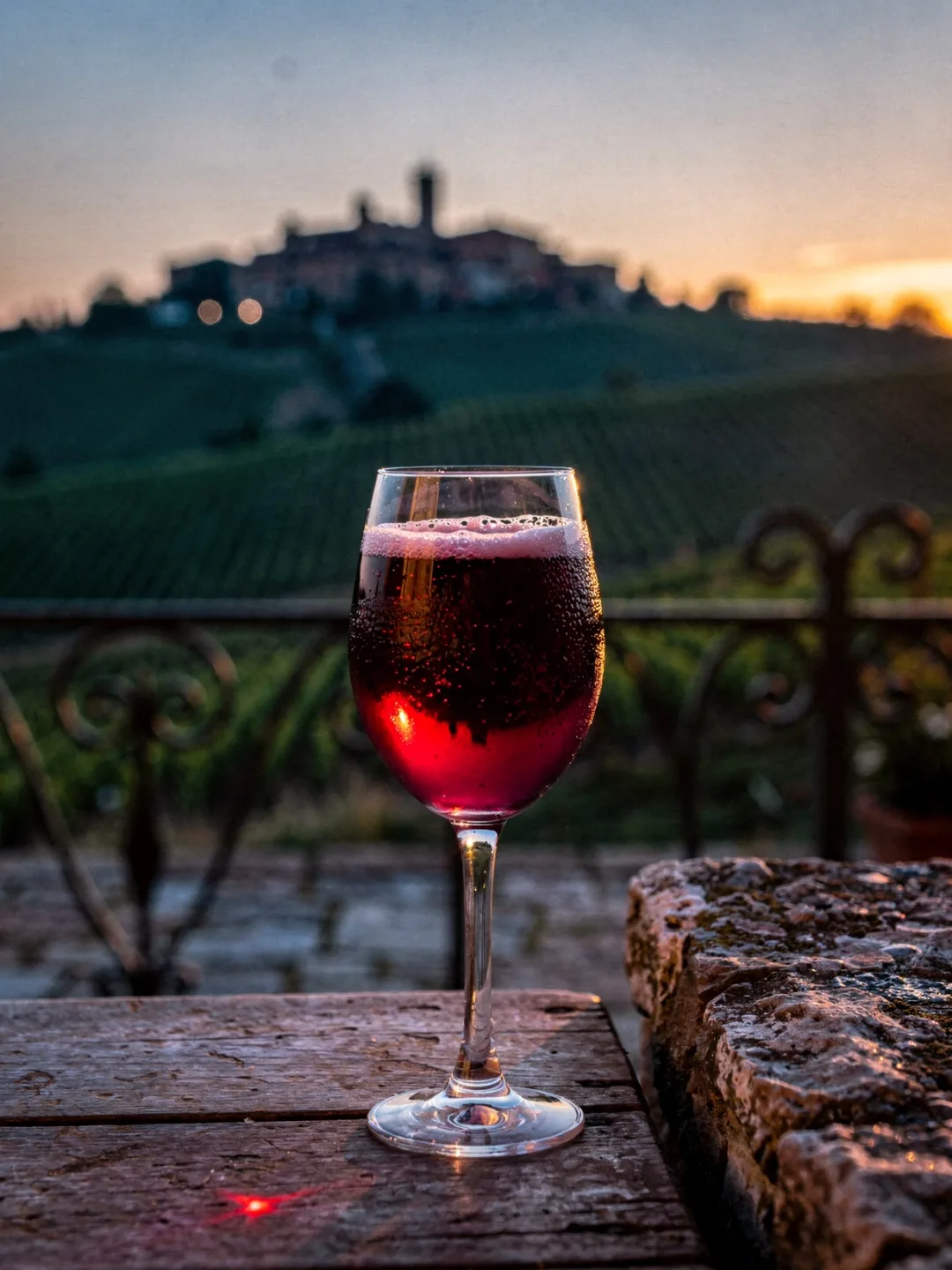
A glass for Lambrusco needs one thing above all: room for the foam. Pour it into a narrow flute, the kind used for Champagne, and you squeeze the bubbles together. What's lost in the process are exactly the fruit aromas that define this wine — cherry, violet, sometimes blackberry.
A tulip-shaped glass with a wider bowl that narrows again toward the rim works better. It gives the carbonation room to sparkle, while still gathering the aroma at the top in the narrower opening. With a Lambrusco di Sorbara, whose violet perfume stays delicate, this glass makes the difference between a wine you can smell and one you merely drink.
Temperature follows the style. A delicate Lambrusco di Sorbara can take ten to twelve degrees Celsius, almost like a white wine. At room temperature its acidity suddenly seems weak and its sugar too forward. A robust, tannic Grasparossa di Castelvetro can go into the glass two or three degrees warmer, since otherwise the tannin comes across too harshly.
When pouring, patience matters. Lambrusco foams up more vigorously when opened than many a sparkling wine. So tip it slowly down the side of the glass and wait for the first foam to settle. Only then top it up — otherwise you end up with a glass full of bubbles and little wine.
Albana passito calls for its own rule. This dense, golden-brown sweet wine made from dried grapes is served in a smaller glass with a wide opening, so that aromas of apricot, honey, and saffron can unfold. It comes to the table cooler than a red wine but warmer than a dry white: ten to twelve degrees Celsius, poured from a glass barely bigger than a palm.