Tank or Bottle
Production
Almost all Lambrusco today is made in a pressurized tank, using the so-called Charmat or Martinotti method. The base wine undergoes a second fermentation in a sealed steel tank, which traps the carbonation without requiring each individual bottle to referment on its own. The method was fast and predictable. It was precisely this technique that made mass production for the American market possible in the sixties.
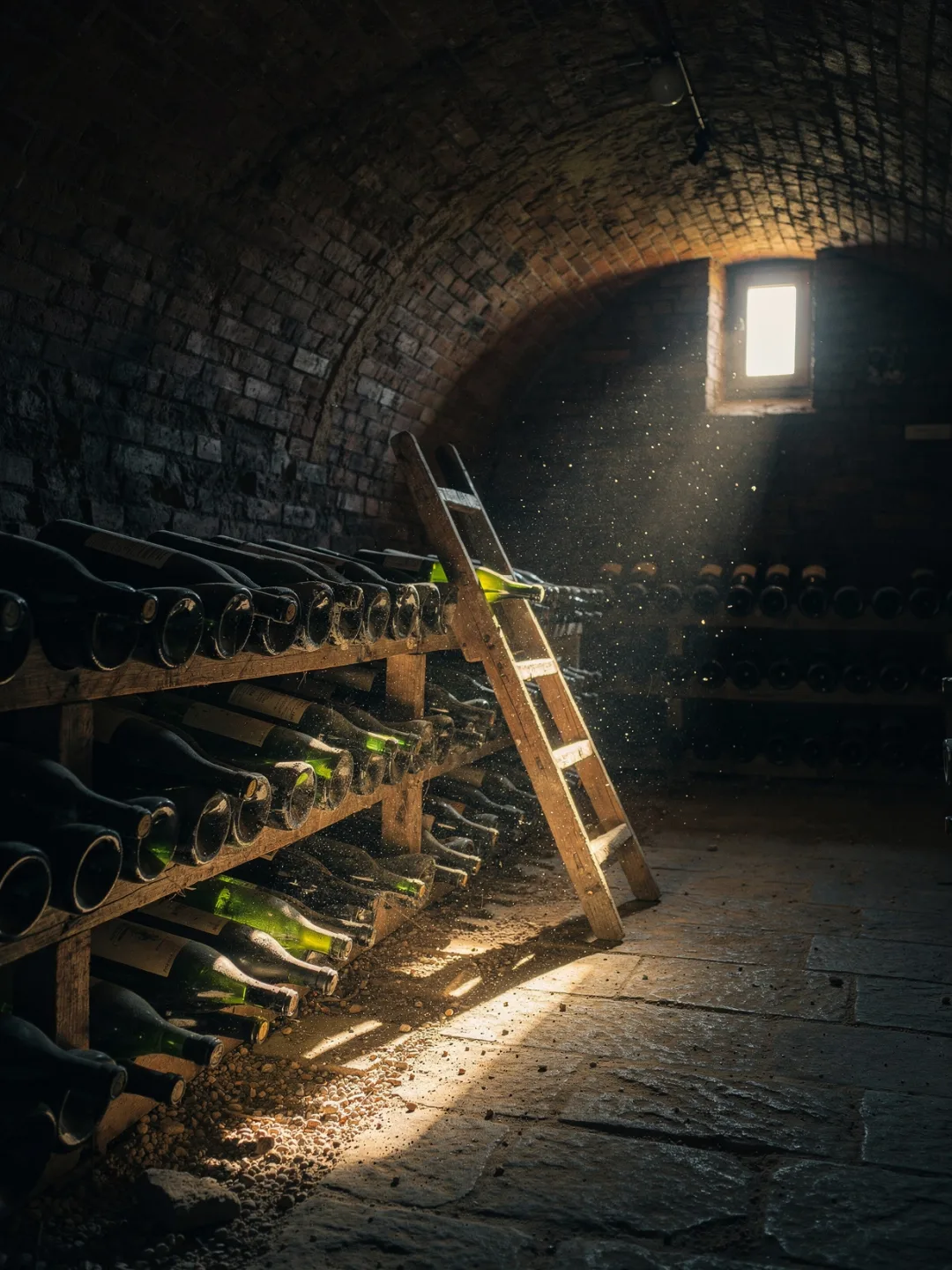
Alongside it survives a much older technique that nearly vanished: the metodo ancestrale, also called col fondo. Here the wine is bottled while its first fermentation is still underway, and the yeast keeps working inside the bottle, with no later disgorgement or filtration. In the end, a fine layer of lees settles at the bottom, and the wine stays slightly cloudy. This is exactly how Lambrusco di Sorbara was already being poured in the osterias of Modena back in 1865, long before anyone thought of steel tanks.
With Sangiovese di Romagna, the process runs more classically: maceration, meaning fermentation in contact with the skins, for color and tannin. Aging then usually takes place in large, neutral casks rather than small barriques. Winemakers here have always favored fruit and drinkability over toasty oak notes, unlike the long tradition in Tuscany, and this Sangiovese is almost never blended with other varieties.
Albana passito follows an entirely different path. After harvest, the grapes are left for weeks on mats or in airy crates, losing water. The sugar concentrates as the shrinking berry dries out — this process is called appassimento. Only afterward does fermentation begin, which, due to the high sugar content, often stops on its own, leaving behind a dense, honey-sweet wine.
And then there's Fortana on the coast near Comacchio, which gets by with almost no intervention at all. A short maceration, cool fermentation, early bottling. On sandy, salty soil, little sugar accumulates anyway. A winemaker who interferes too much here usually makes the wine worse, not better.