Foam, Sweetness, Acidity
Tasting
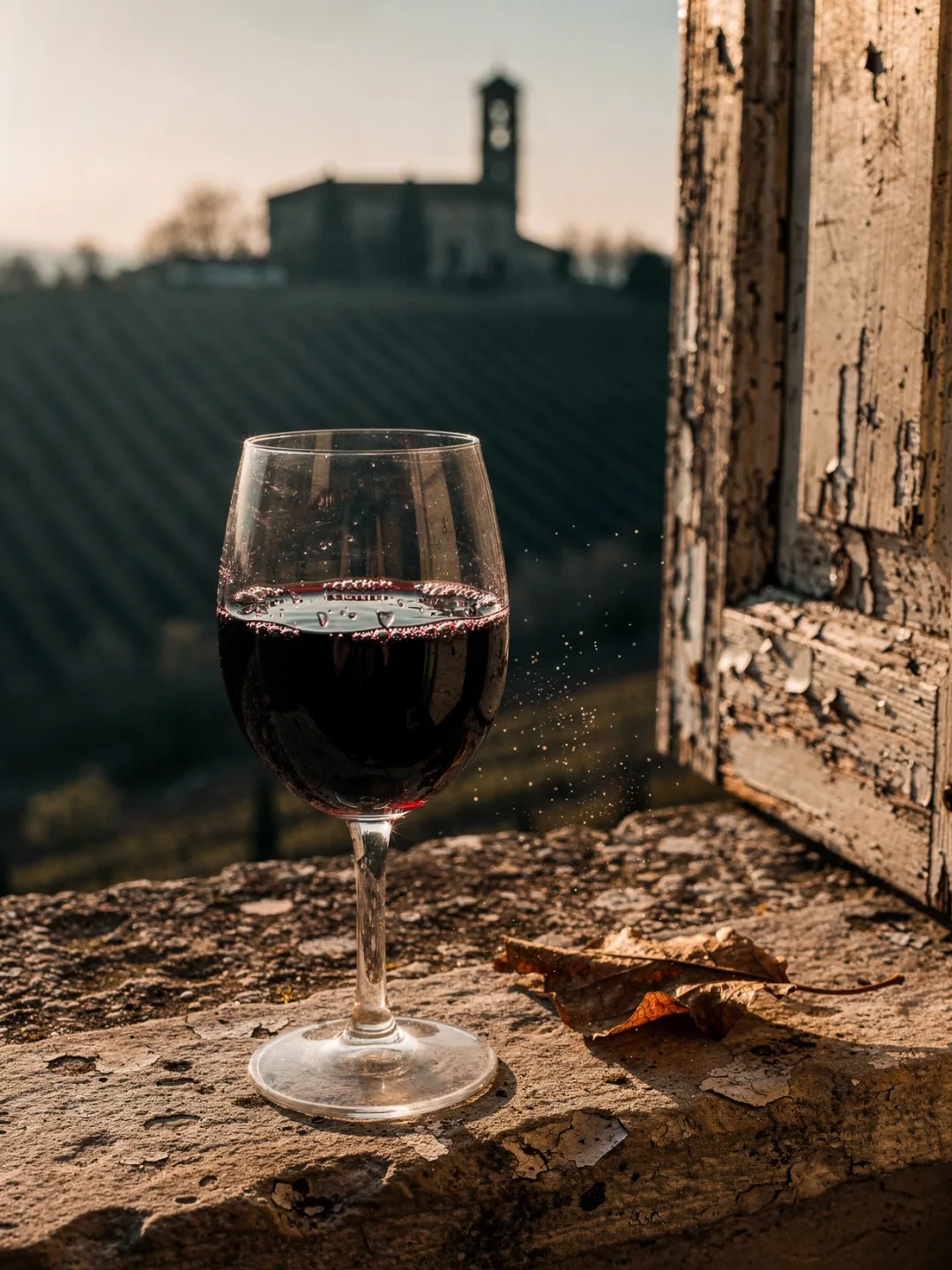
Hold a glass of Lambrusco Grasparossa up to the light, and you can barely see through it. Deep purple-red with a violet rim, plus foam that renews itself instantly with a swirl. A Lambrusco di Sorbara beside it looks almost like a full-bodied rosé — paler, more translucent, with finer, quicker-fading bubbles.
Smell first, without swirling. Sorbara shows above all violets, an aroma so characteristic that experienced tasters can identify the variety blind. Grasparossa, by contrast, smells darker: blackberry, plum, sometimes a hint of licorice, amplified by the splash of Ancellotta that plays a part in nearly every blend.
In the mouth, the carbonation changes everything. It carries the fruit forward and brings a livelier edge to the acidity. At the same time, it masks part of the tannin — that rough, furry sensation on tongue and gums — which is why even a tannic Grasparossa never feels as hard-edged as a still red wine with comparable numbers. Still, pay attention to the texture: rough and dry in a Secco, meaning dry; soft and round in an Amabile, meaning off-dry to semi-sweet.
When it comes to sweetness, a careful comparison pays off. A Secco leaves almost no residual sugar, an Amabile a bit more, a Dolce, meaning sweet, considerably more. The label usually states this clearly, but in blind tastings many people mix up the categories, because the carbonation cleverly conceals the sugar.
Finally, a leap to the other extreme: Albana passito. Amber-colored, almost oily in the glass, with an aroma of dried apricot, honey, and saffron. On the palate, a subtle tannin surprises the taster — a trait found in no other Italian white wine with this kind of clarity. It's a legacy of the thick, tannin-rich skin of the Albana grape.