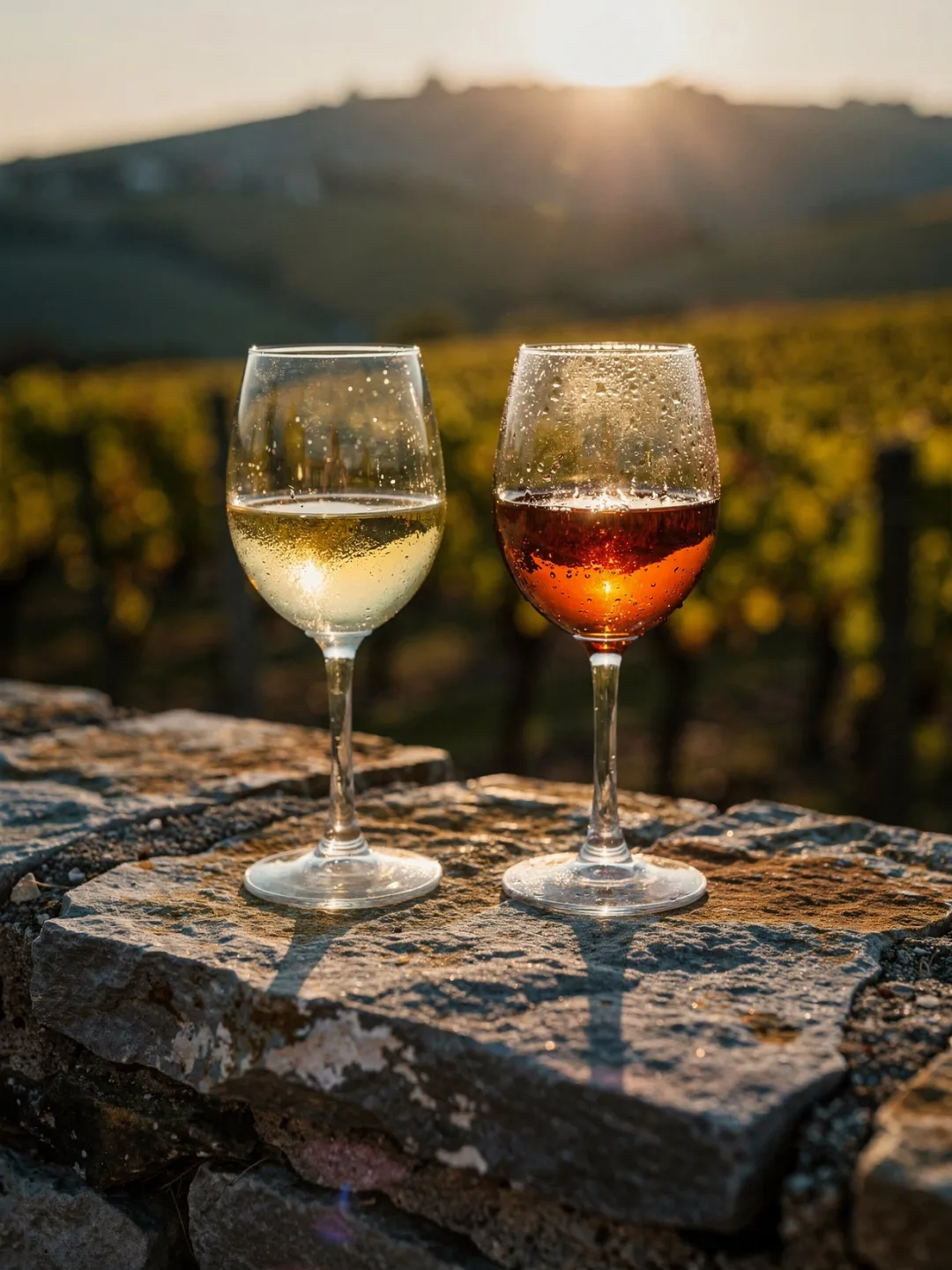
White, Amber, Red
Glassware
A standard white wine glass doesn't suit every wine from this region, and the reason lies in the skins. Friulano is a classic case: slender, with a delicate floral aroma. Too narrow a glass traps that scent, too wide a glass lets it dissipate. A medium-sized glass with a slightly tapered rim concentrates just enough to let you catch the bitter almond note on the finish too, which would otherwise simply vanish. Without it, all you taste is lemon.
With orange wine made from Ribolla Gialla, the opposite rule applies. Weeks of skin contact bring tannin and oxidative notes into the wine, much like a red, and just like a red, it needs a rounder glass with more air in the bowl. A narrow glass compresses the phenolic notes, making the wine feel harsh. A wider bowl, on the other hand, gives it time to unfold its dried apricot and tea-like character.
Temperature separates the two worlds once again. Classically made Friulano and Ribolla Gialla belong in the glass at ten to twelve degrees Celsius, cool enough to keep the acidity fresh. Orange wine, meanwhile, can handle two to three degrees warmer. Serve it too cold, and the complex notes of nuts and honey that make it appealing simply disappear.
Refosco and Schioppettino call for yet another shape: a generous red wine glass with a wide opening that rounds off the robust acidity and gives the firm tannin room to breathe. Serve at sixteen to seventeen degrees Celsius. Otherwise, a young Refosco quickly turns edgy and sour instead of juicy.
And then there's Picolit, the region's most expensive wine. It's traditionally served in tiny glasses, barely bigger than a thimble, since a hectare often yields only a few hundred bottles. In the end, every single sip counts. Serve it in a large glass, and you give away aroma. You also give away the sense of just how rare what's in the glass really is.