Pozzolana and Tuff
Soils
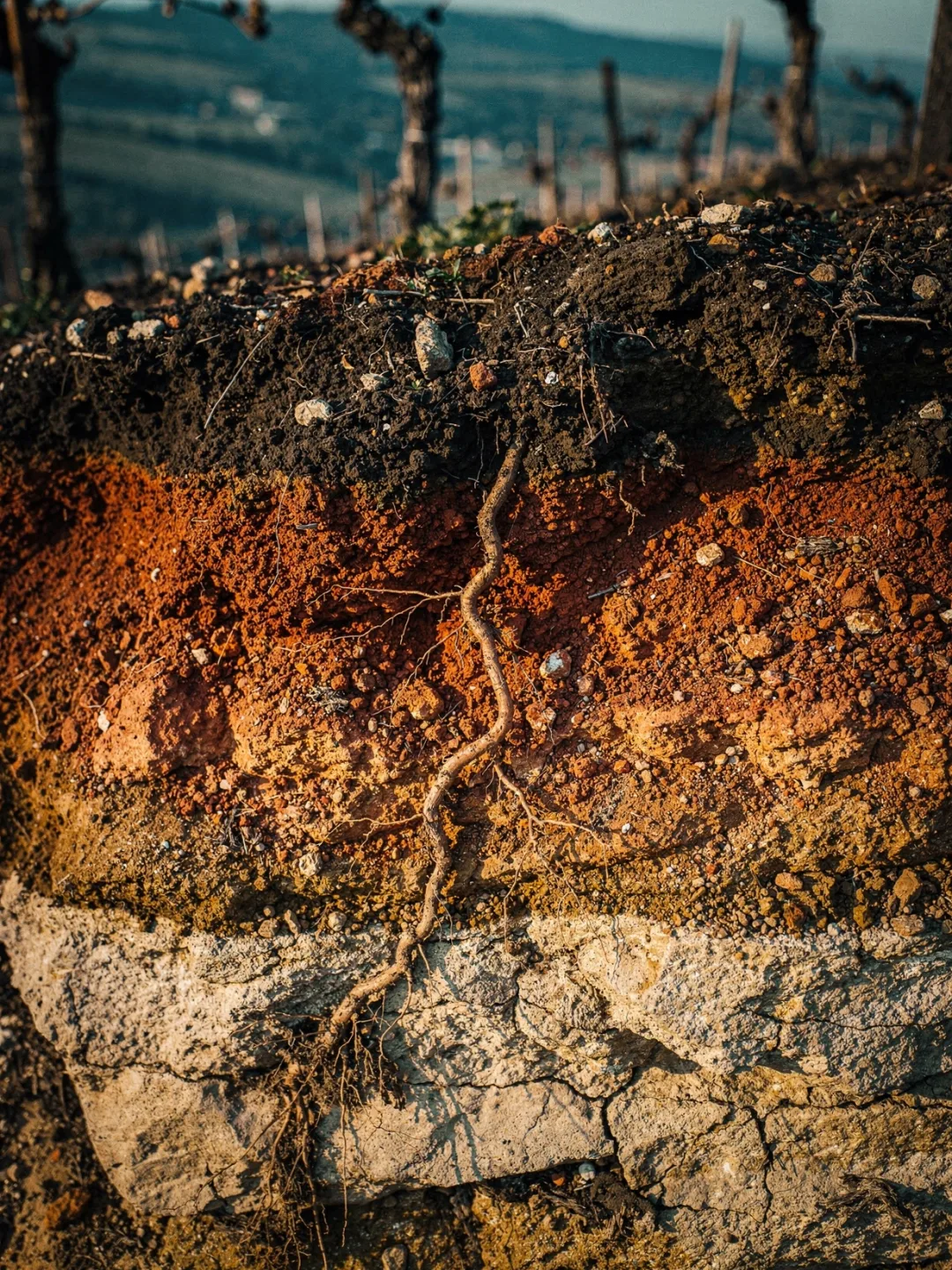
Dig a hole in a vineyard near Frascati. The spade sinks in surprisingly easily. After the thin layer of humus, there's no stone, just loose, sandy soil in a warm reddish-brown — Pozzolana, named after the town of Pozzuoli, where the Romans first used it for their cement.
Its history begins about six hundred thousand years ago, when the Vulcano Laziale began to erupt. Roughly three hundred fifty thousand years ago its magma chamber collapsed, leaving behind a massive caldera exactly where the vineyards of the Castelli Romani lie today. Ash and lapilli from these eruptions piled up metres deep, layer upon layer.
Where the ash stayed unconsolidated, farmers call it terrinella: loose, permeable, with no cementing whatsoever. Water runs through quickly and never pools anywhere. The root pushes in with ease — unlike with solid rock, the challenge here isn't getting through, but the scarce nutrient supply of such young, porous soil.
Deeper down, often below half a metre, the ash cements into tuff. Hard enough that you need a pickaxe to work it. This tuff holds considerably more water than the Pozzolana above it and supplies the vines with their last reserve exactly when it matters most, in August.
This combination explains the character of Malvasia Puntinata. Plenty of fruit and floral scent comes from the loose, warm Pozzolana up top, plus a taut, almost saline note from deep down, where the root meets the hard tuff.
Fifty kilometres further east, in Piglio, none of that applies anymore. Cesanese doesn't grow on volcanic earth there but on a red, clay-and-limestone soil from the weathered limestone of the Monti Ernici, mixed with scree. Firmer, poorer soils curb yield and concentrate the wine. That's why Cesanese from Piglio usually tastes denser and darker than many a wine from the volcanic slopes further west.
A thin, dark layer of organic material on top of the porous volcanic soil, rarely thicker than a hand's width in the vineyards of the Castelli Romani.
The root: This is where the fine roots sit, absorbing whatever the rain brings — in dry summers, they're the first to feel thirsty.