A Tulip for Puntinata
Glassware
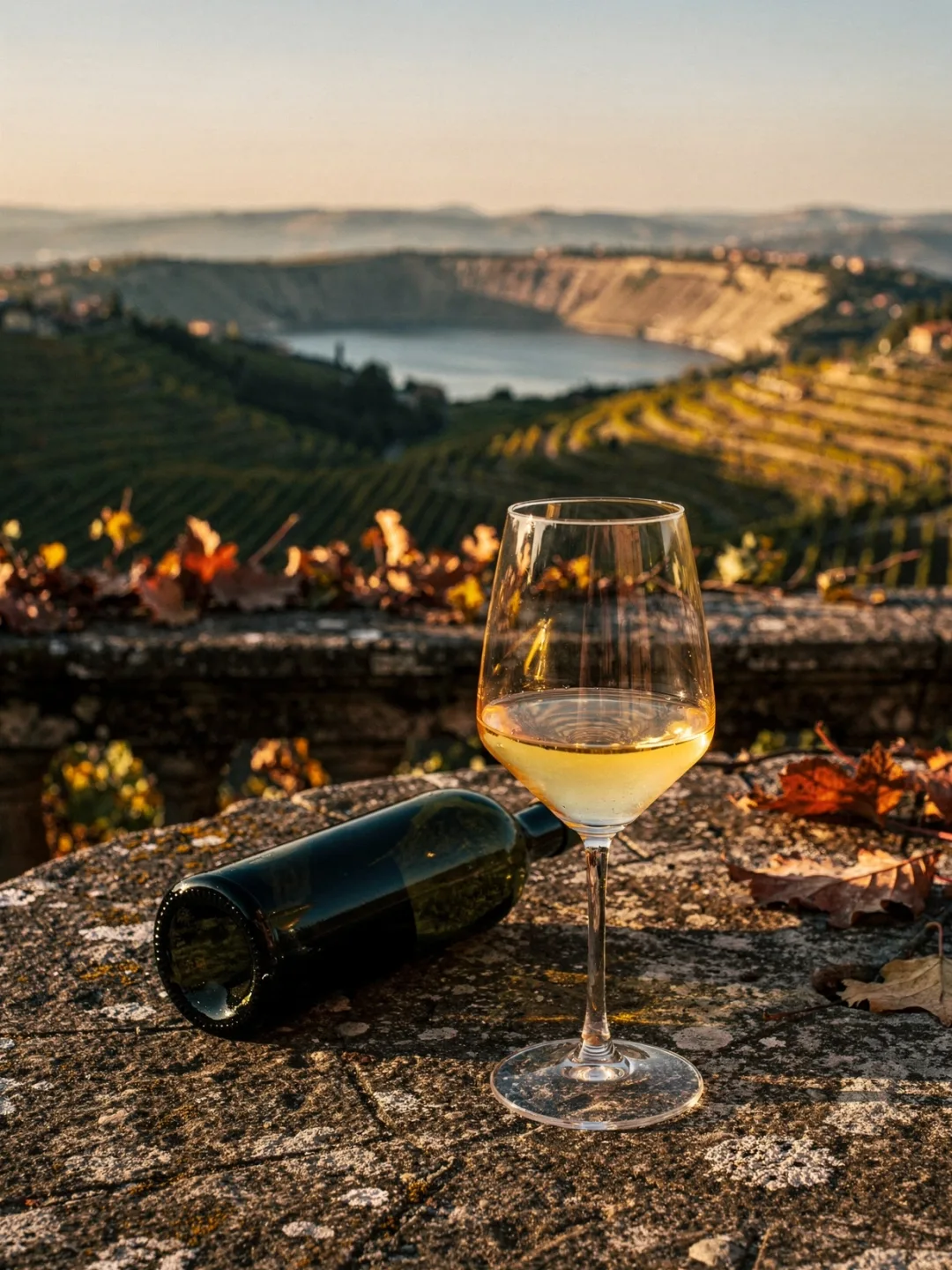
A glass decides how much of an aroma actually comes through, and with Malvasia Puntinata that's no minor detail. Its floral scent is delicate. It fades fast. A glass that's too wide scatters it into the air before the nose can even catch it.
That's why a slender tulip glass suits it better than the large, open bowl used for bolder white wines. The narrowing rim above the rounded base gathers the scent of almond blossom and slightly bitter almond that defines a good Frascati Superiore, and holds it there instead of letting it slip away instantly.
When it comes to temperature, the difference between the three Frascati types matters. A basic Frascati can take eight to ten degrees Celsius, cool straight from the fridge. The Superiore can go into the glass a touch warmer, at ten to twelve degrees, since it carries more structure and would stay mute if served too cold.
The sweet Cannellino di Frascati belongs in a smaller glass, barely bigger than a hand's span, well chilled to eight degrees Celsius. Its bouquet of apricot and honey otherwise feels heavy. The sweetness would otherwise smother whatever freshness the wine actually brings.
Cesanese needs the opposite: a medium-sized red wine glass with enough air above the wine, served at sixteen to eighteen degrees Celsius. A young Cesanese doesn't need decanting. A mature Piglio Superiore with several years in bottle, on the other hand, only truly opens up after thirty minutes of air contact; before that, its tannin feels closed and edgy.