Cold Instead of Time on the Skins
Production
With Malvasia Puntinata, modern production starts with cold, not with time. The grapes go into the cold room shortly after harvest and often macerate on the skins for only twenty-four hours at low temperature before being gently pressed. That draws out aroma from the skin without pulling in bitter compounds along with it.
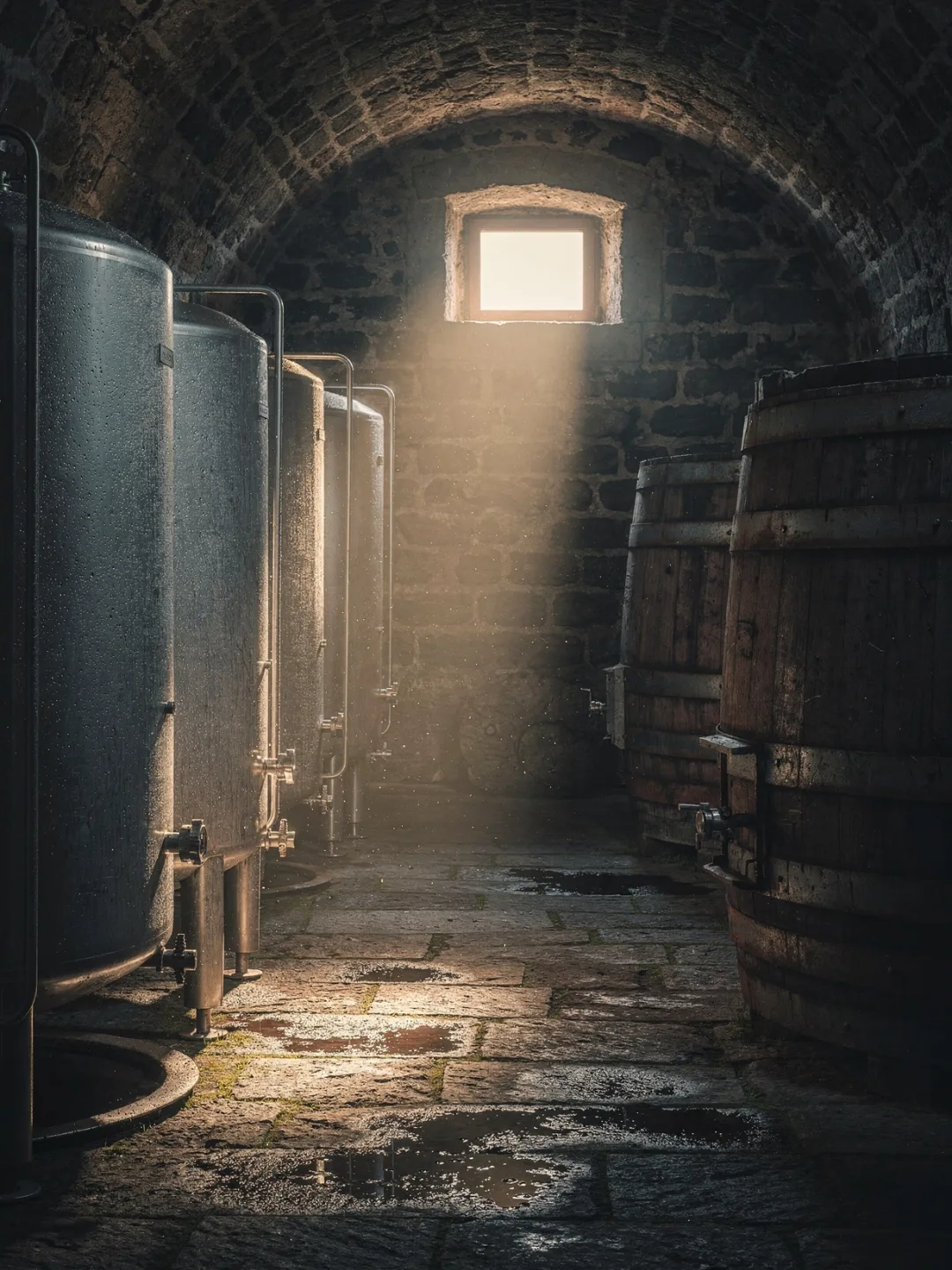
Fermentation then takes place in stainless steel tanks at around eighteen degrees Celsius, controlled and slow, so the floral aromas don't cook off. Malolactic fermentation practically never happens. Puntinata's acidity is meant to be preserved, not softened. After that, the wine ages for a few more months on the fine lees.
For the sweet Cannellino, the logic flips: here it's time on the vine that counts, not time in the cellar. The grapes hang until late October or early November, often affected by noble rot, which draws out water and concentrates the sugar, so the result must contain at least thirty-five grams of residual sugar per litre and still taste fresh — a balancing act that only comes together in truly good vintages.
Cesanese demands the opposite of Malvasia: long time on the skins. Ten to fourteen days of maceration draw out colour and the relatively soft tannin typical of the variety. After that, the wine ages depending on the producer in steel, large casks, or small barriques. The regulations don't mandate wood, just a minimum ageing time.
A basic Cesanese del Piglio has no prescribed ageing period. The Superiore needs at least thirteen percent alcohol, the Riserva twenty months total, of which at least six must be in bottle. A maximum of eleven tonnes of grapes per hectare is allowed, and only nine for the Superiore tier. Anyone who harvests more forfeits the right to the name.