Narrow and Salty
Glassware
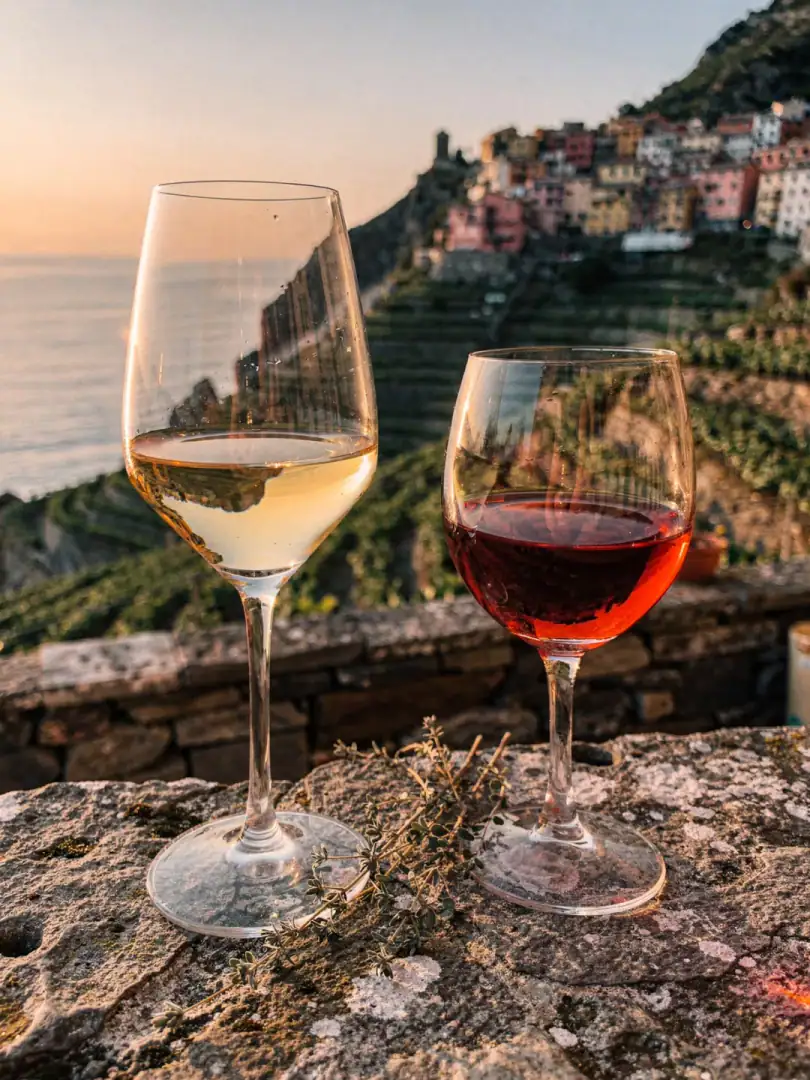
Pigato and Vermentino live on two things: intense aromatics and a strikingly salty acidity. Some tasters compare it almost to seawater, and a glass that's too wide scatters exactly that before it even reaches the nose. A slim, slightly tulip-shaped white wine glass with a narrowing rim works better. It's large enough to release the herbs and citrus, narrow enough to concentrate them at the top instead of losing them into the room.
With the red Rossese, the pale color is deceiving. Anyone who pours it into a large glass, the kind used for heavy red wines, loses something crucial: the delicate note of white pepper gets lost, the very thing that sets this wine apart from every other Ligurian red. A medium-sized, slender glass is entirely sufficient — barely larger than the white wine glass next to it, just with a bit more bowl for the delicate fruit aromatics.
Cooler than most people think: that's the rule of thumb for Pigato and Vermentino. Eight to ten degrees Celsius is right, straight from the fridge rather than just lightly chilled, or the salty acidity disappears behind the alcohol. Rossese, on the other hand, tolerates twelve to fourteen degrees, noticeably warmer than the white wine beside it. Still cool, though.
Only Sciacchetrà, the sweet wine of the Cinque Terre, gets its own small glass — just fifty to sixty milliliters. Its density of sugar and aroma doesn't need a large bowl, just one sip at a time. It's usually drunk with a cookie or a piece of dried fruit anyway, not by the liter like an everyday wine.
What all these glasses have in common is a narrow opening. Ligurian wines live on finesse, not power. A glass that's too open lets escape exactly what sets these wines apart from every other Italian wine.