Pigato & Rossese
Grape Varieties
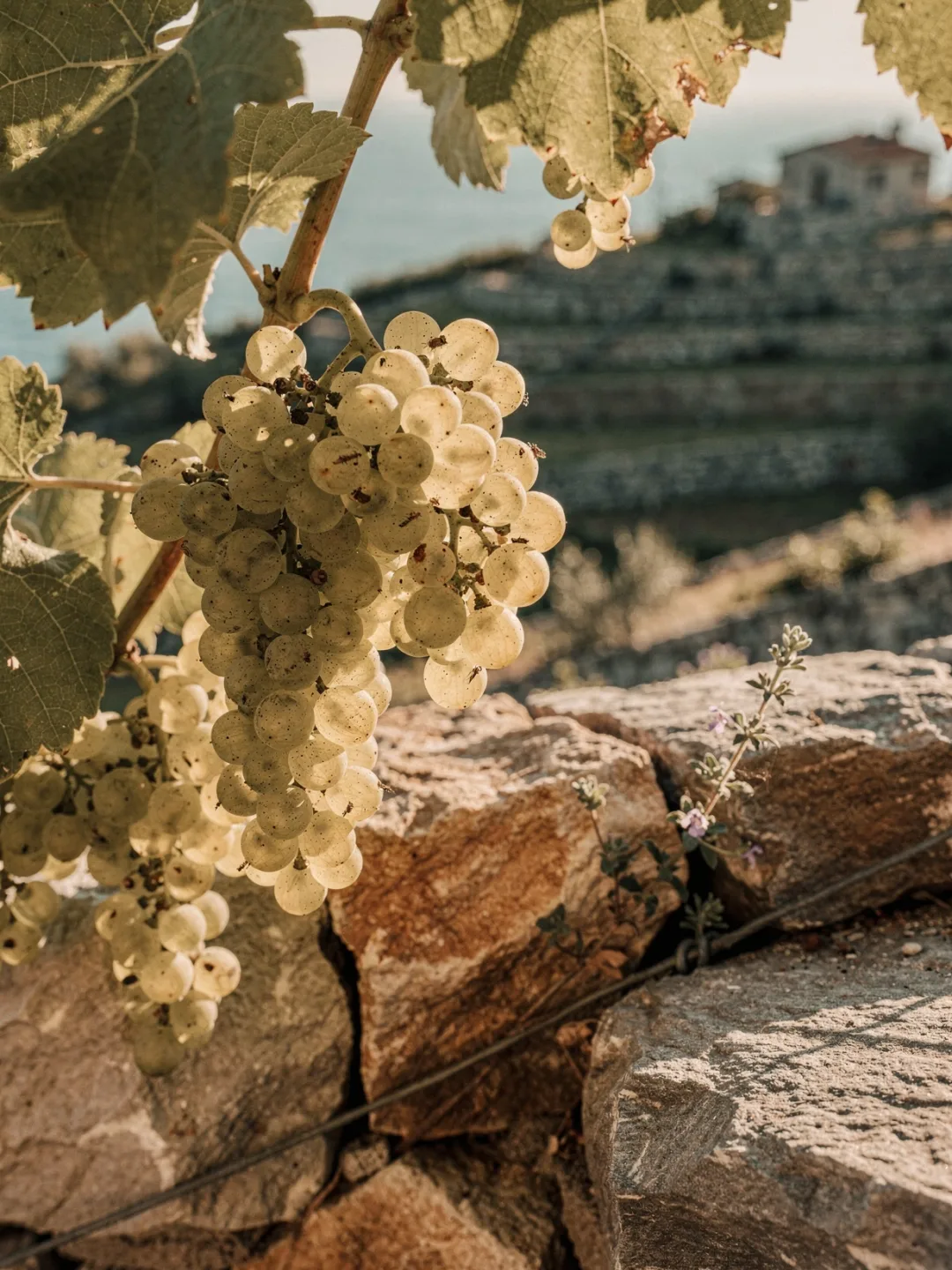
This family is more closely related than the three names suggest. DNA analysis shows that Pigato, Vermentino, and Piedmont's Favorita are nearly the same grape, simply grown to prominence under three names in three regions. Pigato means speckled, named for the brownish spots on the ripe berry skin. The name simply describes what you see. In the Riviera Ligure di Ponente, both wines must consist of at least ninety-five percent of the grape that gives them their name.
On the eastern coast, in the Cinque Terre, a third white variety dominates: Bosco. It makes up at least forty percent of Cinque Terre DOC. Albarola and Vermentino round it out, together no more than forty percent. Bosco has thick skins that barely rot even after weeks in the open air — exactly what's needed for Sciacchetrà, the region's famous sweet wine.
With the red Rossese, the origin is less clear. One theory traces it back to Greek settlers, all the way to Marseille and Provence. There, the same grape lives on under the name Tibouren, before finding its true home in Dolceacqua. This isn't proven, only likely. What is certain, however, is how the grape tastes: pale in color, but with striking acidity and a salty note you'd sooner expect from the coast than from wine.
In the far northwest, in the alpine valleys around Pornassio, a fourth red grape grows under a foreign name: Ormeasco. Genetically, it's Piedmont's Dolcetto. But in Liguria's thinner mountain air, it becomes a paler, more fragrant wine with softer tannins. From the same grapes comes Sciac-trà, a briefly macerated rosé — the name literally means to crush and drain off.
Since 2011, Granaccia has also officially belonged to the Riviera Ligure di Ponente DOC. It's the same grape known elsewhere as Grenache or Alicante, but here it goes by its own Ligurian name. Alongside it stands Moscato, the same sweet Muscat grape known in Piedmont, only grown here with a view of the sea instead of the Alps. Liguria cultivates over a hundred grape varieties across a comparatively tiny area.