Salt and Pepper
Tasting
Pour yourself a glass of Pigato and hold it up to the light: straw yellow, sometimes with a hint of gold, never quite colorless. On the nose, ripe yellow fruit comes first. Something reminiscent of almonds. Behind that lie Ligurian herbs — sage, thyme, everything that grows on the dry slopes of the Riviera — and it hangs in the air even before it ever makes it into the wine.
On the palate, what follows immediately is what sets Pigato apart from almost any other white wine: a salty note on the finish. This has nothing to do with actual salt, but arises from the combination of acidity and a touch of residual sugar. Some tasters call this sapidità, salty-savory, a word that has no exact equivalent in English. Vermentino next to it tastes brighter and more citrus-forward, with less of this mineral-salty edge.
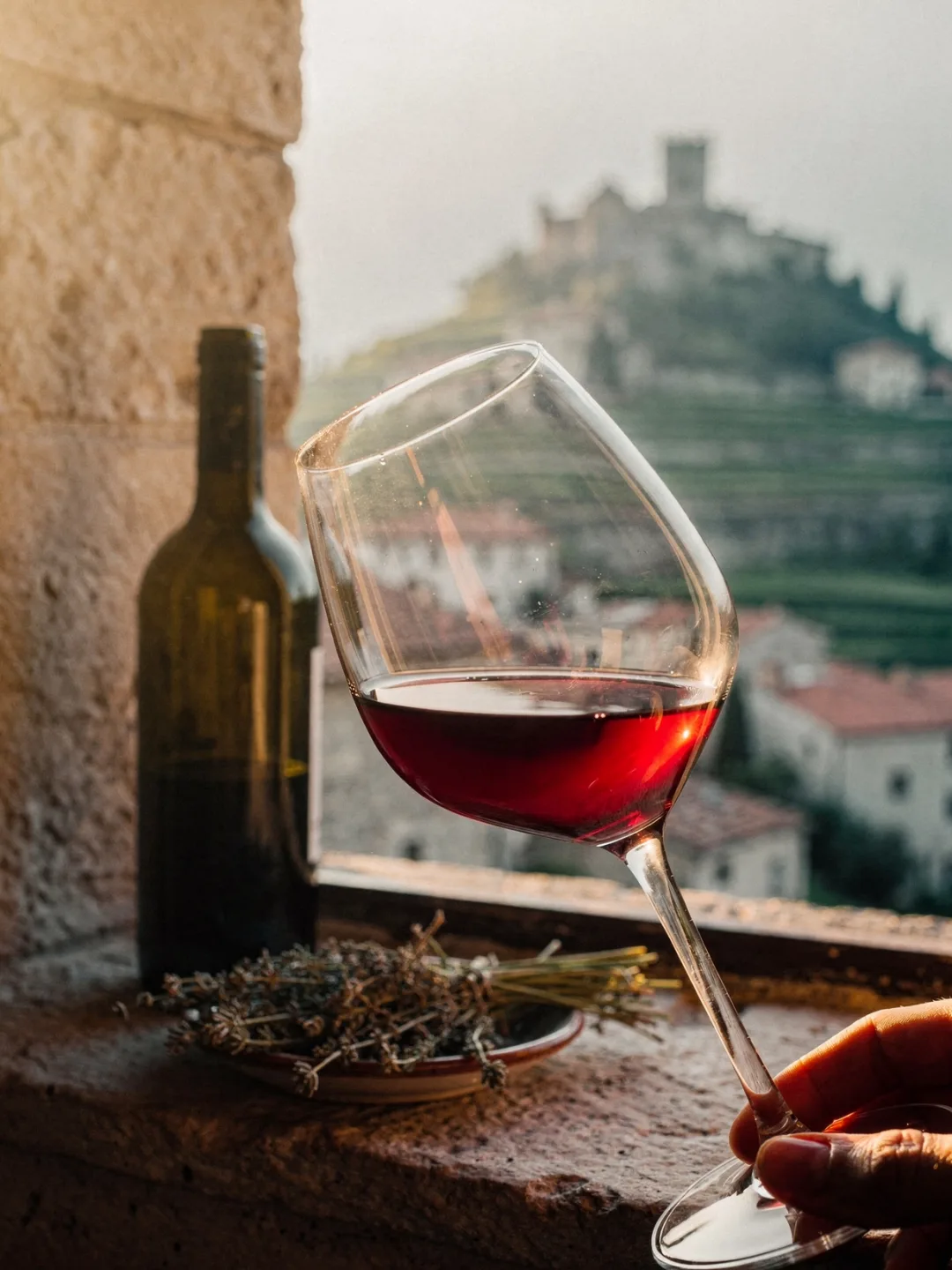
Hold a Rossese di Dolceacqua against something white. You'll see a pale ruby red, almost translucent, which after a few years shifts toward brick red. On the nose, strawberry comes first. Then pomegranate, then violet. On closer inspection, white pepper joins in — a sharp, almost tingling detail that no other Ligurian grape shows so distinctly.
On the palate, the acidity is high and makes your mouth water instantly, while the tannin is barely noticeable. Rossese is a red wine you can drink almost like a full-bodied white. Add to that the same salty, almost maritime note that turns up in nearly every Ligurian wine, red or white, as if the nearby sea had lent a hand during ripening.
At the end, count how long the flavor lingers after you swallow. With a simple Pigato, that's three or four seconds, while a good Rossese from a steep site above Dolceacqua often lasts twice as long. It's exactly this length that distinguishes a terrace wine from one grown somewhere down in the flat valley.