Mountain, Lake, Plain
Climate
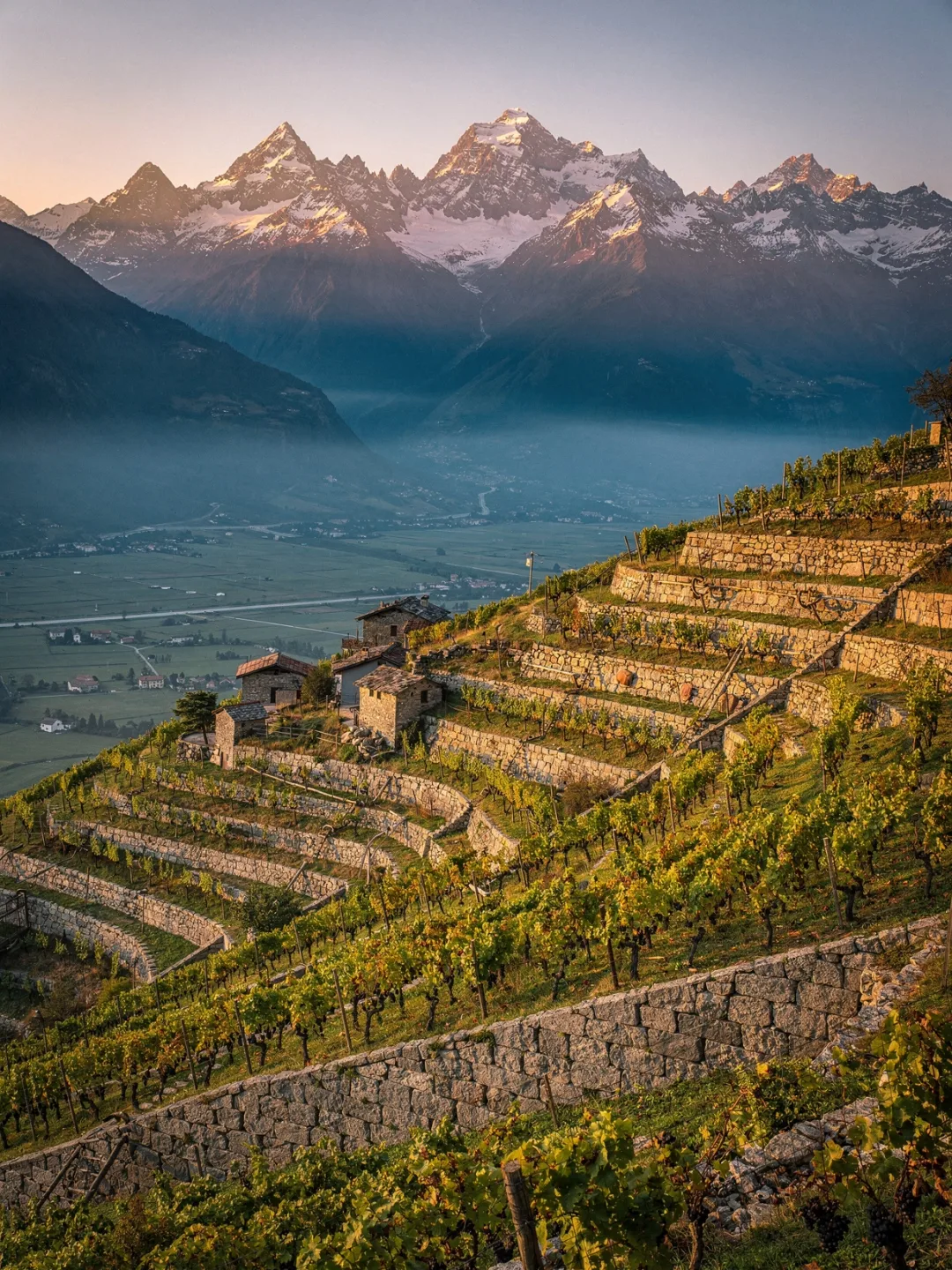
Four regions, four climate zones — it's hard to imagine a starker contrast. In Valtellina, the vineyards lie between 230 and 800 meters above sea level, on the so-called versante retico, the sunny north-facing slope of the valley that looks south.
This exact orientation is what decides everything. During the day the sun heats the terraces, and at night the temperature drops quickly in the thin mountain air. This swing locks in the acidity of the grapes while sugar and aroma still ripen. Without this daily temperature drop, Chiavennasca would hardly ever ripen fully at this altitude.
At Lake Iseo, by contrast, the water tempers the extremes. Large lakes store coolness in summer and release it again in winter. South of the lake, olive trees even grow — an almost Mediterranean climate in the middle of northern Italy. At Lake Garda, there's also the Ora, an afternoon wind that blows in from the south across the water, keeping the vineyards around Lugana dry and healthy.
In the Oltrepò Pavese, different rules apply again, closer to the continental climate of the Po Valley. Warmer, more sheltered sites exist in the Apennine hills, but without a moderating lake nearby.
Climate change is affecting the four regions unevenly. The most noticeable response has come at Lake Iseo. Because Chardonnay and the two Pinots now often ripen too quickly and too sweetly, the regulations allowed the late-ripening, highly acidic Erbamat as a counterbalance in 2017. It's a direct response to warmer summers, planted right into the vineyard itself.