Chiavennasca & Co.
Grape Varieties
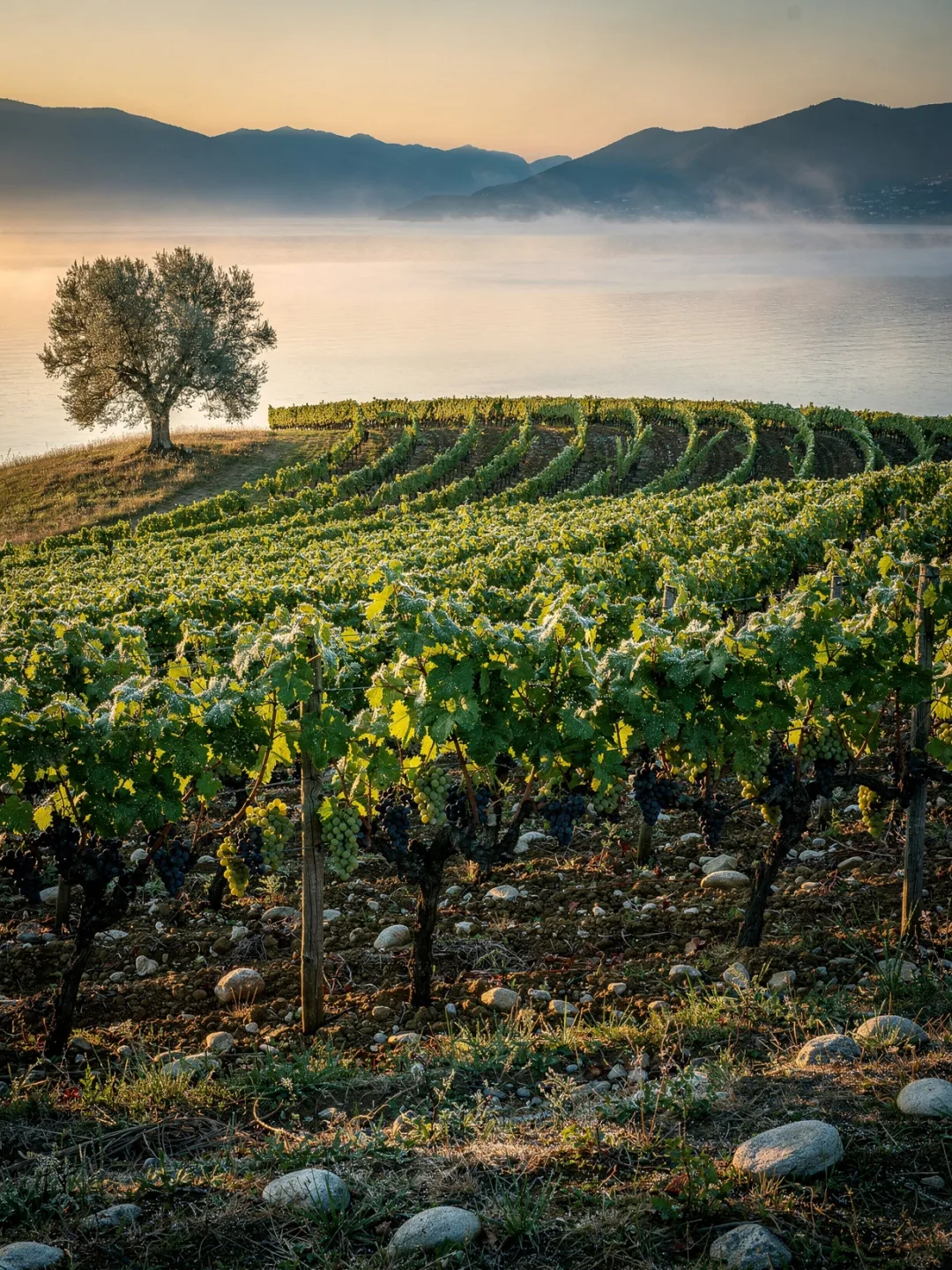
In Valtellina, almost everything revolves around a single grape. Elsewhere in Italy it's called Nebbiolo; here it goes by Chiavennasca. For the appellation wines Valtellina Rosso and Valtellina Superiore, at least ninety percent of the blend must come from this grape. The remainder may come from other red varieties approved in Lombardy. That sounds like little room to maneuver. It is, in fact, very little room to maneuver.
At Lake Iseo, the list looks quite different. Franciacorta is made from Chardonnay, Pinot Nero, and Pinot Bianco, the three classic Champagne grapes. Since 2017, a fourth has been permitted: Erbamat, an almost forgotten local variety that ripens late and naturally brings very high acidity. Up to ten percent of it may now go into the blend.
Further south, in the Oltrepò Pavese, things get both more complex and larger in scale. Over twelve thousand hectares of vines grow here in the foothills of the Apennines, more than in any other part of Lombardy. Thirty-five hundred hectares alone are planted with Pinot Nero — the largest contiguous area of this variety in all of Italy. Croatina and Barbera define the red wines, often sold as Bonarda, while Pinot Nero here mostly ends up as a still base wine for sparkling production.
Finally, at Lake Garda, in the far east of Lombardy, almost exclusively one white variety is grown: Turbiana. Closely related to Verdicchio from the Marche, it has thick-skinned, juicy berries and produces Lugana — the regulations require at least ninety percent Turbiana.
Four regions, four entirely different grapes, and hardly any overlap between them. Comparing a Chiavennasca from Valtellina with a Franciacorta from Lake Iseo is essentially comparing two foreign wine countries that happen to share the same administrative name.