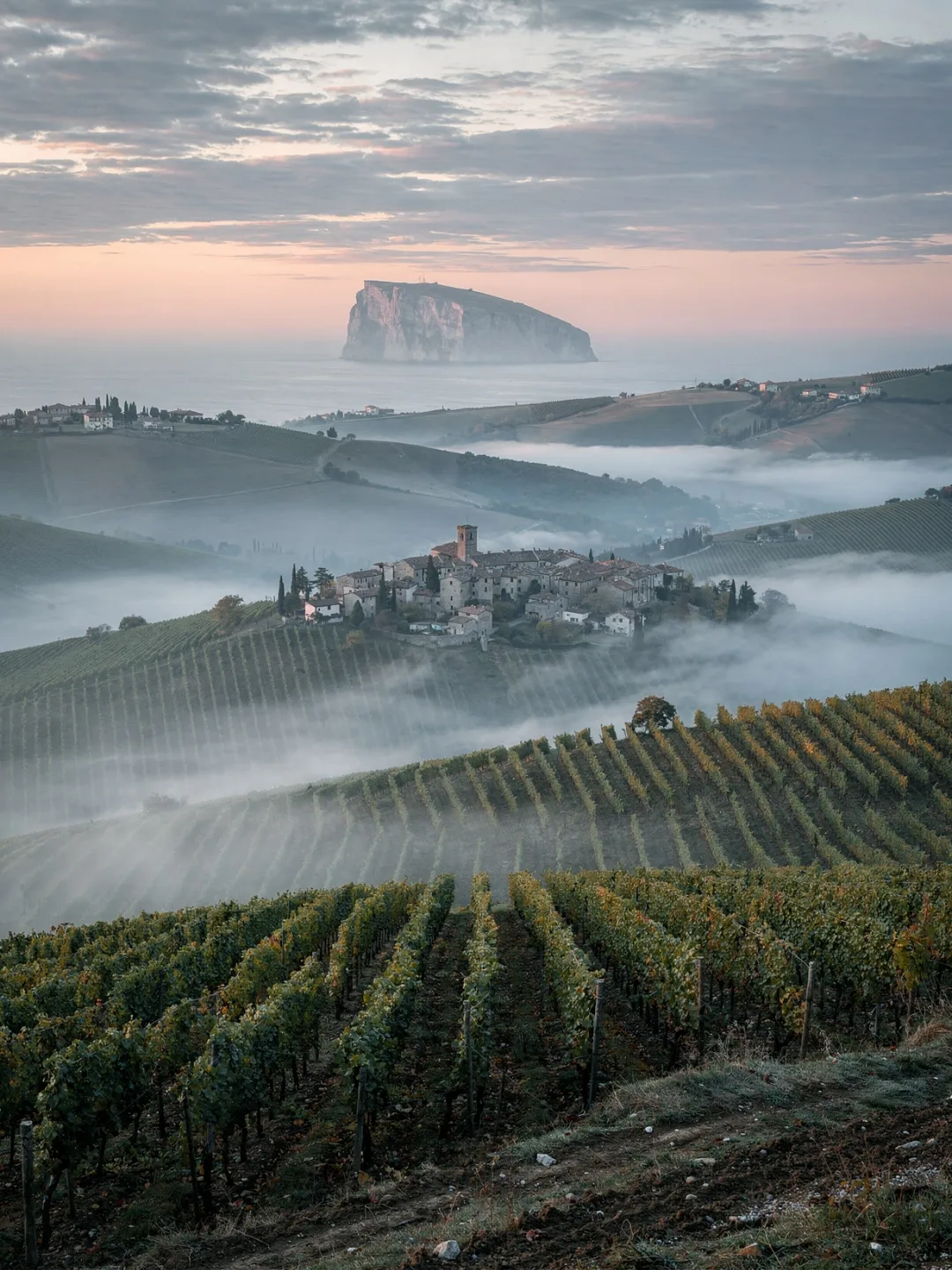
A Ridge of Valleys
Climate
On the map, Marche looks like a comb. More than a dozen valleys run down from the Apennines almost parallel to the Adriatic, each with its own short river that plunges straight to the coast rather than winding its way there. This shapes the climate more strongly than the southern location might suggest. Every valley has its own weather.
On the coast, it's mild. Monte Conero, a limestone cliff right on the sea, stores the day's warmth in its pale rock and releases it back to the vines at night. There's also a constant breeze. It keeps humid air away from the densely packed Montepulciano grapes, and dense clusters rot quickly if they can't dry out.
Further inland, it gets harsher. Matelica lies in an enclosed valley, sealed off by Monte San Vicino, where the sea is close only on the map. During the day the thermometer climbs above thirty degrees Celsius in summer. At night it often drops by ten degrees or more, sometimes within a few hours, and this swing slows ripening and locks in the acidity of Verdicchio. Harvest here begins later.
Even higher up lies Serrapetrona, between four hundred fifty and six hundred meters, in a climate best described as mountain-Mediterranean: Mediterranean in its base warmth, alpine in its temperature swings. It's exactly these swings that Vernaccia Nera needs. It builds up aromatic compounds without the sugar climbing along at the same rate. After the October harvest, selected grapes there continue to dry until mid-January, in cool, dry mountain air that gives mold no chance.
So in the same region, winemakers harvest on three different days within the same autumn: early on the warm coast, mid-season in the hills around Jesi, late in the cool mountain country. The same sun, three different schedules.