A Shape for Tintilia
Glassware
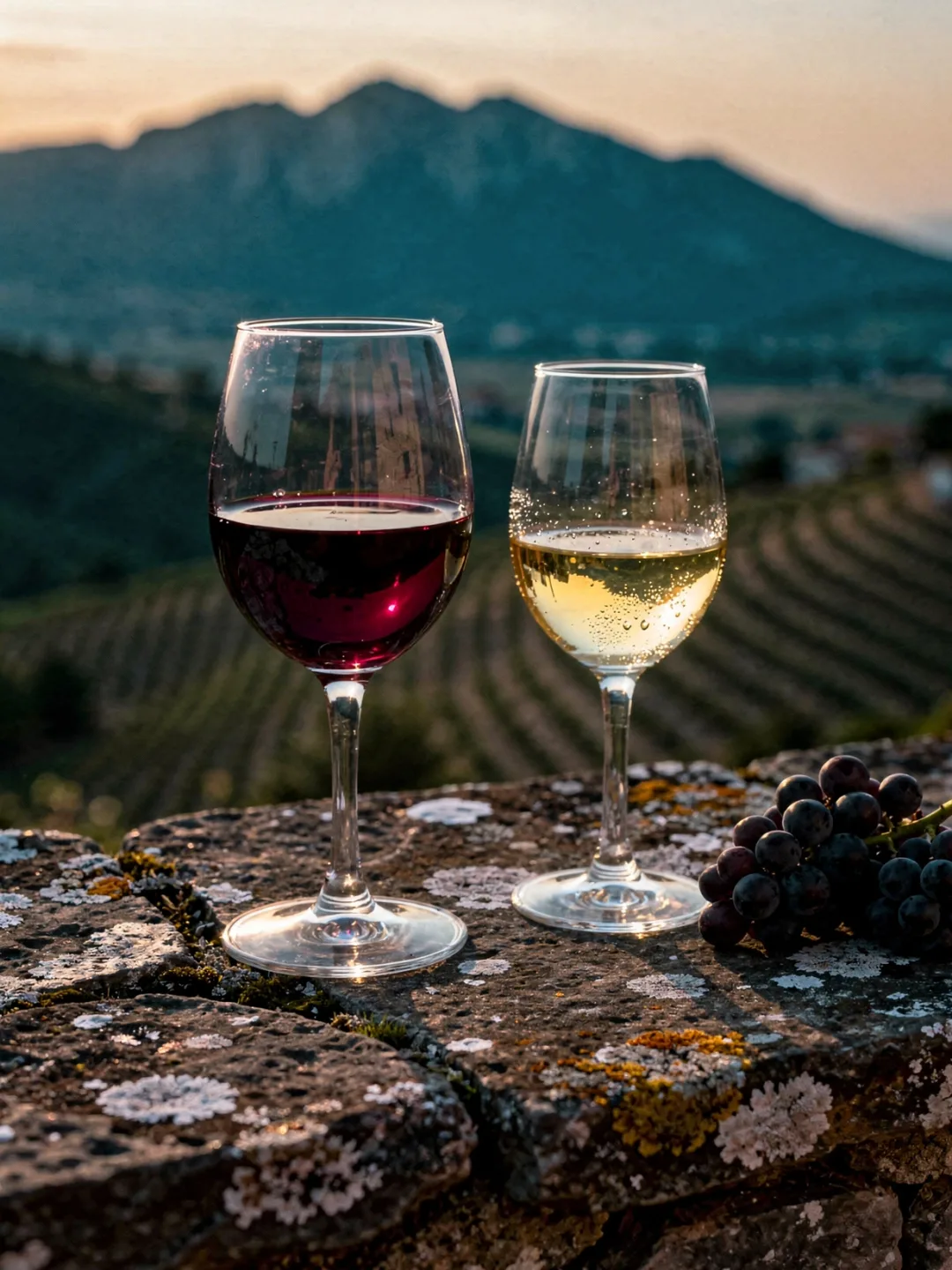
A glass changes how much of a wine actually reaches the palate, and with Tintilia this difference is especially pronounced. It carries firm tannin and an acidity that surprises many, and both traits can easily tip into unpleasant territory with the wrong shape.
Best suited is a glass with a medium, slightly rounded bowl that narrows gently toward the rim — similar to the shape used for robust Montepulciano, only with noticeably more room for the dark fruit. The rounded bowl lets the tannin soften, while the narrower opening holds the aroma together before it dissipates.
The most common serving mistake concerns temperature. Sixteen to eighteen degrees Celsius suits a young Tintilia — noticeably cooler than what most people consider room temperature. Served warmer, the alcohol pushes forward and the tannin turns coarse rather than refined. A Biferno Bianco made from Trebbiano and Bombino Bianco belongs in the glass even colder, at eight to ten degrees. Otherwise it loses exactly the freshness that makes it so good with fish on the coast near Termoli.
A Tintilia Riserva, having spent its required two years in the cellar, benefits from half an hour in the decanter. That opens up what the long time in the bottleneck has kept closed, while also protecting the sediment that has formed during that time. A young Tintilia or a simple Biferno Rosso doesn't need this.
When it comes to pour size, a fixed rule applies here as everywhere: fill only up to the widest point of the glass, no higher. For a red wine glass, that's about one hundred fifty milliliters. In many trattorias in Molise, habit still leads to more generous pours, especially with a Pampanella loaded with chili. Understandable given such spicy food, but not ideal for the wine's sake.