Skin, Botte, Riserva
Production
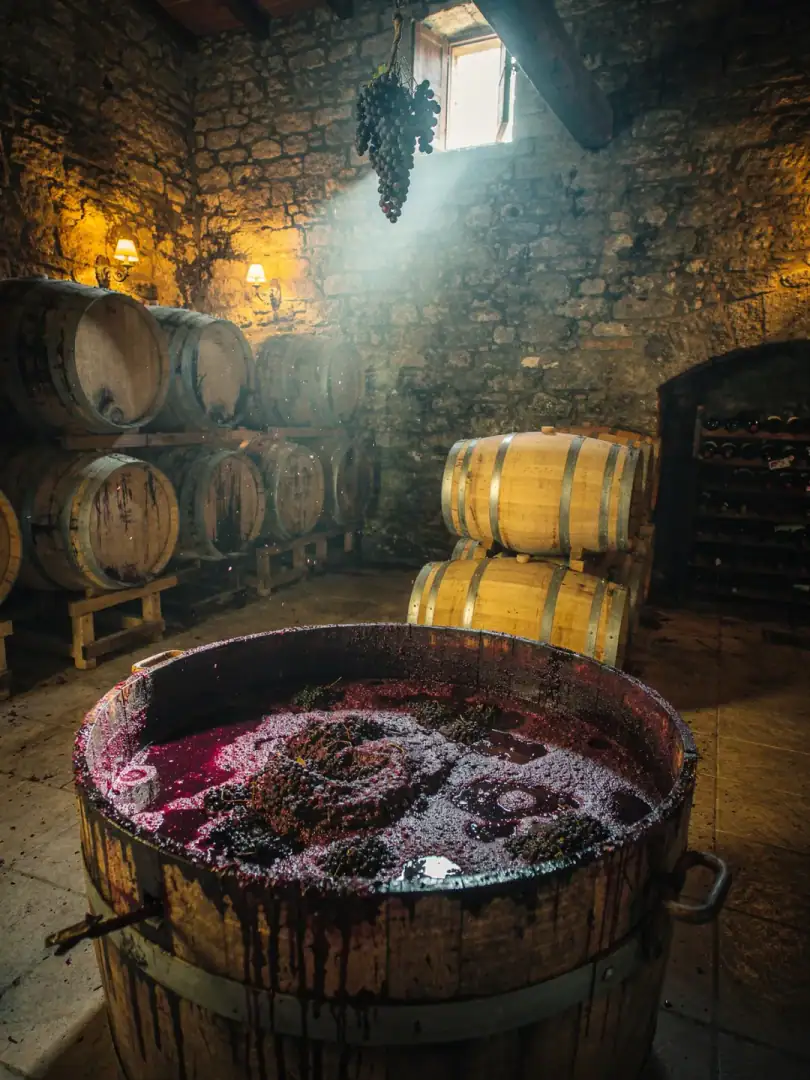
With Tintilia, time spent on the skins decides almost everything. Press the grapes off immediately and the wine stays pale, almost like a rosato, since color lives in the skin, not the juice. That's why the skins stay in the vat for two to three weeks, longer than for many other varieties, because the thick berry skin otherwise barely yields enough.
After that comes the decision of how strict a wine is allowed to become. The DOC requires at least ninety-five percent Tintilia in the wine, with the remainder allowed to come from other red varieties grown in the provinces of Campobasso and Isernia. A simple Tintilia del Molise only needs eleven and a half percent alcohol. For the Riserva, the rules require at least thirteen percent, plus two years of aging starting from the first of November of the harvest year. A producer who picked in 2024 can't sell the Riserva before 2026 at the earliest.
Opinions on wood diverge widely across Molise. Some producers age Tintilia in large old casks, called botti, which impart little aroma and bring the wine into contact with oxygen only slowly. Others rely on small barriques, which contribute vanilla and toasty notes. For a variety whose appeal lies in unadulterated dark fruit, that's a decision with real consequences.
Biferno Rosso follows fixed blending rules: seventy to eighty percent Montepulciano, ten to twenty percent Aglianico. The remainder may come from other permitted varieties. Pentro di Isernia, on the other hand, was rewritten in 2014. Since then it blends seventy-five to eighty percent Montepulciano with twenty to twenty-five percent Tintilia — a sign of how strongly the native variety has reasserted itself.
All red wines from the region are also subject to a yield limit: from one hundred kilos of grapes, no more than seventy liters of wine bearing the appellation may be produced. The rest goes into simpler products. This limit may sound bureaucratic, but it ensures that not every record harvest can automatically be sold as quality wine.