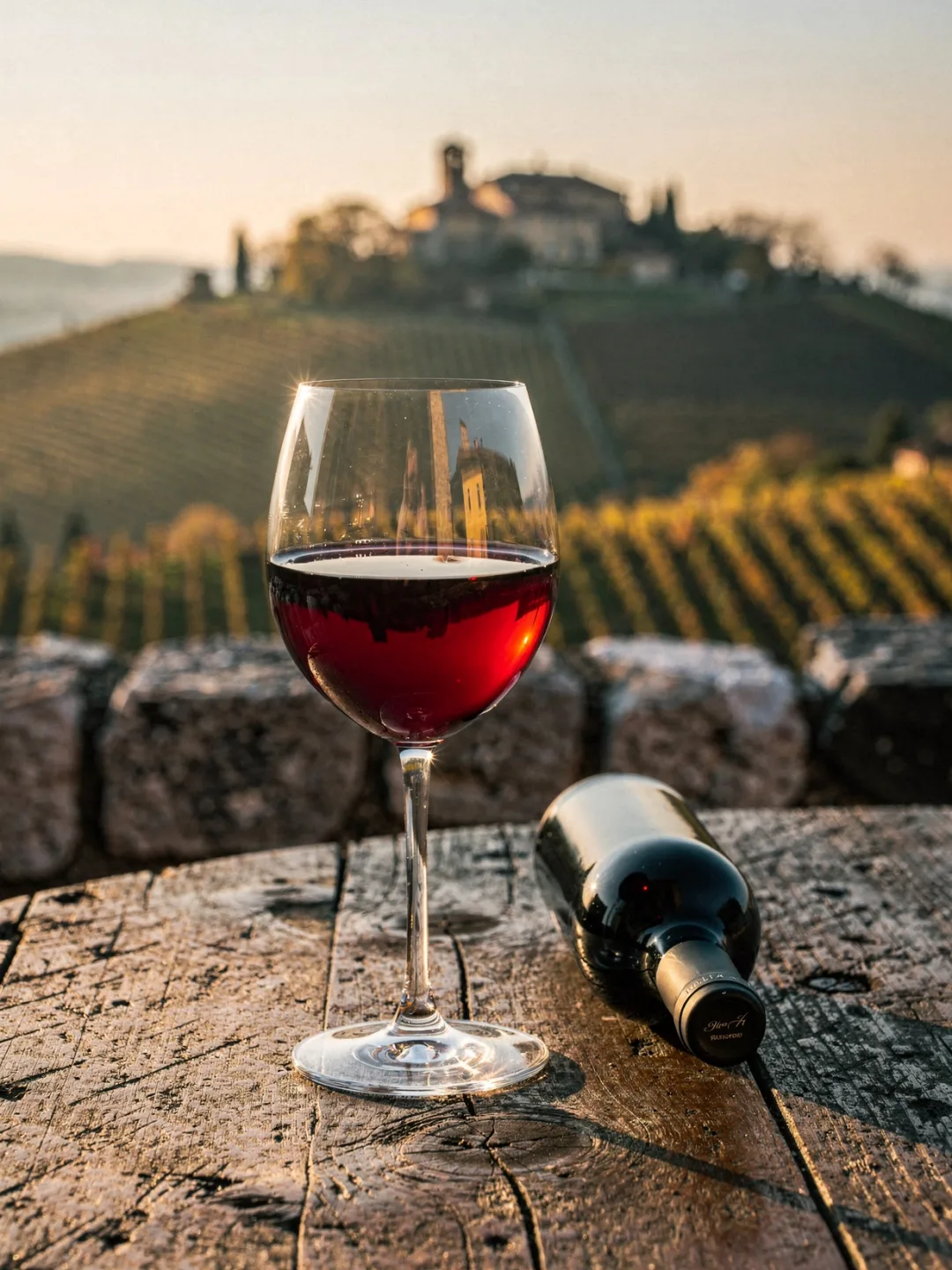
The Balloon Glass for Nebbiolo
Glassware
No glass changes a wine as dramatically as the one used for Nebbiolo. The wine itself is a paradox: pale as a rosé at the rim, yet with tannin and acidity like a deeply dark Cabernet. Pour it into a narrow glass, and you'll mostly feel its sharp edges. That alone is enough to ruin the whole evening.
That's why, in Piedmont, people reach for the large, round-bowled glass known as the balloon glass — the same shape used for Burgundy. Nothing more is needed. The wide surface at the base lets plenty of oxygen reach the wine, and this aeration is exactly what rounds out the tannin before it even hits the tongue. The narrowing opening above concentrates the aroma, which in Barolo and Barbaresco turns out unusually complex: rose, tar, dried cherry, sometimes licorice.
When it comes to temperature, wines are often served too warm. Sixteen to eighteen degrees Celsius is right for Barolo and Barbaresco — cooler than what most people consider room temperature. Cooler tastes better. At twenty degrees and above, alcohol comes to the fore, and the already powerful tannin turns bitter instead of velvety.
A young Barolo handles a half-hour in the decanter well; a ten- or twenty-year-old wine practically demands it. Time makes all the difference here. With age, sediment settles, and the aromas close up behind the cork after years — air reopens them, slowly, sometimes over a full hour.
Moscato d'Asti is a completely different story. It's served chilled, between six and eight degrees Celsius, in a smaller, slender glass that holds the carbonation instead of letting it escape. Small is right here. With just over five and a half percent alcohol and plenty of sweetness, it's made for immediate drinking, not aging — the exact opposite of everything that defines a Barolo, and yet both come from the same rolling hills. This way, the bubbles are preserved.