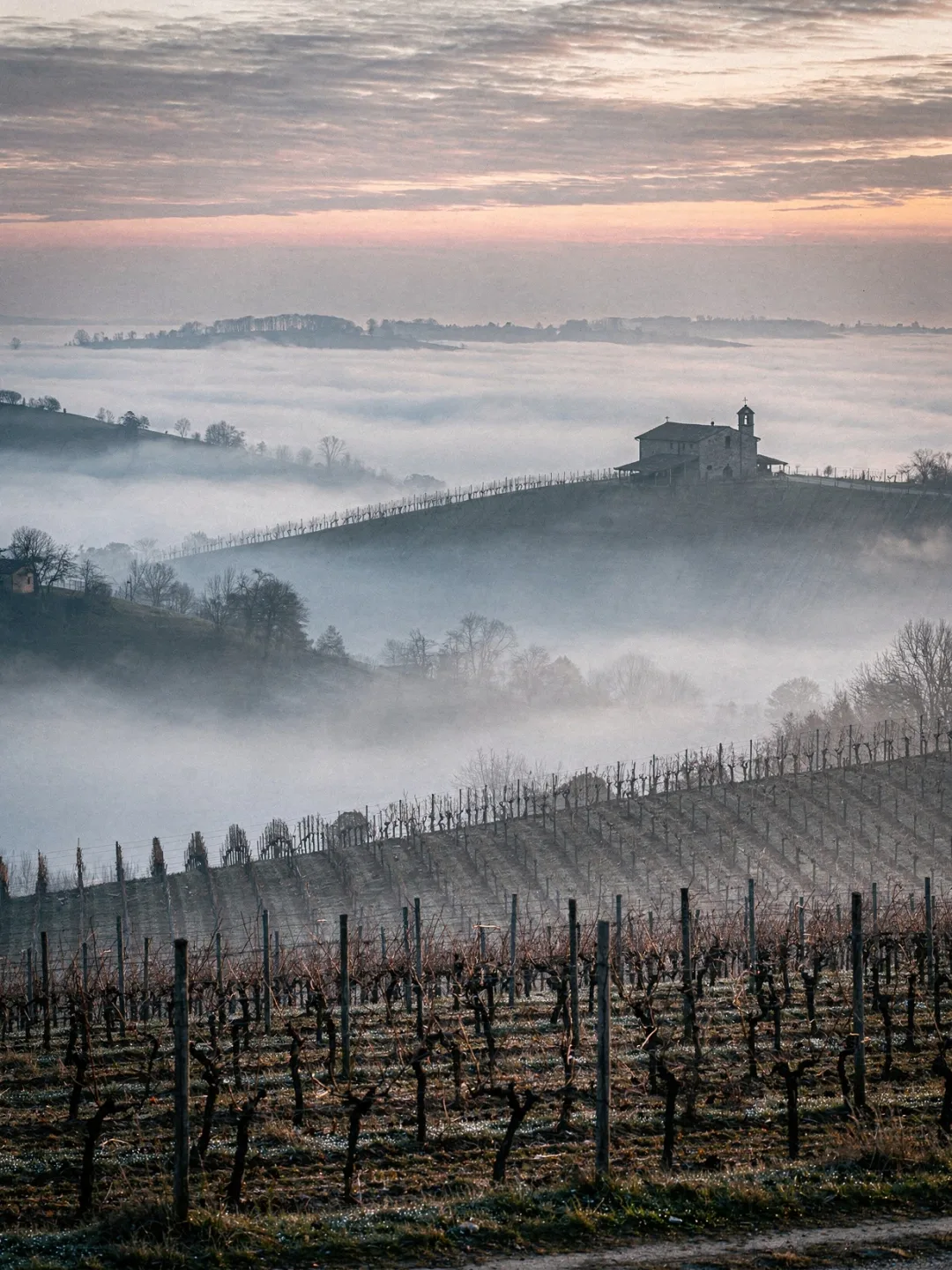
Alpine Shelter and Autumn Fog
Climate
The Alps to the north and west block cold air from France and Switzerland before it reaches the land. Through a narrow gap in the Tanaro Valley, mild, humid air flows in instead from the Ligurian Sea. The result is a moderately cool, sub-continental climate with clearly separated seasons — fitting for the name Piedmont, which literally means foot of the mountains.
In autumn, the region's most famous weather phenomenon appears. Fog rises from the river valleys and settles over the Langhe hills in the evening, sometimes for days on end, almost always right at Nebbiolo harvest time. That's enough to make a difference. Whether the grape's name really comes from this nebbia or from the whitish waxy bloom on the berries remains disputed to this day — both explanations fit remarkably well.
Within the Langhe, there are noticeable differences from village to village. Barolo itself lies sheltered and relatively mild, warmed by air from the valley. Barbaresco, closer to the river and narrow side valleys, gets more wind and less rain. Each village stays climatically distinct. Dogliani, further toward the Alps, is comparatively the coolest of the three zones. Taste these three wines side by side blind, and you'll almost always pick out these differences in terroir.
Also crucial is the difference between day and night temperatures in autumn. During the day, the sun ripens the grapes; at night, the hills cool quickly, and this coolness preserves the acidity that defines Nebbiolo so distinctly. Nights cool down reliably. Without them, the wine would taste flat, no matter how ripe the berries otherwise were.
Climate change is now shifting the clock here too. Where Nebbiolo was once often harvested as late as the end of October, picking in many places now begins as early as September, shortly after Barbera. Time is running out. Growers are responding with higher-altitude vineyards and more canopy shade over the grapes, so the acidity doesn't disappear too soon. The risk remains, though: Nebbiolo needs the longest ripening period of all, and the few remaining cool autumn weeks are growing scarcer.