Cherry, Strawberry, Tannin
Tasting
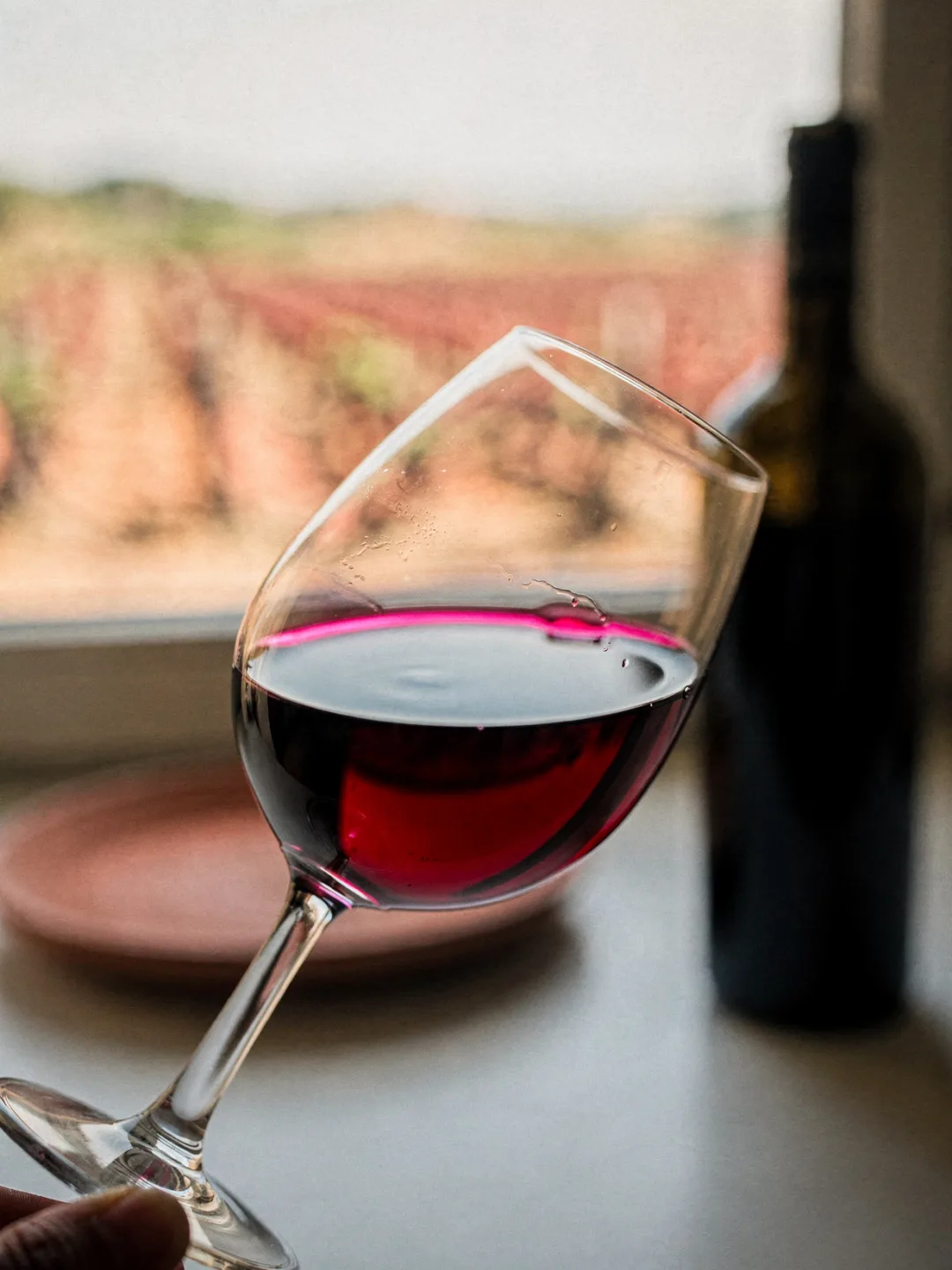
Take a Cerasuolo di Vittoria and hold it up to the light. The color recalls ripe cherries—hence the name, cerasuolo, "cherry-colored" in Sicilian—paler than a pure Nero d'Avola and more full-bodied than a pure Frappato. That very middle ground is where the wine's whole character lives.
Smell first, without swirling. From the Nero d'Avola comes dark fruit, blackberry and a touch of pepper; from the Frappato comes strawberry, cherry, and a hint of violet, noticeably brighter and more floral. After swirling, both sides merge into something third, belonging to neither variety alone.
On the palate, you immediately sense what the blend is designed to do. Nero d'Avola supplies structure and a firm yet round tannin that carries the wine; Frappato brings the acidity that keeps everything light and drinkable, even though the alcohol must reach at least twelve and a half percent by regulation. Without the Frappato, the wine would feel heavy. Without the Nero d'Avola, it would have no backbone.
The regulations leave little room here: fifty to seventy percent Nero d'Avola, the rest Frappato, nothing else. Winegrowers wanting more fruit push the ratio toward seventy percent; those seeking more freshness stay closer to fifty. You won't spot this difference on the label—only in the glass.
Finally, count the finish, as with any serious wine. With a simple Cerasuolo, the flavor might last eight to ten seconds. The Classico grade, sourced from the tighter historic area around Vittoria and required to age at least eighteen months, holds on noticeably longer. Many Sicilians consider this wine underrated as a result, even though it seems light at first glance.