Cellar, Barrel, Sun
Production
Hardly any island produces its wine in such varied ways as Sicily. On Etna, fermentation follows the same path as elsewhere—destemmed, crushed, aged on the skins. In the west and south, by contrast, methods are used that few people elsewhere in Italy still know.
An Etna Rosso typically ages in large, old barrels made of chestnut or oak. They contribute almost no flavor of their own, allowing only slow, gentle oxygen exchange. Anyone using new, small barrels quickly picks up vanilla and toasty notes in the glass—flavors that rarely suit the delicate fruit of Nerello Mascalese. Most serious producers on the volcano deliberately avoid them.
With Marsala, the real work begins only after fermentation. The base wine—usually Grillo, Catarratto, or Inzolia—is fortified with brandy to make it fit for transport. This technique was introduced by John Woodhouse in 1773, following the model of Port. The finest Marsalas then age in the so-called in perpetuum system: young wine is repeatedly blended with older wine, similar to the solera method in Jerez. In the end, a single barrel carries decades of maturity within it. For the Vergine grade, which must age this way for at least five years, additional sweetening is even forbidden.
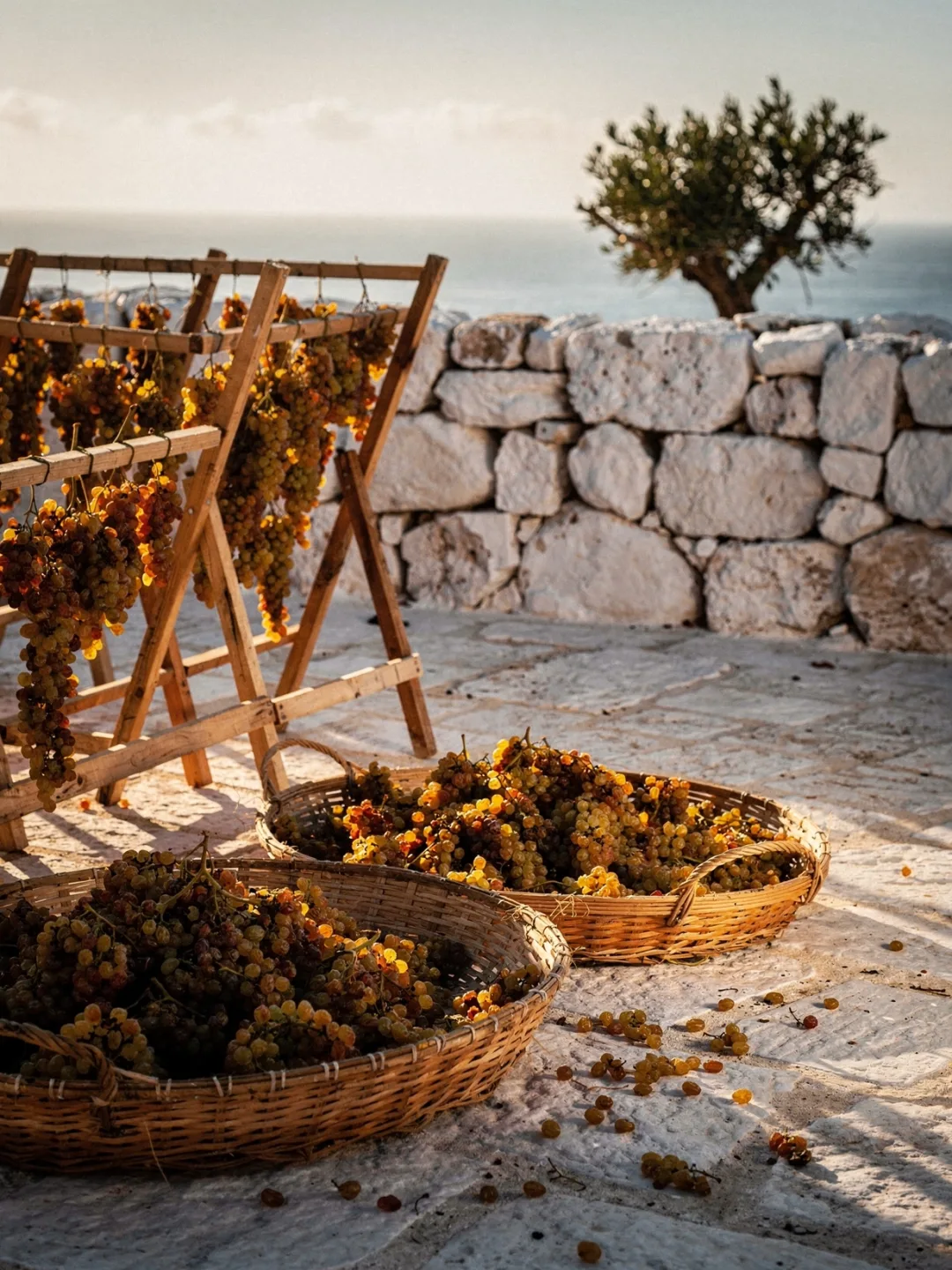
On Pantelleria, by contrast, the work begins right at harvest. Zibibbo grapes destined for Passito are hand-picked and then dried on wooden racks in sun and wind for three to four weeks. In the process, they lose water and their sugar becomes concentrated. Only then are they pressed. Fermentation proceeds slowly until the wine comes to a natural stop at around thirteen percent alcohol by volume—concentrated, but without any added spirit.
As different as these three paths look, they all follow the same idea. Wherever the island has poor soils, plenty of sun, and little rain, it concentrates the wine rather than diluting it—whether through the skins on Etna, the barrel in Marsala, or the sun on Pantelleria.