A Glass for Every Grape
Glasses
Three varieties define South Tyrol, and none of them suits the others' glass.
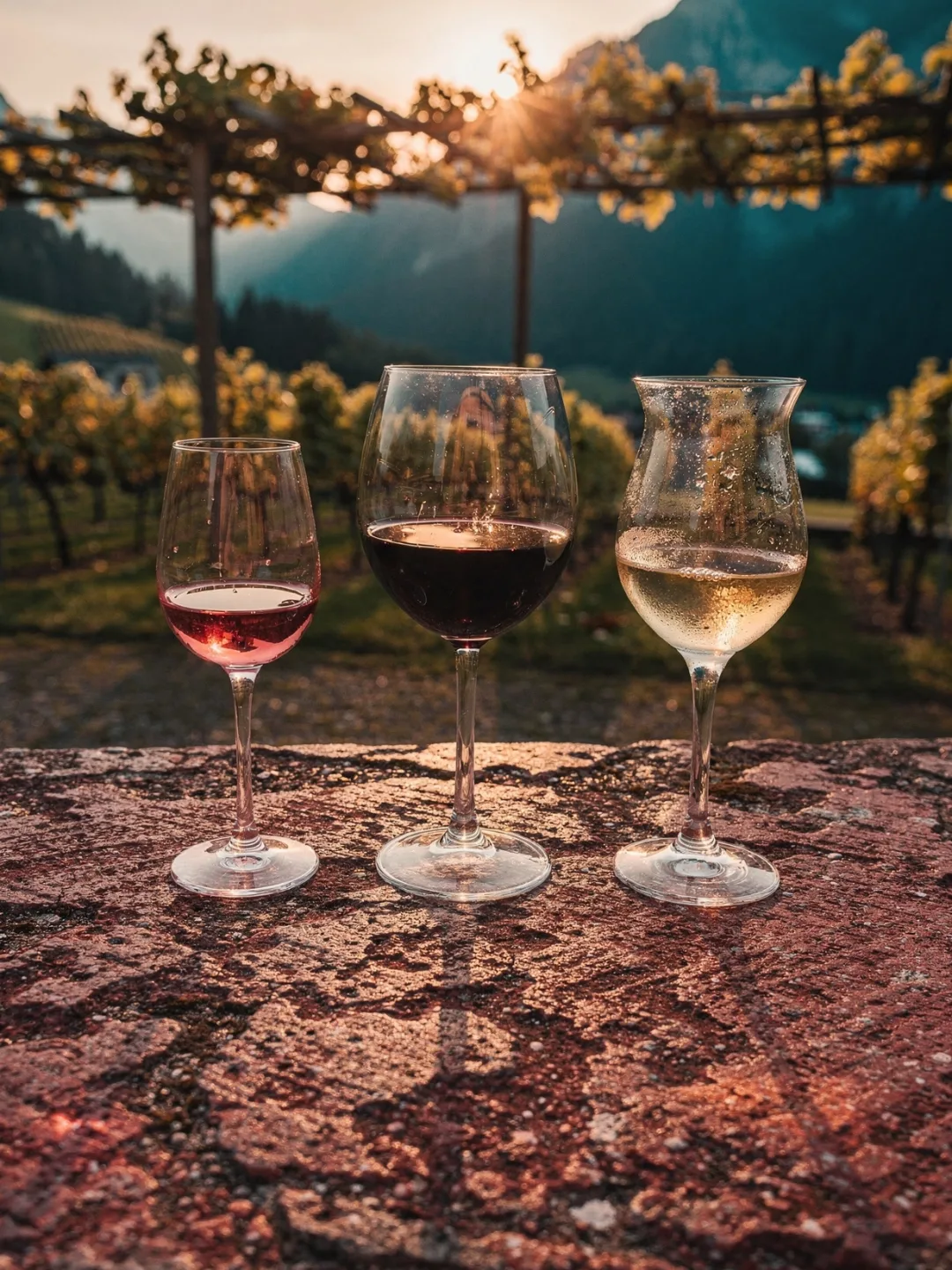
Vernatsch is pale, delicate, and low in tannin — tannin being the rough sensation on the gums that a robust red wine leaves behind, and this variety has barely any of it. A small, slender glass is entirely sufficient, served chilled at twelve to fourteen degrees Celsius, or the wine loses its freshness within minutes. A large, bulbous glass would only warm it up and dilute its delicate bitter almond note before it even had a chance to register.
With Lagrein, almost everything is reversed. It needs a wide, high-bowled glass that gives the dense wine room to breathe, along with a warmer serving temperature of sixteen to eighteen degrees Celsius, so the firm tannins can soften a little. An aged Lagrein Riserva benefits further from half an hour in a decanter, since its aromas, after years in barrique, can seem closed at first.
Gewürztraminer calls for yet another measure. Its rose and lychee scent is intense, and too wide a glass overwhelms it outright. A narrower, tulip-shaped glass concentrates the aroma without making it feel heavy-handed. It's served cool, around eight degrees Celsius, because at room temperature its low acidity quickly feels heavy, and the high alcohol crowds out the fruit.
Drink all three from the same glass, and all you taste is an interchangeable version of South Tyrol. These three shapes are the reason a good South Tyrolean table rarely gets by with just one style of glass.