Kretzer, Dunkel, Riserva
Production
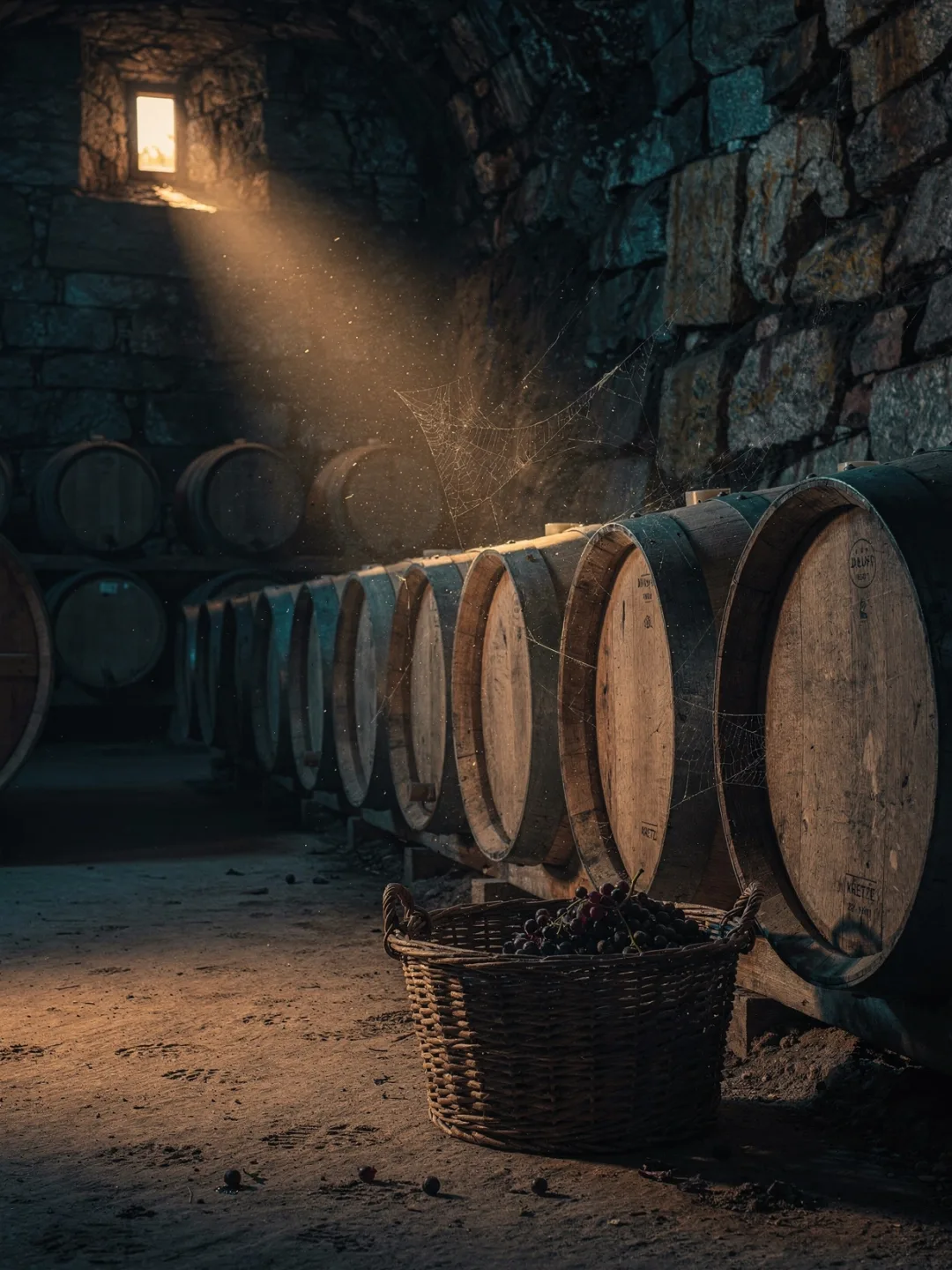
An old habit begins with Vernatsch already in the vineyard. Among the vines there are usually a few rows of Lagrein, around five percent. Up to fifteen percent is permitted, and both varieties are harvested and fermented together. This is how St. Magdalener comes to be, named after the hill of the same name above Bolzano — denser and warmer than pure Vernatsch. The must sits on the skins only briefly, since Vernatsch's thin skin releases its color quickly. In the old days, large old wooden barrels, botti, sufficed for the entire aging process.
Lagrein, by contrast, becomes wine by two different paths. If the grapes are pressed quickly, before the skin can release much color, the result is Kretzer, named after the Kretze, a willow basket once used to hold back skins and stems during pressing. What emerges is a pale, salmon-colored rosé with lively acidity. Leave the must on the skins for weeks, on the other hand, and you get dark Lagrein, deep in color and rich in tannin. As a Riserva, it typically ages for around two years, a good portion of that in small barrique barrels.
Gewürztraminer demands restraint above all in the cellar. Its aromas are volatile and heat-sensitive, so fermentation takes place cool, in steel tanks, with little skin contact and practically no wood. Any barrique would bury the rose and lychee scent under vanilla before it ever reached the glass.
In the vineyard itself, two training systems stand side by side. The old South Tyrolean pergola trains the vine two meters high into a flat canopy of leaves, worked from below — ideal for steep slopes, but labor-intensive and hard to mechanize. About half the vineyard area now instead carries Guyot, the wire-trained trellis system that lets more sun reach the grapes and allows for more concentrated wines.
In the Eisacktal, on the steep terraces to the north, harvest usually comes late, and fermentation likewise takes place cool in steel tanks, so that Sylvaner and Kerner retain their bright, mineral freshness. Two traditions thus run side by side in South Tyrol, the red one from the warm basin and the white one from the cool terraces, and neither dictates its style to the other.