Ora and Elevation
Climate
The Bolzano basin is the warmest and sunniest wine location in Italy. It counts around 2,200 hours of sunshine a year, more than anywhere else in the country. The reason lies in its position: the Alps shield the basin to the north, while mild air from the south flows in unhindered.
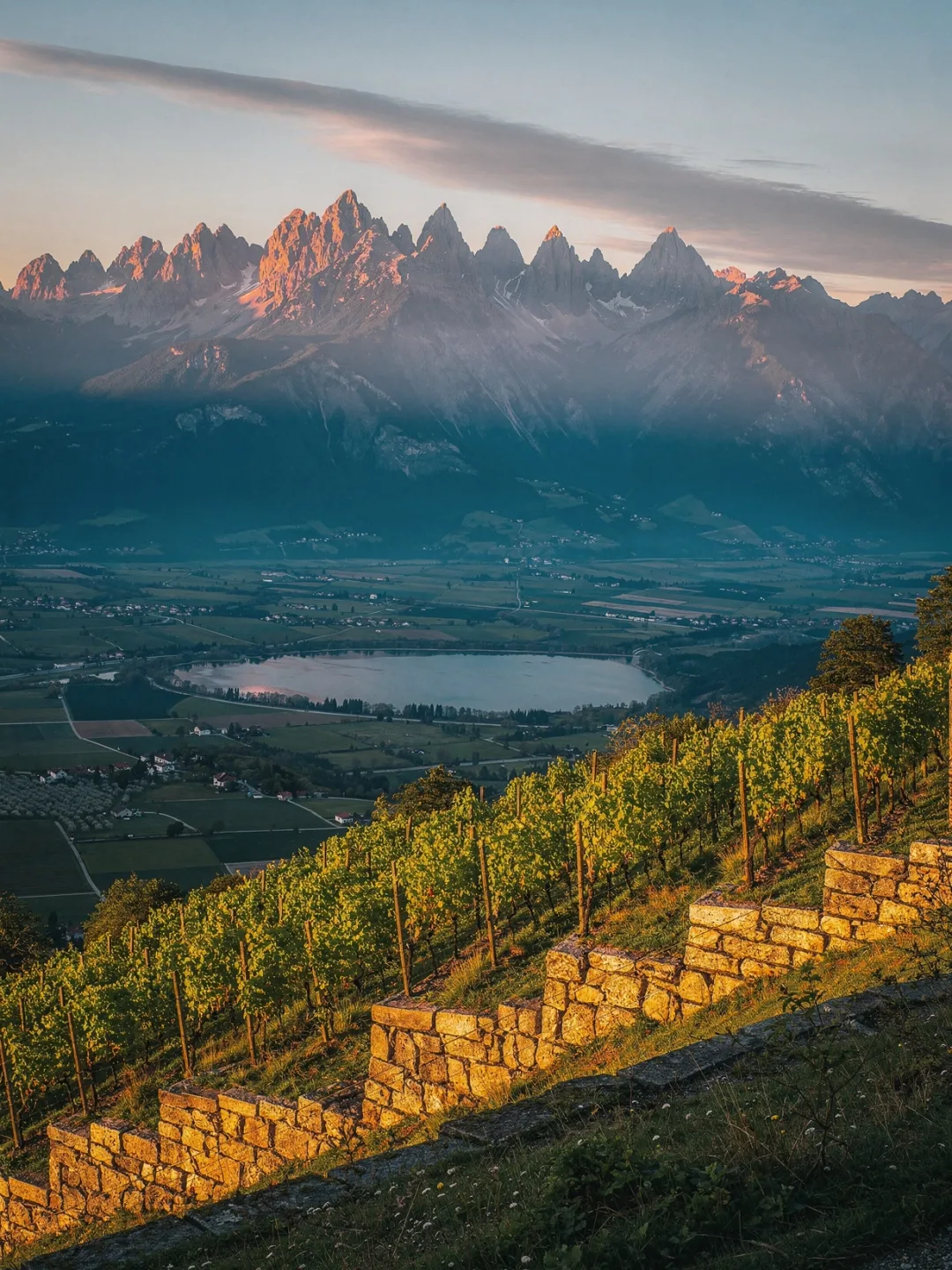
Climb out of the basin and the picture changes quickly. South Tyrol's vineyards are spread far apart, ranging from 200 meters in the Etschtal to over 1,000 meters on the terraces of the Eisacktal, and in between lies almost every climate a winemaker could wish for. In Kurtatsch, for instance, a single municipality spans from 220 to 900 meters in elevation — a difference of seven hundred meters within the tightest of spaces, hardly matched by any other wine region in Europe.
At midday the Ora arrives. The warm wind blows up the Etschtal from Lake Garda, because the air above the Alpine slopes heats up faster during the day than the air above the lake. The cooler air from the water then moves in to replace it. It usually begins around midday, reaches full strength in the afternoon, especially around Eppan and Kaltern, and eases off again afterward.
The Vinschgau in the west runs on an entirely different rhythm — the driest and smallest growing zone in the region. There, temperatures swing sharply between day and night, and that's exactly what Weißburgunder, Riesling, and Blauburgunder like. They need the cool nights. Only then do they retain their acidity, while the day brings them the ripeness they need.
The Eisacktal, in turn, is the northernmost wine-growing area in all of Italy — narrow, alpine, and noticeably cooler than the basin to the south, which is why harvest here often doesn't begin until late October, while down in Bolzano it's long since finished.