Shape Changes Everything
Glassware
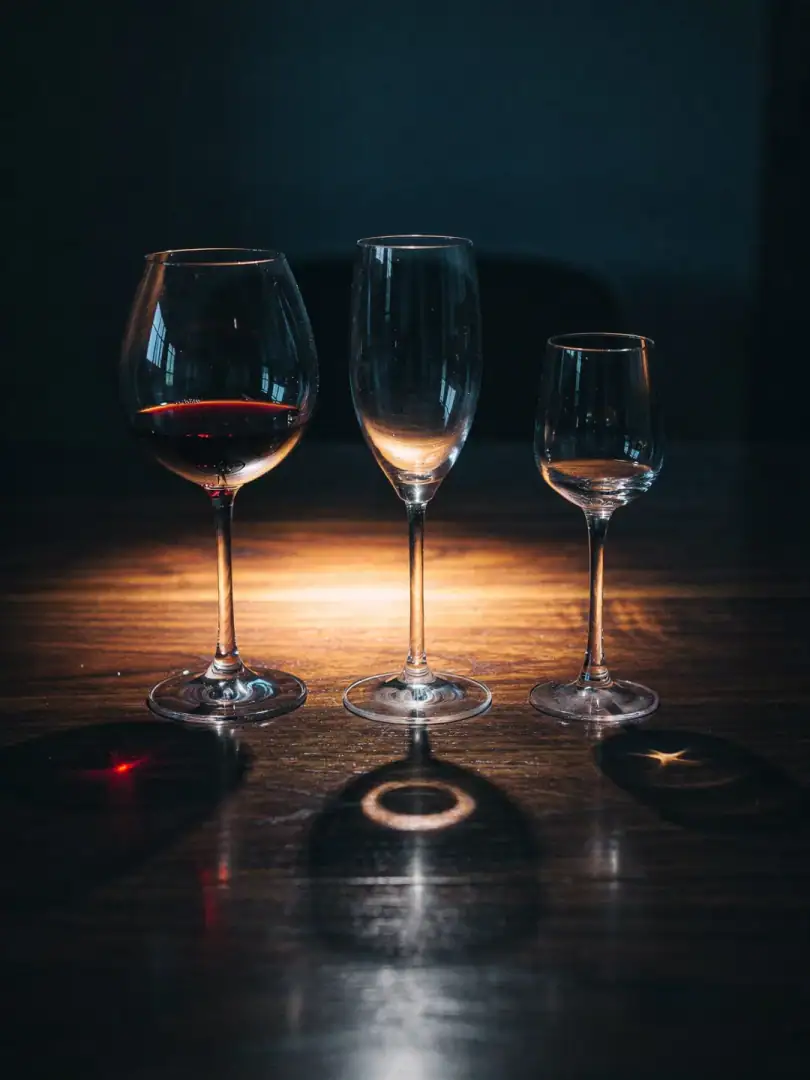
A glass isn't just a vessel — it's a tool. It determines how much wine comes into contact with air and where the aromas land — and with Sangiovese, the difference is more pronounced than with most other varieties.
The reason lies in the acidity. A wide, bulbous Burgundy glass, the kind used for Pinot Noir, spreads the wine across the tongue and makes the acidity stand out sharply. A glass that's too narrow, on the other hand, traps the aromas. For a Chianti Classico, something in between works best: a glass with a tall, slightly tapering bowl and a rim that narrows again. The bowl gives the wine room, while the narrow opening concentrates what rises up.
Temperature is where most mistakes happen. Sixteen to eighteen degrees Celsius (about 61–64°F) is right — not the oft-quoted “room temperature,” since rooms were around twenty degrees when that phrase was coined, and today they're closer to twenty-two. At twenty-two degrees, the same Chianti tastes of alcohol instead of sour cherry, and the tannin comes across as rougher. Twenty minutes in the fridge is enough to fix that.
A young Chianti Classico doesn't need a decanter. A ten-year-old Brunello does, for two reasons: it has sediment you don't want in the glass, and after so long in the bottle it's as shut as a closed shutter. Half an hour of air changes more than any amount of swirling.
Finally, the amount poured. A glass should be filled only to its widest point, never higher — for a standard red wine glass that's about one hundred fifty milliliters, which looks alarmingly little. What's left above is the space where the aromas gather. Fill it to the rim, and you take that away.