From Must to Wine
Winemaking
Red wine is made differently from white, and the difference is remarkably simple: the skins stay in. Color and tannin sit in the grape's skin, not in the juice. Press red grapes right away, and you get pale wine — that's exactly how rosé is made.
With Sangiovese, the time spent on the skins is a delicate decision. Two weeks extracts color and structure, four weeks pulls out additional tannin, which tastes harsh when young and turns fine with age. Wait too long, and you get a wine no one wants to drink in its youth. Press too early, and you get one that's tired after three years.
A Tuscan specialty is called governo all'uso toscano. Part of the harvest is dried on mats after picking and only added to the already-fermented wine weeks later. The sugar from these raisined grapes triggers a second fermentation that makes the wine softer and rounder. It used to be a defense against stuck fermentations in cold cellars; today a few estates still do it out of conviction.
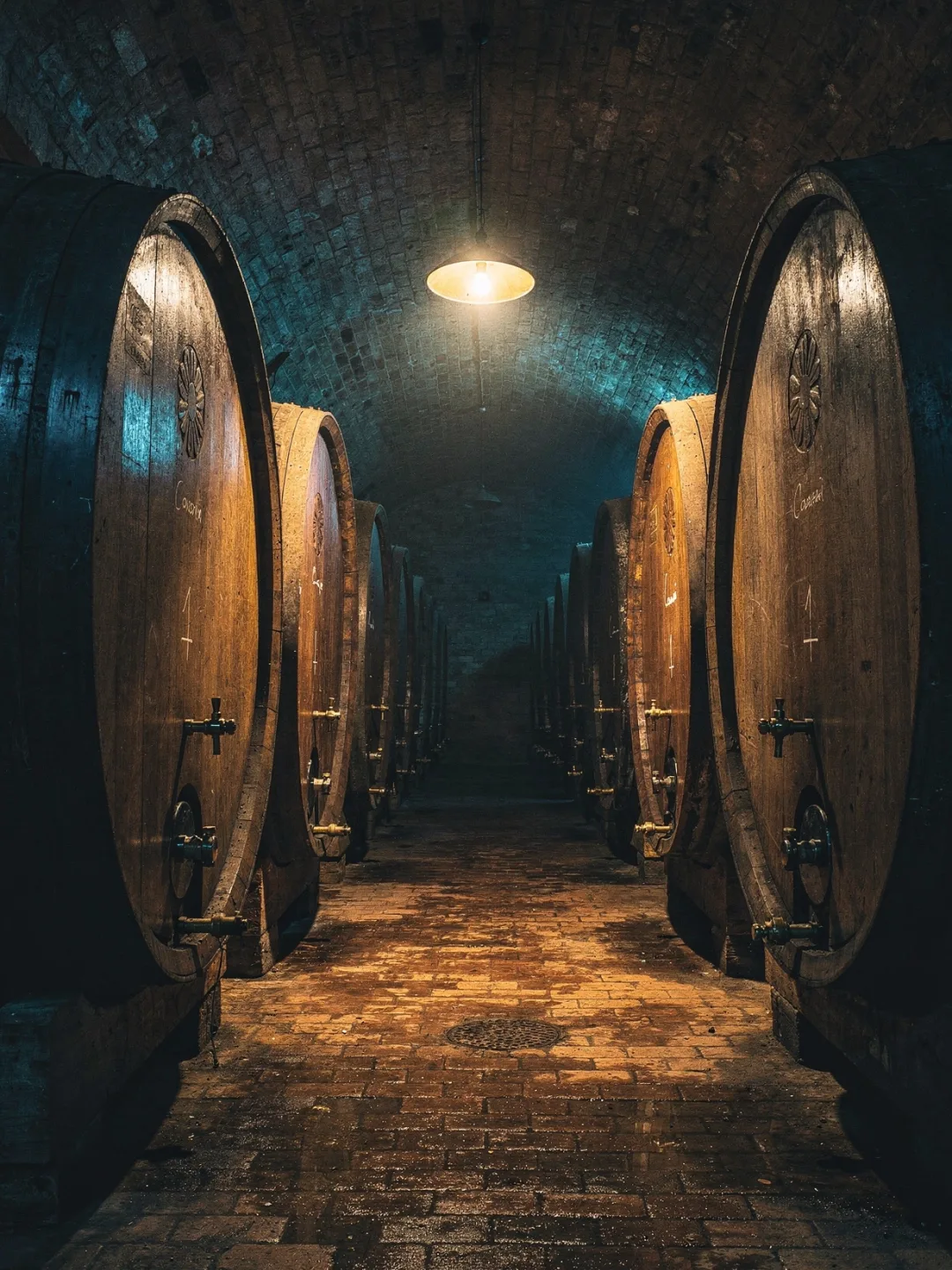
After that comes the wood, and here opinions diverge. Traditionally, Sangiovese ages in large barrels of Slavonian oak, called botti, which hold twenty to fifty hectoliters and impart almost no flavor — they simply let the wine breathe slowly. Since the 1980s, many estates have also used small new barriques of 225 liters. Their influence is unmistakable — vanilla and toasty notes — and whether that suits a variety built on cherry and herbs remains a point of debate to this day.
The regulations set minimum aging periods. A Chianti Classico may go on sale after one year, the Riserva after two, the Gran Selezione tier after two and a half. Brunello di Montalcino is Italy's strictest case: five years total, at least two of them in wood. A wine picked in 2020 can't be sold before 2026 at the earliest.