On a Chianti
Tasting
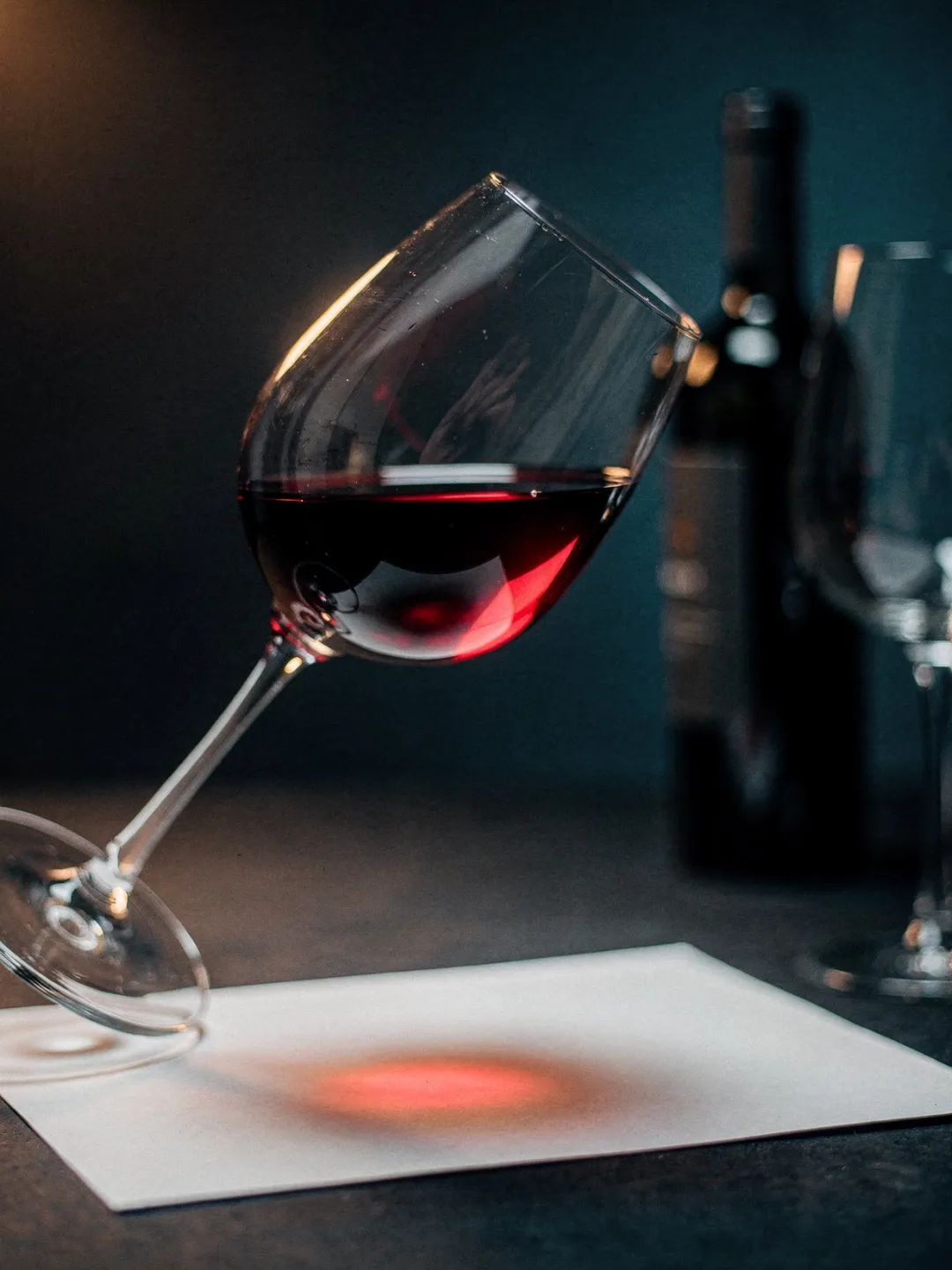
Take a Chianti Classico and tilt the glass over something white. At the rim, where the wine thins out, its age is written: a young one glows ruby red with a violet sheen, a ten-year-old shifts toward brick red. That Sangiovese is never as dark as a Cabernet isn't a flaw. It's just the variety.
Then smell it, twice. Once with the glass still, once after swirling — the difference between the two is half the information. In the still glass, fruit usually rises first, since the lightest molecules evaporate first, and only after swirling does everything heavier and slower to release come through: herbs, leather, tobacco.
With Sangiovese, there's one aroma that's almost always present and rarely expected: dried tomato, sometimes tomato leaf. Add to that sour cherry, not sweet cherry, and something balsamic in the background. Once you've had these three scents together in a glass, you'll recognize Sangiovese for the rest of your life. No label required.
On the palate, pay attention to two things separately. You feel the acidity along the sides of your tongue — it gets the saliva flowing and makes the wine feel alive. You feel the tannin as a rough coating on your gums — a sensation, not a flavor. A good Chianti has plenty of both, and both need to be carried by enough fruit, or the wine comes across as thin and edgy instead of taut and vibrant.
At the end, count. How long does the flavor linger after you swallow? Two seconds is short, twenty is a lot, and experts call this the finish. It's the one thing that can't be manufactured: a cellar master can add alcohol, sugar, and oak flavor, but not length. That's why it sits at the very bottom of every serious tasting sheet — and often ends up deciding the score.