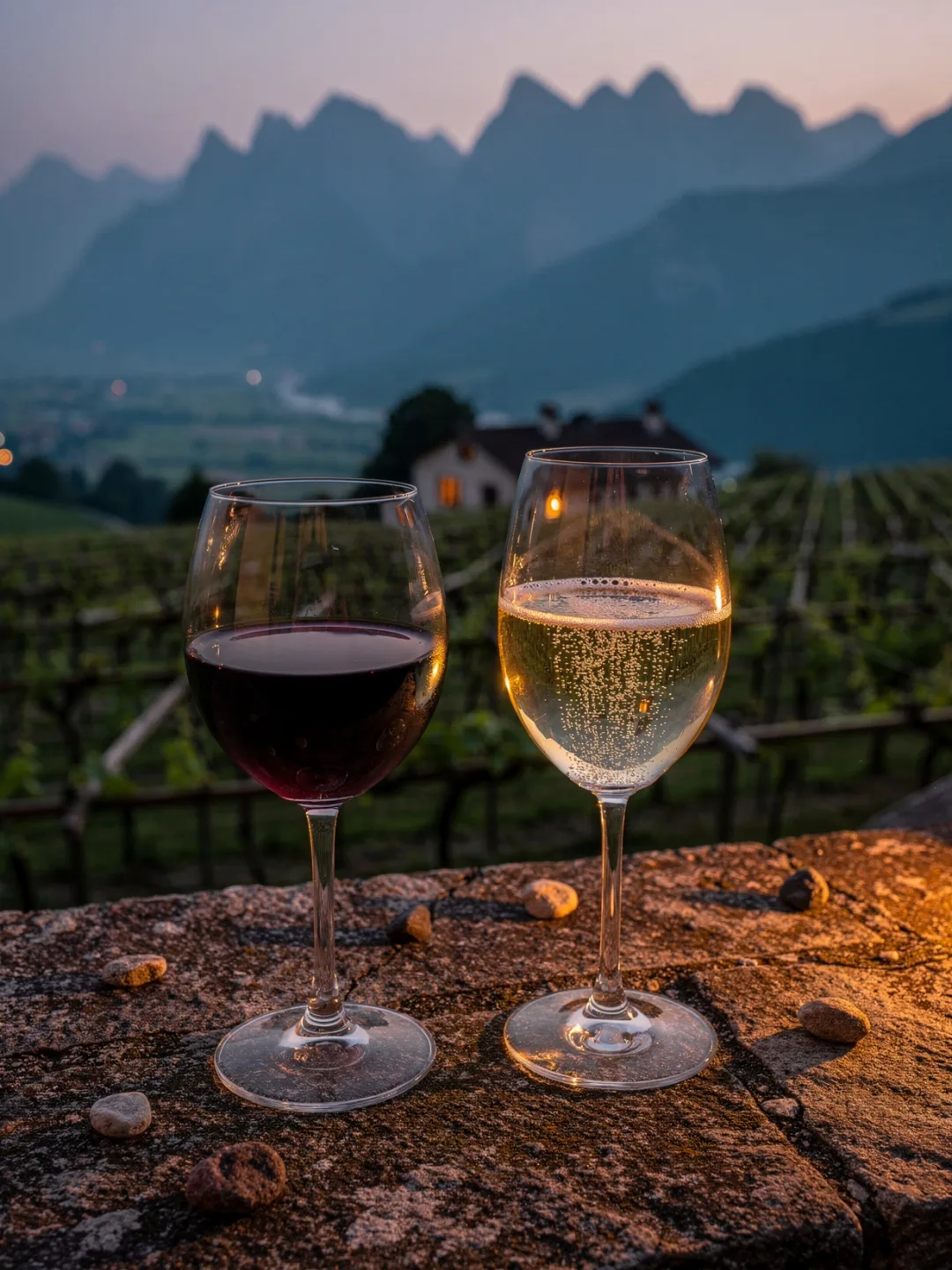
A Goblet, Not a Flute
Glassware
The glass determines how much of a wine truly comes through. In Trentino, there are two very different answers to this. Teroldego needs room: its firm acidity and powerful tannin quickly turn harsh and edgy in a narrow glass. A rounded goblet with a wide opening solves this. It lets enough air reach the wine so that blueberry and black pepper can unfold before the tannin even becomes noticeable.
For Trentodoc, almost the opposite of what many expect holds true. The narrow flute familiar from Prosecco or Champagne is the worst choice for this sparkling wine. The reason lies in its maturity. Due to extended lees aging, at least fifteen months, and up to thirty-six for Riserva, Trentodoc develops toasty, bread-like aromas that have little room to unfold in a narrow tube. The wine consortium itself recommends a wide, tulip-shaped glass, the kind usually used for white wine: more surface area, more aroma, at the cost of slightly less mousse.
The two wines also differ sharply in serving temperature. Trentodoc belongs on the cool side, six to eight degrees Celsius, straight from the fridge. Teroldego, on the other hand, doesn't handle cold well: below fourteen degrees, its tannin suddenly turns bitter rather than firm, and the dark fruit nearly vanishes. Sixteen to eighteen degrees, well below room temperature, is the right range.
Vino Santo needs the opposite of both: a small glass. The wine is so concentrated from the long drying of the grapes that just five centiliters is enough to reveal apricot, honey and roasted nut. A large goblet would only release alcohol fumes, not aroma. It's traditionally served in a narrow liqueur glass, cool, but never ice-cold.
A young Teroldego needs no decanter. A Riserva with eight or ten years of age, however, benefits from half an hour of air, since its initially closed bouquet opens up only gradually. Trentodoc, on the other hand, must never be decanted; every unnecessary movement costs carbonation that can't be recovered. It's poured only up to the widest point of the glass anyway, leaving room above for the aroma.