Pergola, Lees, Arele
Production
The Pergola Trentina is more than tradition, it's an answer to the climate. On the flat Campo Rotaliano, cool, damp air settles over the ground at night, ideal conditions for fungal disease. The overhead canopy lifts the grapes to head height and above, where more wind circulates and the leaves dry faster. The effort involved is enormous: every vine is tied and pruned by hand, and in autumn the grapes are harvested from below, with pickers working with their backs to the sun.
During fermentation, Teroldego typically spends ten to fourteen days on the skins, shorter than many red wines from Tuscany or Piedmont. The berry's thick skin releases plenty of color and tannin even in this short time. Longer maceration would only make the wine harder without adding more fruit. Afterward, it usually ages in large, old wooden casks that impart little flavor of their own, or increasingly in stainless steel tanks, to preserve the dark fruit as clearly as possible.
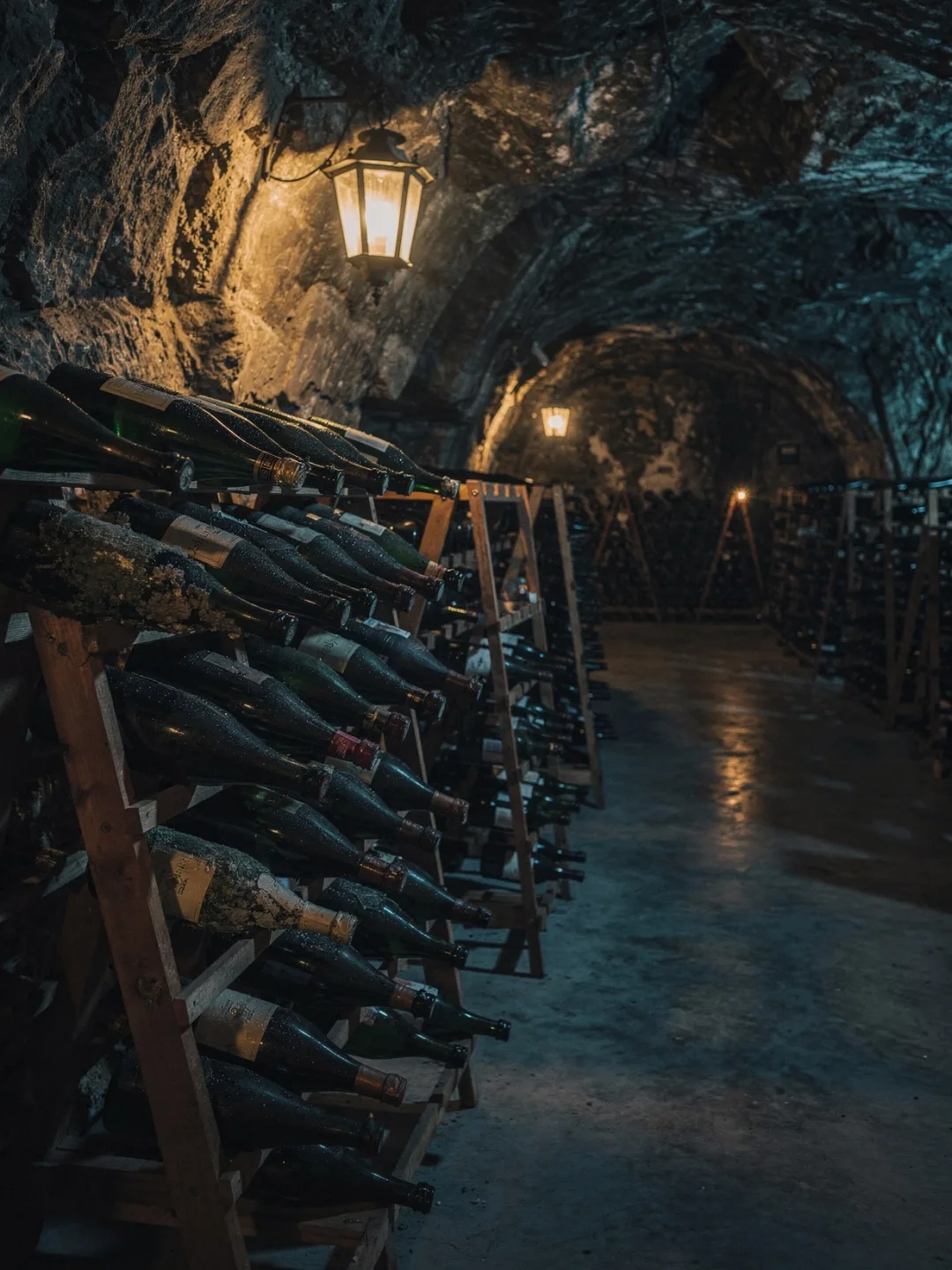
Trentodoc is made in an entirely different way. It follows the classic method, the same one used in Champagne. Chardonnay, Pinot Nero, Pinot Bianco and Pinot Meunier are first vinified into a still base wine, which is then bottled again with sugar and yeast to generate its own carbonation. The wine must then rest on the lees for at least fifteen months, twenty-four for vintage cuvées, and up to thirty-six for Riserva. Other methods, such as the faster tank fermentation process, are legally prohibited for Trento DOC.
At the end comes riddling. The bottles spend weeks upside down in racks until the lees collect in the neck. During disgorgement, this plug of sediment is frozen and shot out under pressure, a step that, in a matter of seconds, determines how clear the finished wine will look. Only afterward does the bottle receive its dosage, a small addition of wine with or without sugar that shapes the wine's final character.
The slowest wine in the region is Vino Santo. The Nosiola grapes are harvested late. They're then left to wither on wooden racks, the arele, in well-ventilated attics throughout the Valle dei Laghi, for up to six months. Only during Holy Week of the following year are they pressed, traditionally on Maundy Thursday, which gives the wine its name, Holy Wine. The resulting, highly concentrated must then ferments for years in small casks. Sometimes a single vintage spends a decade in the cellar before it's bottled.