Gravity in the Tuff
Winemaking
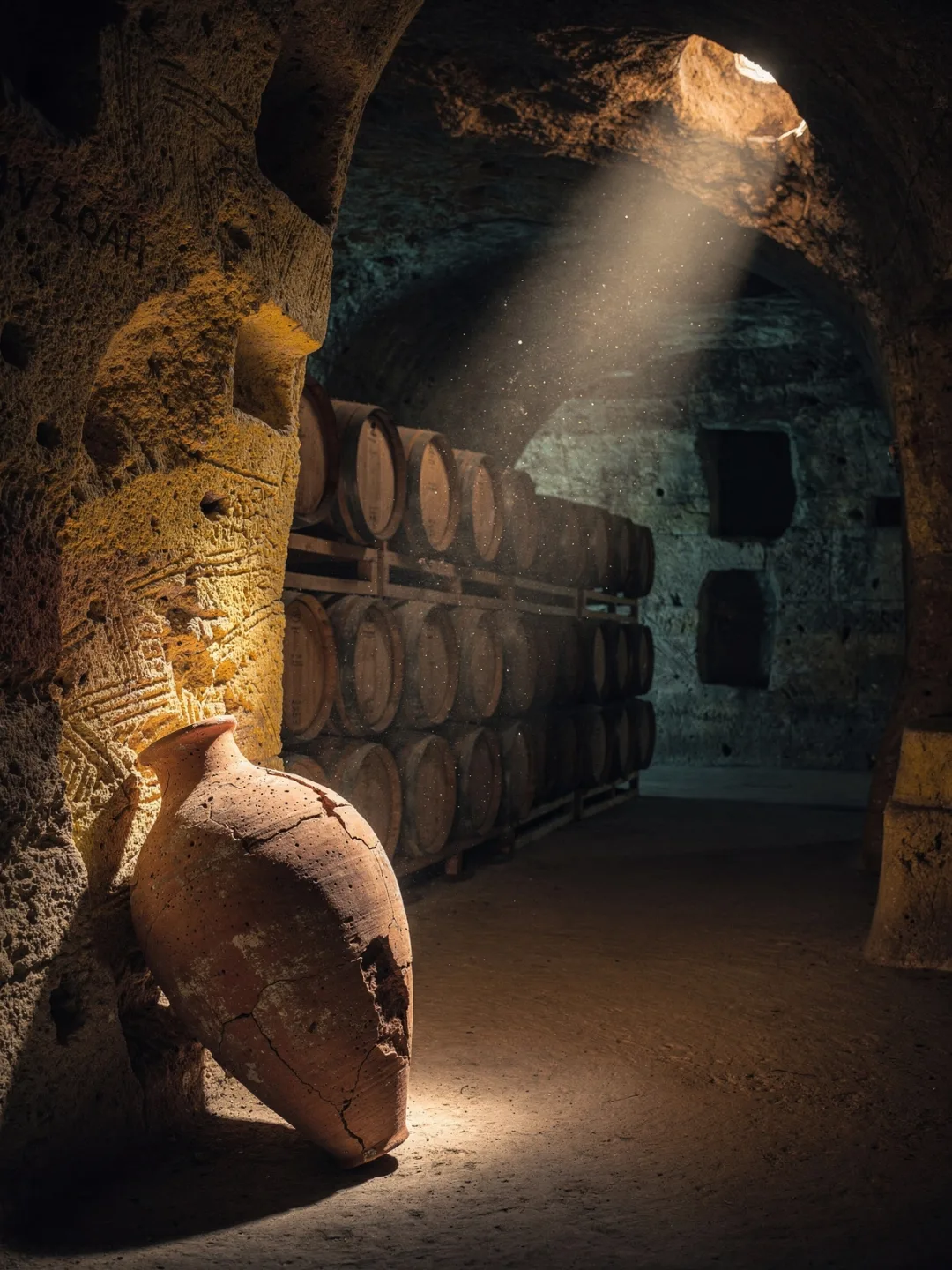
You can see how wine is actually made underground in Orvieto. The Etruscans built their cellars on three levels within the tuff. Up top, they pressed the grapes; must flowed down a level through clay pipes into fermentation vats; and below, the wine aged at a constant temperature. No pumps, just gravity.
Today, strict regulations dictate what happens in the Sagrantino cellar. A Montefalco Sagrantino DOCG secco must age a total of thirty-seven months, at least twelve of them in wooden barrels and a further four in bottle. The wine genuinely needs this long stretch: its enormous tannin is almost undrinkably hard when young and only softens over years.
Passito takes a different path. After harvest, the grapes dry for at least two months on wooden racks, losing water and concentrating sugar until the must reaches at least fourteen percent potential alcohol. Only then does fermentation begin on the skins, slowly and with plenty of tannin, which the sweet wine never loses despite its residual sugar.
Orvieto knows an entirely different kind of concentration: Muffa Nobile, named after the noble rot Botrytis cinerea, which thrives on damp autumn nights along the Tiber. It punctures the berry skin, water evaporates, and what remains is grape juice with at least sixteen percent natural alcohol. Most Orvieto, though, stays dry and is simply fermented in stainless steel to preserve the freshness of Grechetto and Procanico.
Torgiano shows just how differently Umbria ages its wines. A Torgiano Rosso Riserva DOCG must age at least three years, including at least six months in bottle, before it can be sold. This is Sangiovese country, not Sagrantino, and the wine turns out correspondingly gentler in the end. Two completely different wine philosophies, within the same small region.