Altitude instead of coastline
Climate
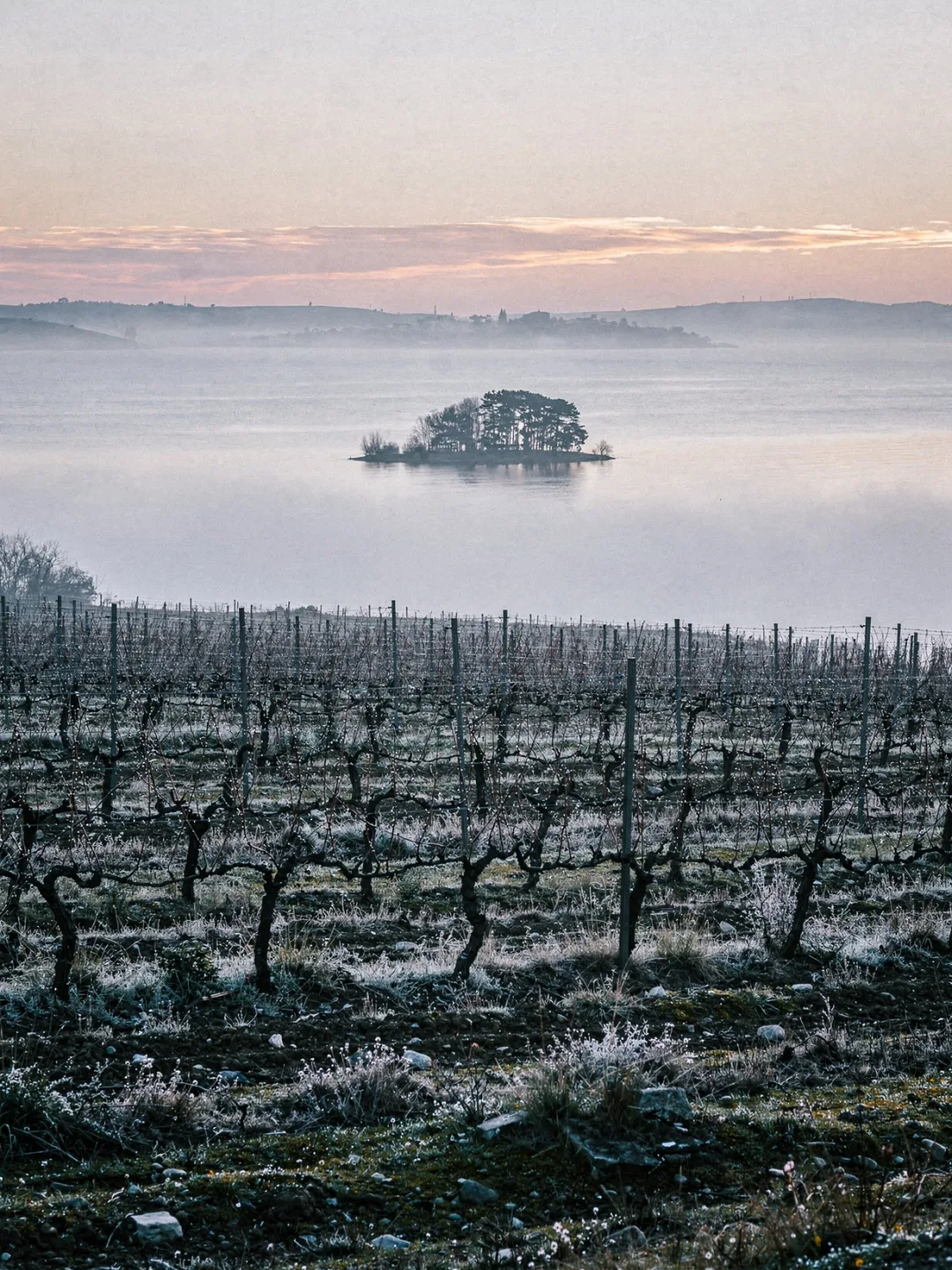
Umbria is the only region in central Italy without its own coastline, wedged inland between Tuscany, Marche, and Lazio. Yet water is hardly scarce: Lake Trasimeno covers roughly one hundred twenty-eight square kilometers, making it the largest lake on the Italian peninsula. Its proximity noticeably softens the climate of the surrounding vineyards.
Broadly, the climate is continental but strongly shaped by elevation. In the valleys, it feels almost Mediterranean. Climb only a little higher, and it turns rougher and colder. In summer, the thermometer easily hits forty degrees Celsius at lower elevations, while nights cool markedly, especially in the hills.
Montefalco itself sits at 472 meters and has borne the nickname ringhiera dell'Umbria, the balcony of Umbria, since 1568, because on clear days you can see from Perugia to Spoleto from there. This very altitude saves Sagrantino, whose thick skin would otherwise struggle to fully ripen without enough sun. Nights cool sharply here, preserving acidity.
Orvieto sits differently, on a tuff plateau between 280 and 325 meters that creates its own island of air. The rock stores warmth during the day and releases it at night, while the vineyards around it lie in the flatter plain and swing more widely in temperature. For Grechetto and Procanico, this milder setting is more than sufficient. They need less heat than Sagrantino.
At Lake Trasimeno, the lake itself acts as a buffer: winters stay mild, summers remain breezy, and the water's mass evens out temperature swings that would otherwise harm the vineyards. In the flatter areas around Perugia and in the Tiber valley, however, late spring frost in April is a more frequent threat. Winemakers therefore prefer planting on slopes, never in the valley floor.