Sagrantino & Grechetto
Grape Varieties
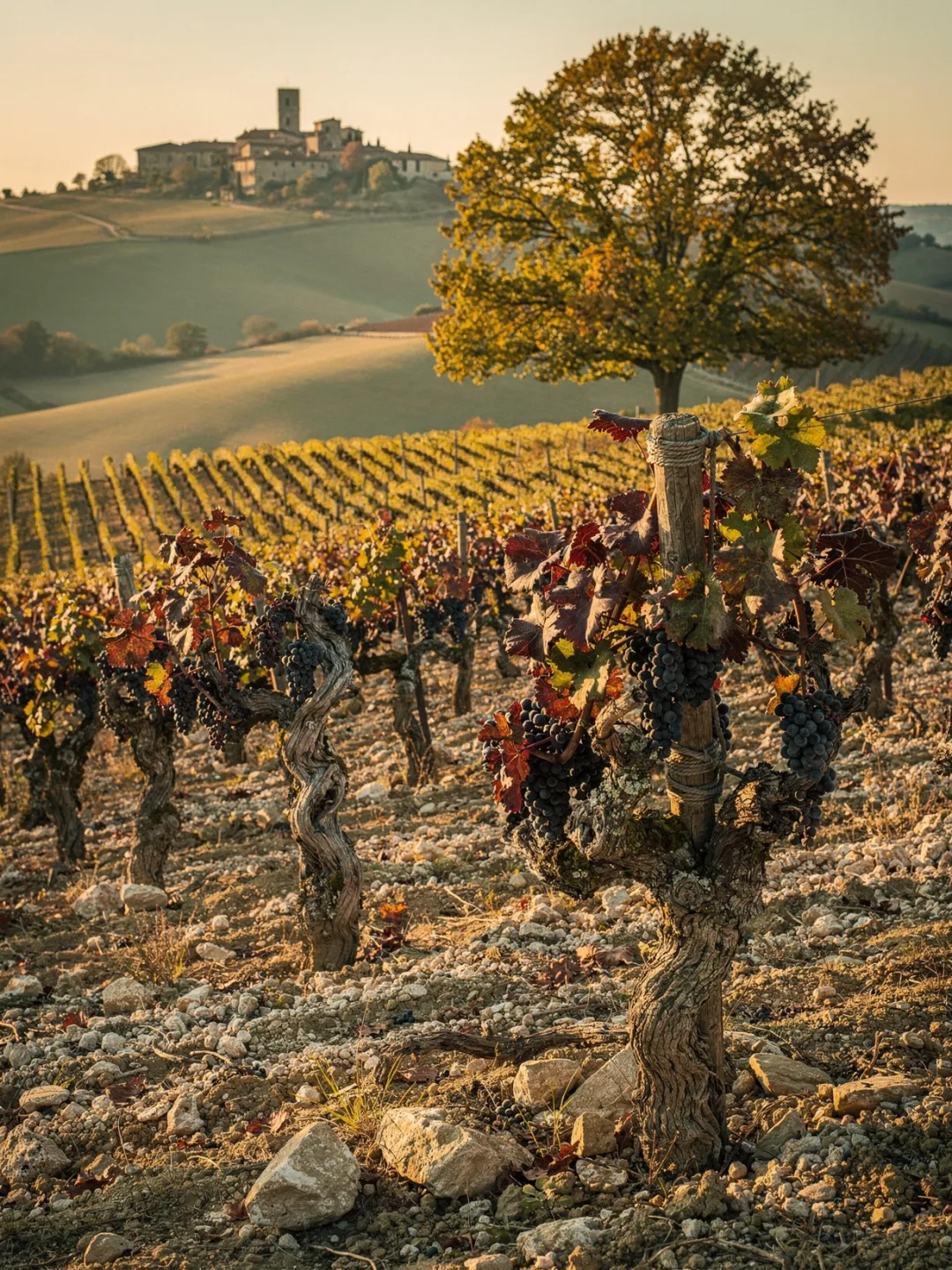
A single grape dominates Umbria's reputation far beyond its borders, and its name is Sagrantino. Its skin is unusually thick, packed with more tannin and polyphenols than any other known grape variety in the world, even surpassing France's Tannat, long considered the record holder. For Montefalco Sagrantino DOCG, the grape must make up one hundred percent of the wine in the glass, no blending allowed. Nothing purer exists. Young, the wine tastes correspondingly hard.
Alongside it stands Sangiovese, the same grape as in Tuscany, but here playing a new role as blending partner. Montefalco Rosso requires sixty to eighty percent Sangiovese and ten to twenty-five percent Sagrantino, with the remainder filled by other red varieties at the winemaker's discretion. Since the disciplinare's latest revision in July 2023, this blend has more flexibility than before. Sangiovese supplies the acidity, Sagrantino the power.
Among white varieties, Grechetto reigns, really more of a family of similar vines. Ampelographers distinguish two main types: Grechetto di Orvieto and the more robust Grechetto di Todi, also called Gentile, with notes of cedar and ripe citrus. Both bring freshness and floral aromatics to the glass. Other white varieties tend to taste flat in the summer heat.
Orvieto's main grape carries two names. Internationally it's known as Trebbiano Toscano, but here it's called Procanico, and together with Grechetto it must make up at least sixty percent of the Orvieto DOC blend. A third, often overlooked variety is Trebbiano Spoletino, which shares little more than its name with the other two. Traditionally, it was trained up maple or elm trees, growing three meters above the ground. The Etruscans invented this training system, and only in the last fifteen years or so have a few winemakers begun reviving it.
By Lake Trasimeno grows a red grape whose name tradition traces to a Spanish wedding: Fulvio Alessandro della Corgna is said to have brought it to the lake with his wife, Eleonora de Mendoza, from Spain. Because it was trained as a bush vine like French Gamay, it took on that name too, a complete misnomer. DNA analysis has since revealed something else entirely: genetically it's identical to Grenache, the same grape Sardinia calls Cannonau. The consortium is now working on a new name.