Corvina & Glera
Grape Varieties
No single name dominates the Veneto the way Sangiovese does Tuscany. Instead, two traditions share the land: red grapes for dense, often dried wines around Verona, and white grapes for Italy's by far most-planted sparkling wine further east. The two worlds lie less than a hundred kilometers apart. Yet they taste as if they came from different continents.
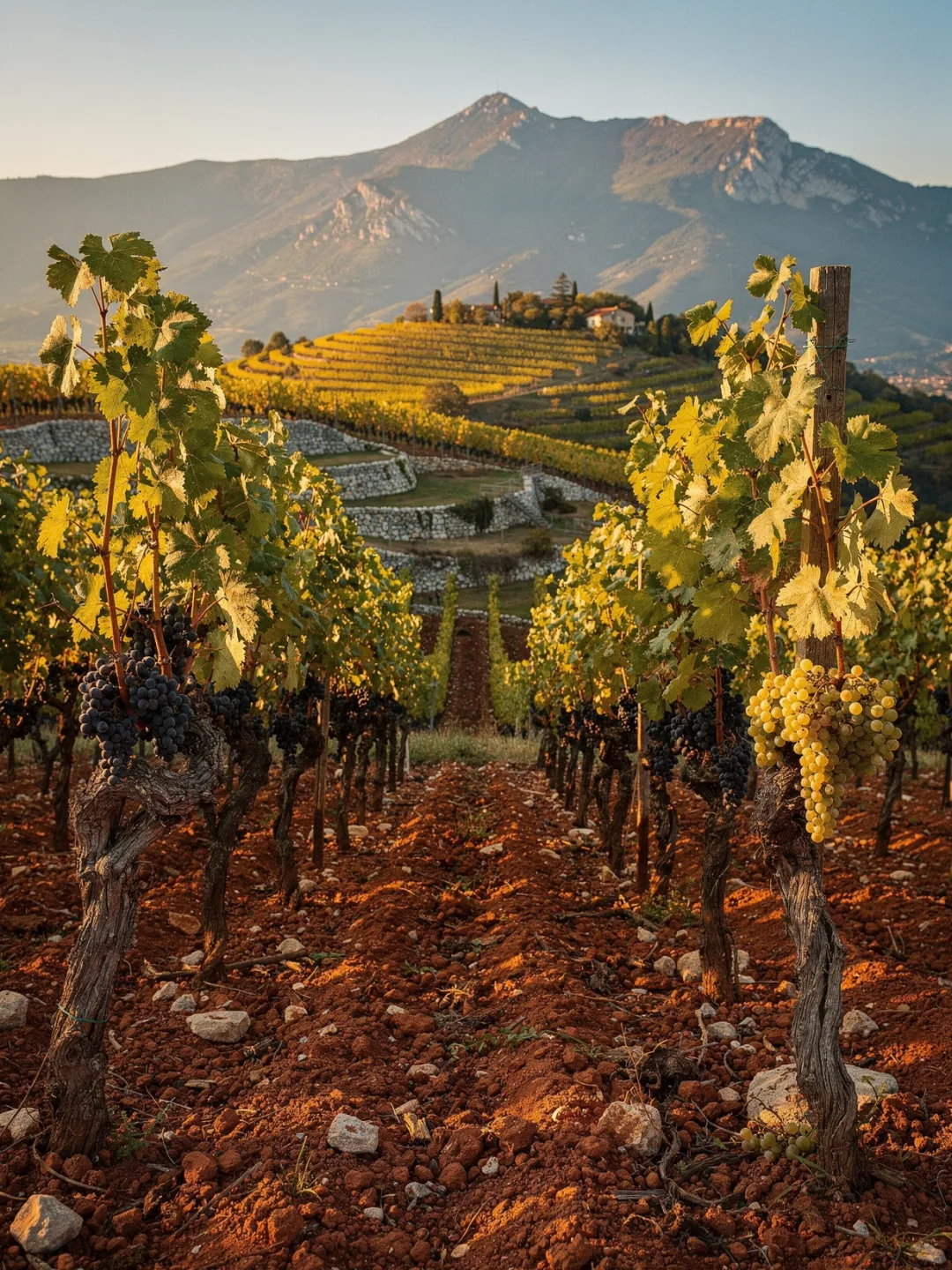
At the heart of the Valpolicella stands Corvina Veronese. Its berry is small, its skin thick and tough — exactly what's needed for a grape meant to dry for weeks on wooden racks without rotting. Its aroma of sour cherry and bitter almond survives even the drying process. Since a rule change, up to half of it may be replaced by the related Corvinone. It has looser, larger bunches and a similar aroma, but greater resistance to rot.
Rondinella provides color and volume where Corvina would be too temperamental. It dries more evenly, brings less acidity, and rounds out the finished Amarone. Nearly vanished, meanwhile, is Molinara, once the third partner in classic Bardolino: pale, tart, thin-skinned — qualities few blenders seek out anymore when working with the other two.
Fifty kilometers to the northeast, the picture looks completely different. There, Glera alone accounts for roughly forty percent of the entire Venetian vineyard area, more than any other variety in all of Italy. It ripens early while retaining plenty of acidity, but with little aroma of its own. That's exactly what suits a process in which the second fermentation takes place in a steel tank, so the wine draws its fragrance mainly from the fruit itself.
Then there's Garganega, the ancient white variety of the hills around Soave. It ripens late, often not until October, and carries heavy bunches with a thick waxy coating that protects them from rot. In the glass, it shows almond, chamomile, and a fine, saline bitterness on the finish — a legacy of the volcanic soil it almost exclusively grows on.