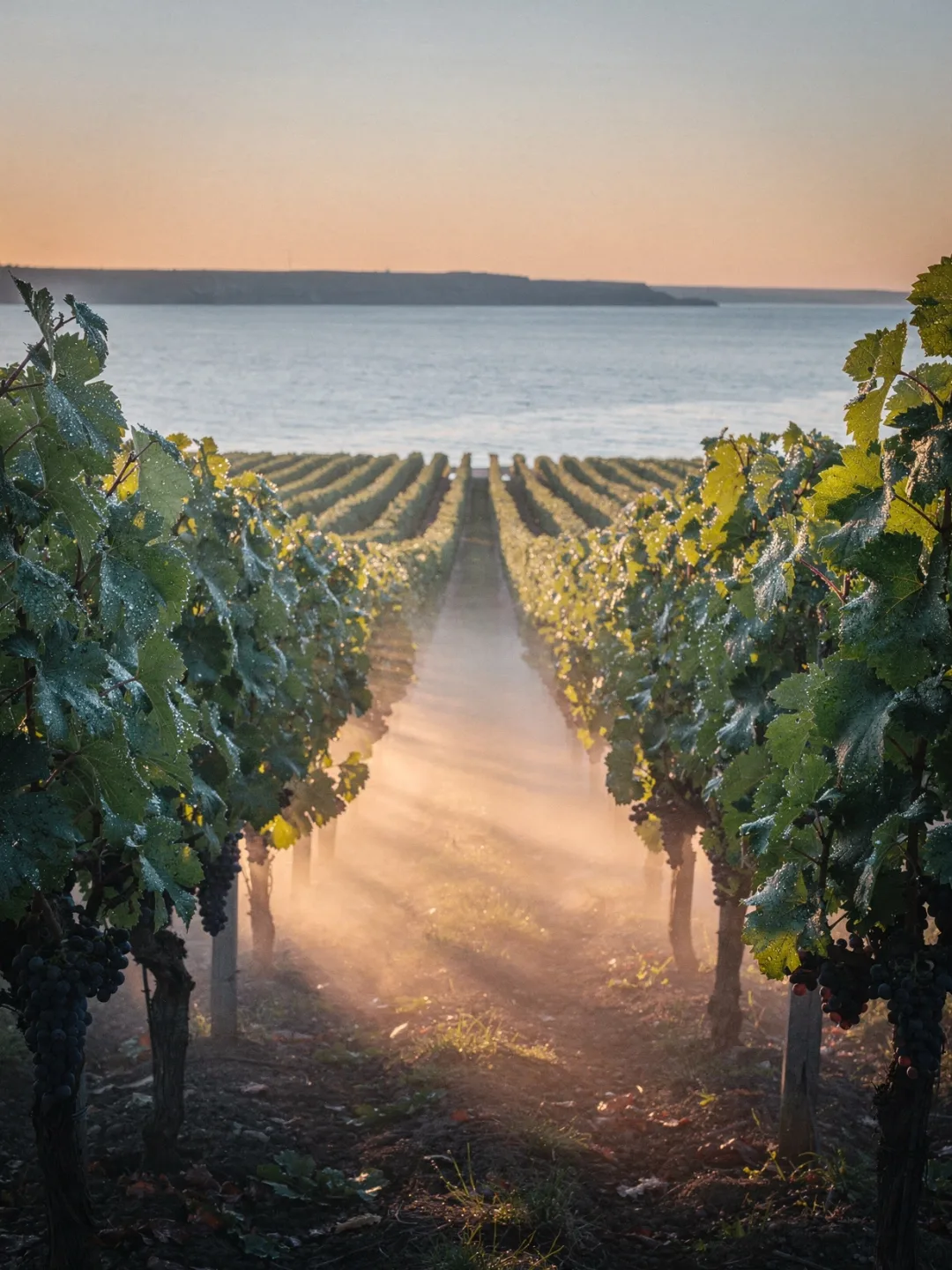
Lake Ontario cools
Climate
Without Lake Ontario, there would be no viticulture of significance here. The region sits at the same latitude as some vineyards in southern France. Yet the climate is entirely different — continental, with cold winters and hot but short summers. A narrow strip between the escarpment and the lake nonetheless makes this one of Canada's most reliable wine regions.
The lake acts like a giant heat reservoir. In spring, its water is still cold from winter. The breeze above it slows the warming on land, and the buds break later than air temperature alone would suggest. That's precisely when the risk of late frosts would otherwise be greatest. In autumn, the effect reverses. The water has stored warmth over the summer and now releases it slowly, allowing the vines to ripen weeks longer than just a few kilometers inland.
The Niagara Escarpment performs a second, independent service. Cold air is heavier than warm air and, on clear nights, sinks down the slopes, away from the vineyards that lie on the so-called benches below the steep edge. This is called cold-air drainage. It lowers the frost risk exactly where the best grapes grow: on the Beamsville Bench and the Twenty Mile Bench, the best-known of these terraces. Anyone planting in the valley below, however, risks frost on a night that passes completely harmlessly on the bench above.
The combination of lake and escarpment pays off at the end of the season. Fully ripe Riesling and Chardonnay grapes stand on the bench in September. Even after that, enough mild weather remains for Vidal grapes, which are deliberately left on the vine well into December. Cool nights hold the acidity in place, while mild days build up the sugar — an interplay without which neither a crisp Riesling nor a sweet ice wine would be possible.