Franc & Vidal
Grape Varieties
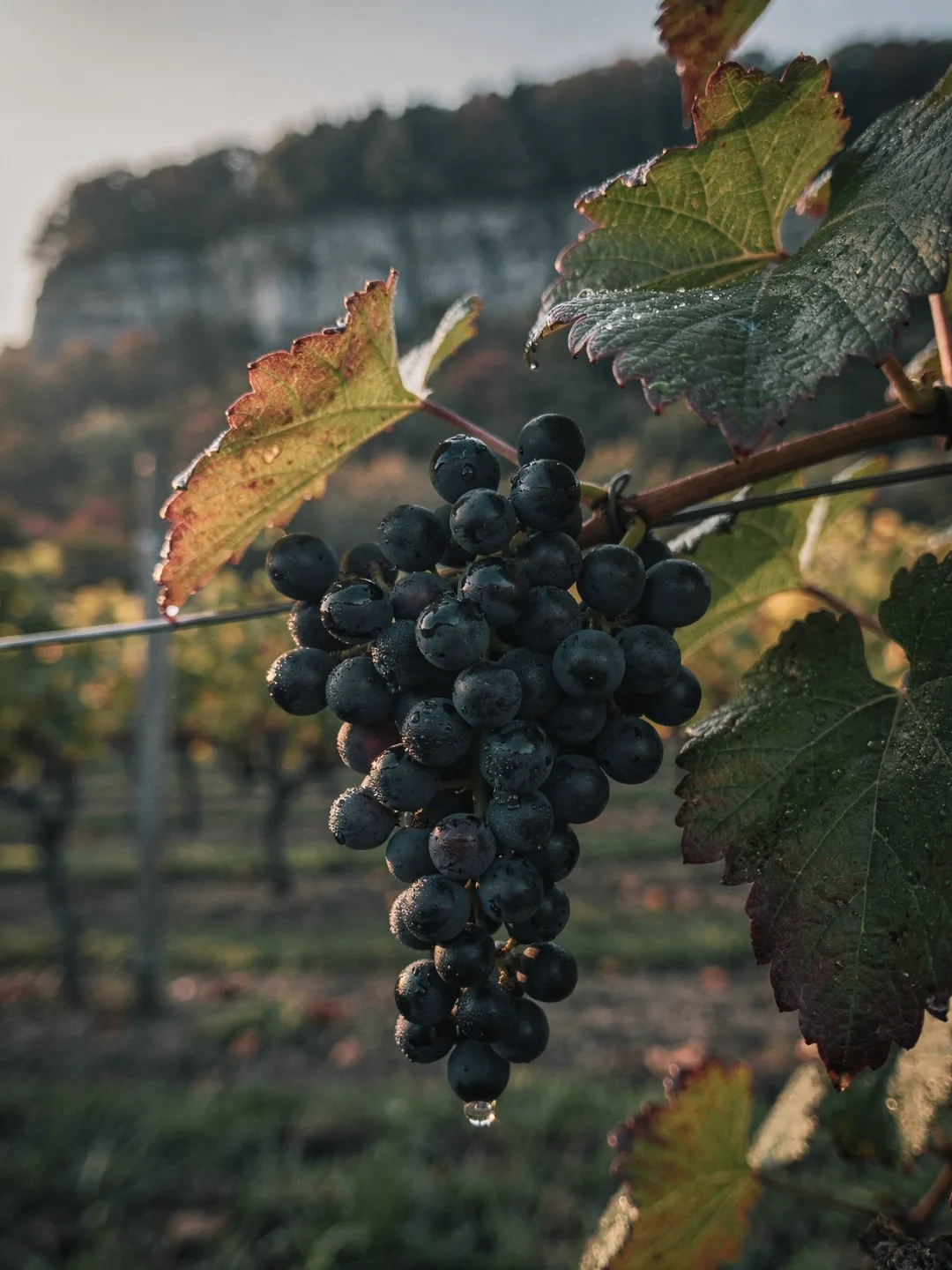
A grape variety with a French name and a Canadian home tops the statistics. Cabernet Franc now covers more acreage than any other red variety in Ontario, nearly eleven percent of the province's total vineyard area, well ahead of Merlot at seven percent and Cabernet Sauvignon at just under seven percent. In Bordeaux, it usually plays a supporting role in blends. In Niagara, it stands alone in the spotlight.
The reason lies in its physiology. Cabernet Franc has a thinner skin than its more famous relative Cabernet Sauvignon and ripens one to two weeks earlier. That's a decisive advantage when the first frost can already threaten in early October. In the glass, it shows notes of blackcurrant, bell pepper, and sometimes freshly cut grass, along with a finer, softer tannin than many expect. Tannin is the rough, furry sensation in the mouth familiar from black tea.
Among the white varieties, the ranking looks different. Riesling and Chardonnay carry the region's reputation as white wine country. They grow on the cool benches of the escarpment and show plenty of fruit alongside plenty of acidity. In terms of volume, though, a third variety surpasses them: Vidal, a cross between an American and a French vine that serves mainly one purpose. Nearly the entire ice wine production of the province relies on it, because its thick skin withstands frost better than thinner-skinned varieties.
A fourth variety recalls the beginning. Gamay was already among Inniskillin's first thirteen hectares in 1975, though today it plays a minor role. More significant instead has become Pinot Noir, especially on the Twenty Mile Bench. There, together with Chardonnay, it goes into traditional method sparkling wines, made the same way as Champagne — only with grapes from the escarpment instead of Champagne.