A Wide Bowl Against the Alcohol
Glassware
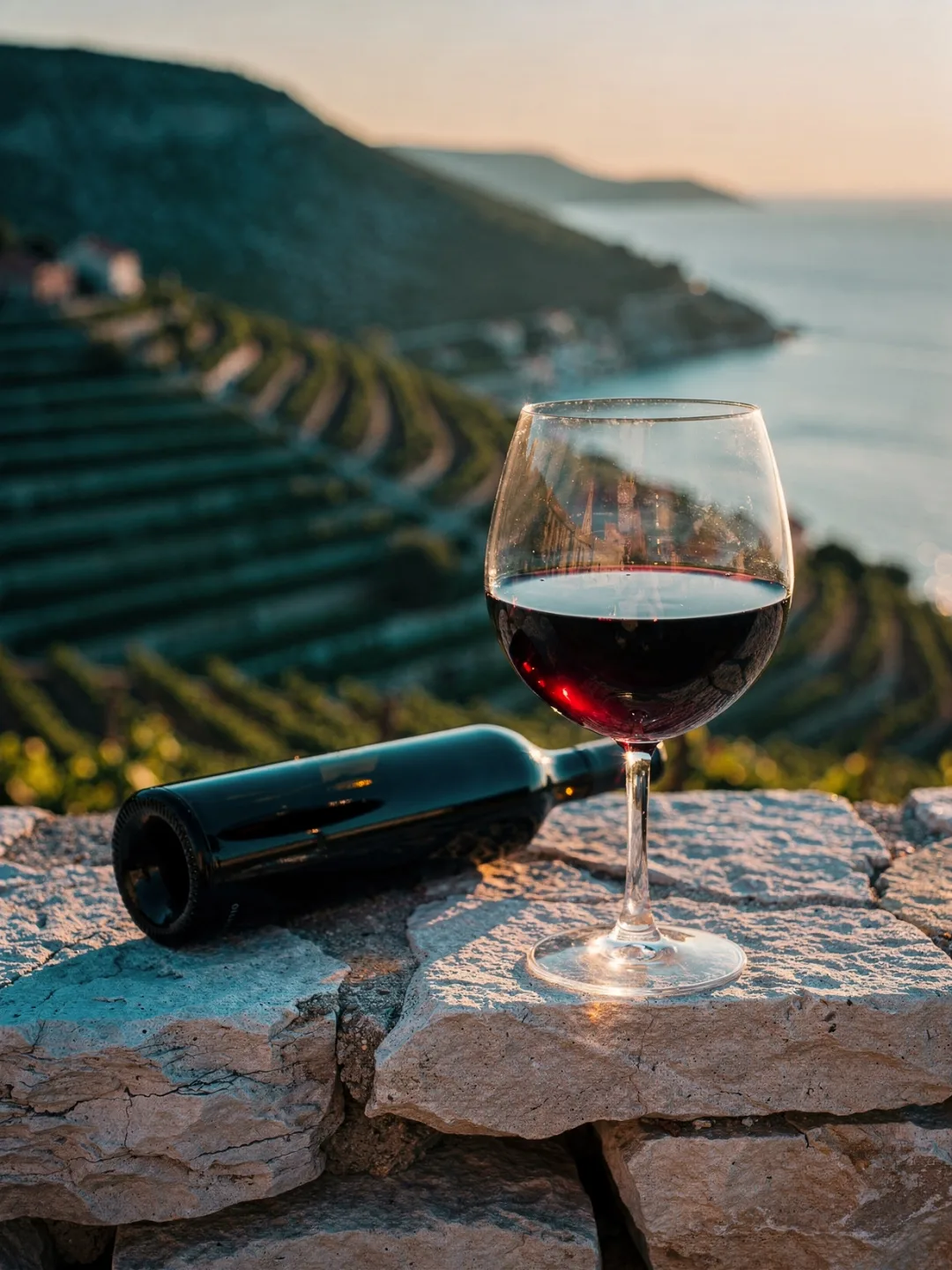
A glass plays its own part in how much of Plavac Mali's high alcohol you actually taste. A wide, tall bowl gives the wine surface area for the alcohol to evaporate off. The rim narrows again, holding the heavier aromas together above: carob, dried fig, dark cherry.
Temperature is where most people go wrong. A Dingač feels so powerful that the instinct is to serve it warmer. The opposite is actually true: sixteen to seventeen degrees Celsius is plenty, on the lower end for a red wine, since anything above eighteen degrees pushes the alcohol ahead of the fruit.
Young, a Dingač often still tastes closed off. Its tannin stands like a plank in front of the fruit. An hour in the decanter noticeably loosens that, far more than simply swirling the glass ever could, because the large surface area lets the wine truly breathe.
For Pošip from Korčula, almost the opposite holds: a narrower glass, a cooler temperature. Ten to twelve degrees preserves the delicate citrus notes that would otherwise fade away in warmth. That's colder than most white wines get, because Pošip is naturally already rich and full-bodied enough.
For the pour, the same old rule applies to both wines. Fill only to the widest point of the glass, no higher, so there's still enough room above the wine for the aroma to gather instead of escaping right away.