Uneven Ripeness
Winemaking
Plavac Mali makes life hard for winemakers well before the first drop of must ever flows. Within the same cluster, ripe berries hang next to half-dried raisins and sometimes even still-green grapes. Pick everything at once, and you mix three stages of ripeness into one vat. Experienced producers therefore harvest by hand in several passes, sometimes two weeks apart.
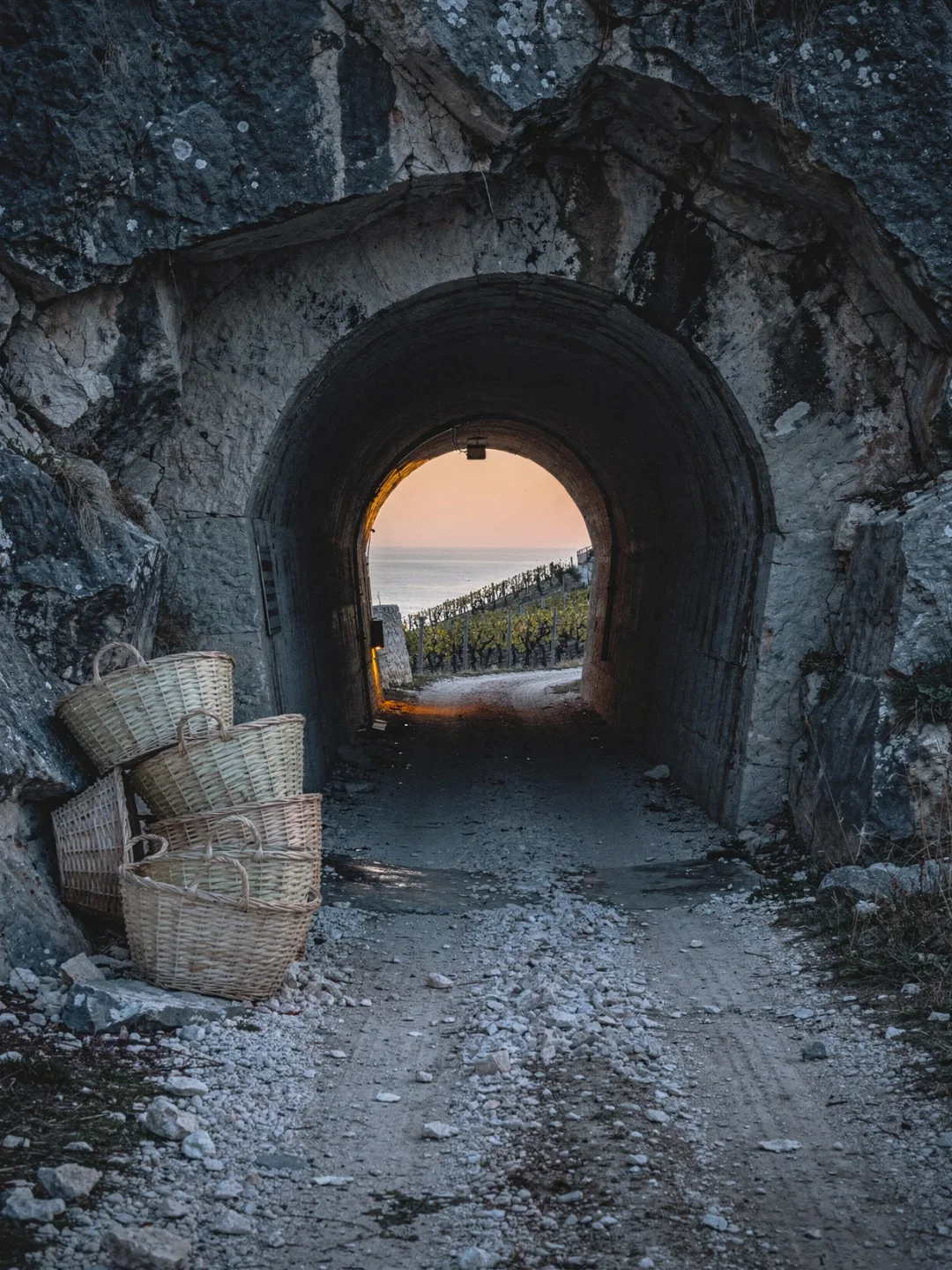
On the steep slopes of Dingač, an entirely different challenge existed until 1973: there was no road. Winemakers loaded baskets of harvested grapes onto donkeys and drove them over a mountain pass four hundred meters high. Or they lowered the baskets on ropes straight down to waiting boats. A tunnel, financed by the winemakers themselves, later shortened the trip to just a few minutes.
In the cellar, the must stays on the skins for a long time, often three weeks or more, since color and structure are meant to give an already powerful wine even more depth. Aging traditionally happens in large old barrels of Slavonian oak, which impart almost no flavor of their own. Only a few estates now use small new barriques, because extra vanilla flavor in a wine that already brings so much to the table quickly becomes too much.
With Grk, the work starts even before flowering. The variety has only female flower parts and cannot self-pollinate, so the winemakers of Lumbarda plant rows of Plavac Mali in between, as a pollen source for a neighbor that couldn't bear fruit without it. Pošip, by contrast, mostly ferments cool in stainless steel tanks.
From overripe white grapes like Maraština comes Prošek, a sweet dessert wine made using the passito method. The grapes dry for weeks on mats in the sun, losing water and concentrating their sugar before they're even pressed. It's often finished only after years in the barrel.