White Meets Red
Glassware
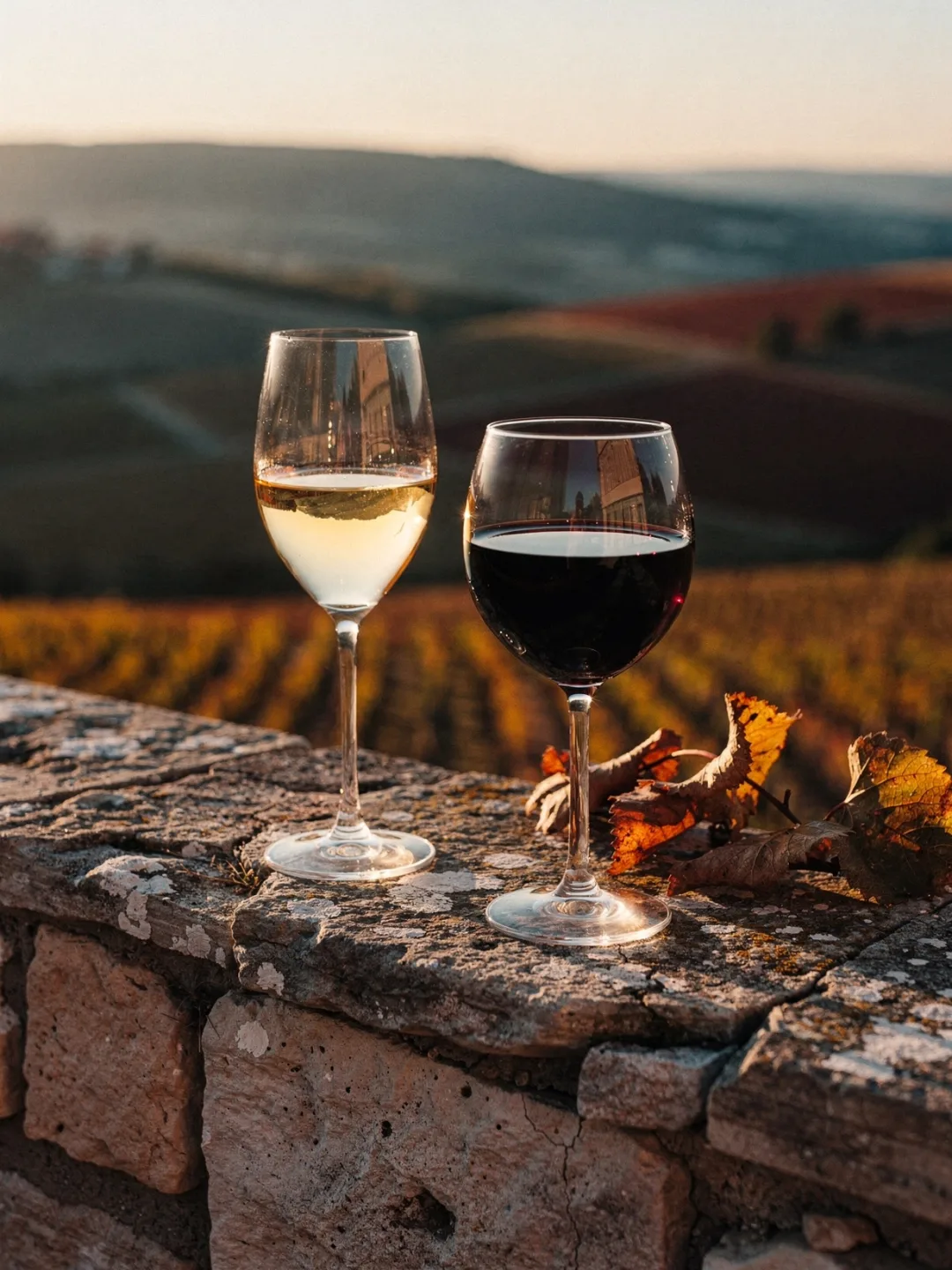
Malvazija and Teran need two completely different glasses. Drink both from the same glass, and you give away half of each. Malvazija is aromatic and rather light; it suits a slender, medium-sized glass with an opening that narrows slightly toward the top, similar to a Sauvignon Blanc glass. This concentrates the acacia blossom and apple instead of letting them scatter and disappear.
Teran demands the opposite: a rounder glass with more volume. It gives the high tannin and robust acidity room to settle before the first sip arrives. In too narrow a glass, Teran comes across as merely harsh and bitter. In the right glass, the dark fruit comes first, then the structure — and that's exactly the order in which it should be drunk.
Temperature is where much goes wrong, in both directions. Malvazija can take ten to twelve degrees, colder than most people assume; otherwise the salinity disappears behind sheer sweetness. Teran, on the other hand, needs sixteen to eighteen degrees. Served colder, its already robust tannin turns even harder, and the fruit falls silent.
There is, however, one moment when no glass is needed at all. In istarska supa, an old ritual involving hot Teran, olive oil, sugar, and toasted bread, the wine is passed around and drunk from a bukaleta, a round-bellied clay jug with no stem-glass shape whatsoever. It travels from hand to hand until empty, and afterward the bread soaked in wine is eaten with a spoon. A wine glass would be entirely out of place here.