Amphora Instead of Barrique
Winemaking
When it comes to Malvazija, Istria has split into two camps, and both sell well side by side. Half of the winemakers press the grapes immediately. They ferment the clear juice in stainless steel tanks, cool and controlled. The result is a pale, fresh wine that smells of apple and acacia, often already bottled by the spring after harvest.
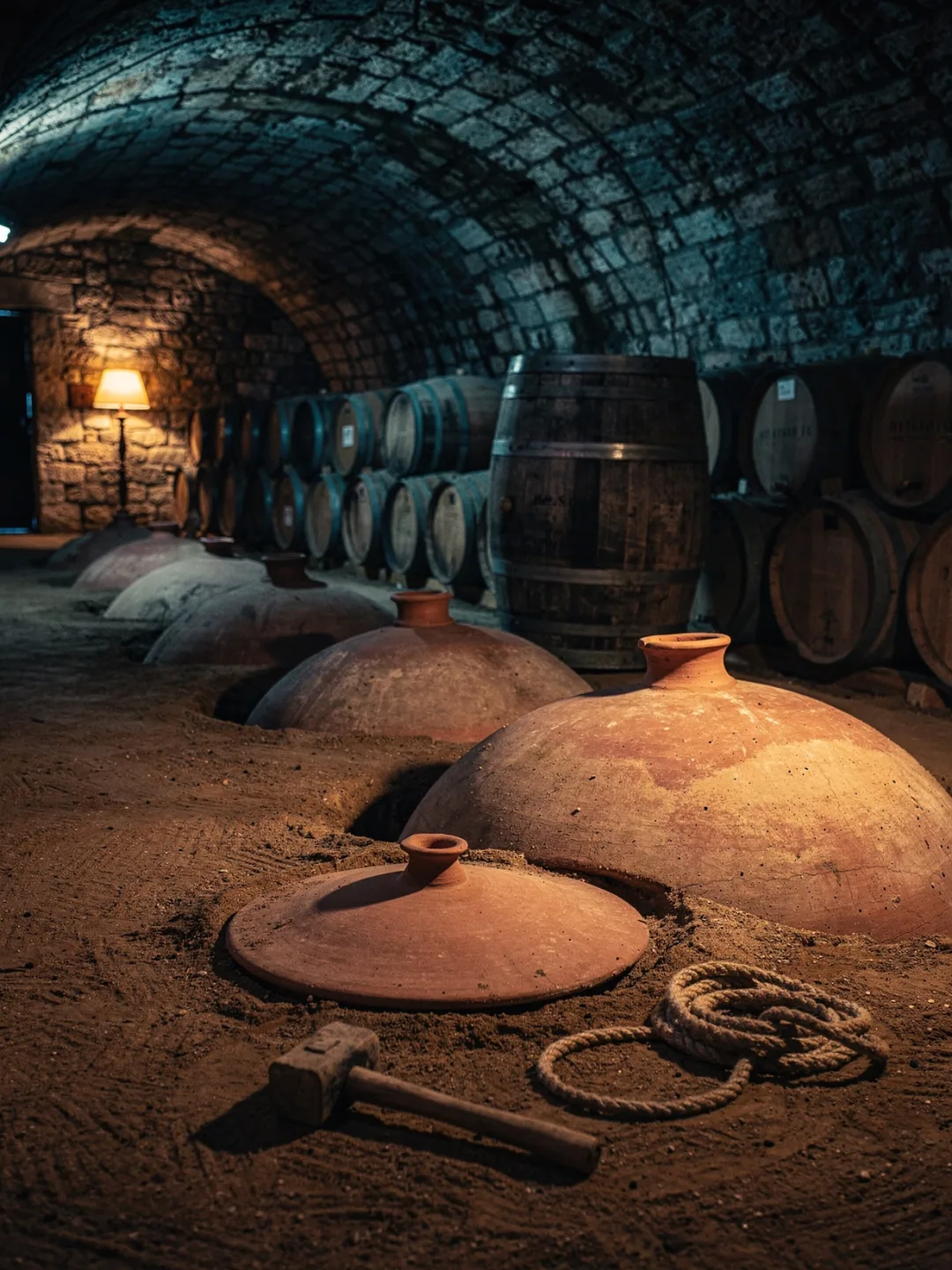
The other half does the opposite, letting the must — juice, skins, and sometimes stems together — ferment for weeks or months before pressing. Some producers source round clay vessels from Georgia for this, where the technique originated. They bury the vessels in the cellar floor. What emerges is amber-colored and tannic, completely different from the tank wine next door: orange wine, even though no one in Istria would have called it that before the term returned from abroad.
A third element often follows: the barrel. Alongside standard oak barrels, some Istrian Malvazijas age in acacia wood, which imparts almost no flavor of its own. It preserves the wine's pale color while still giving it a bit more structure than pure stainless steel. How long a wine stays in wood often shapes its style more than the grape variety itself.
During fermentation, Teran above all demands patience with the skins. Two to three weeks on the must extract enough color and tannin without letting the variety's characteristic bitterness take over. Wait too long, and you get a wine that needs years to soften. Some estates blend in a little Merlot to round out the edges. This is how the so-called Superistrians are made, which now attract more international attention than pure-varietal Teran itself.