Cernoziom & Limestone
Soils
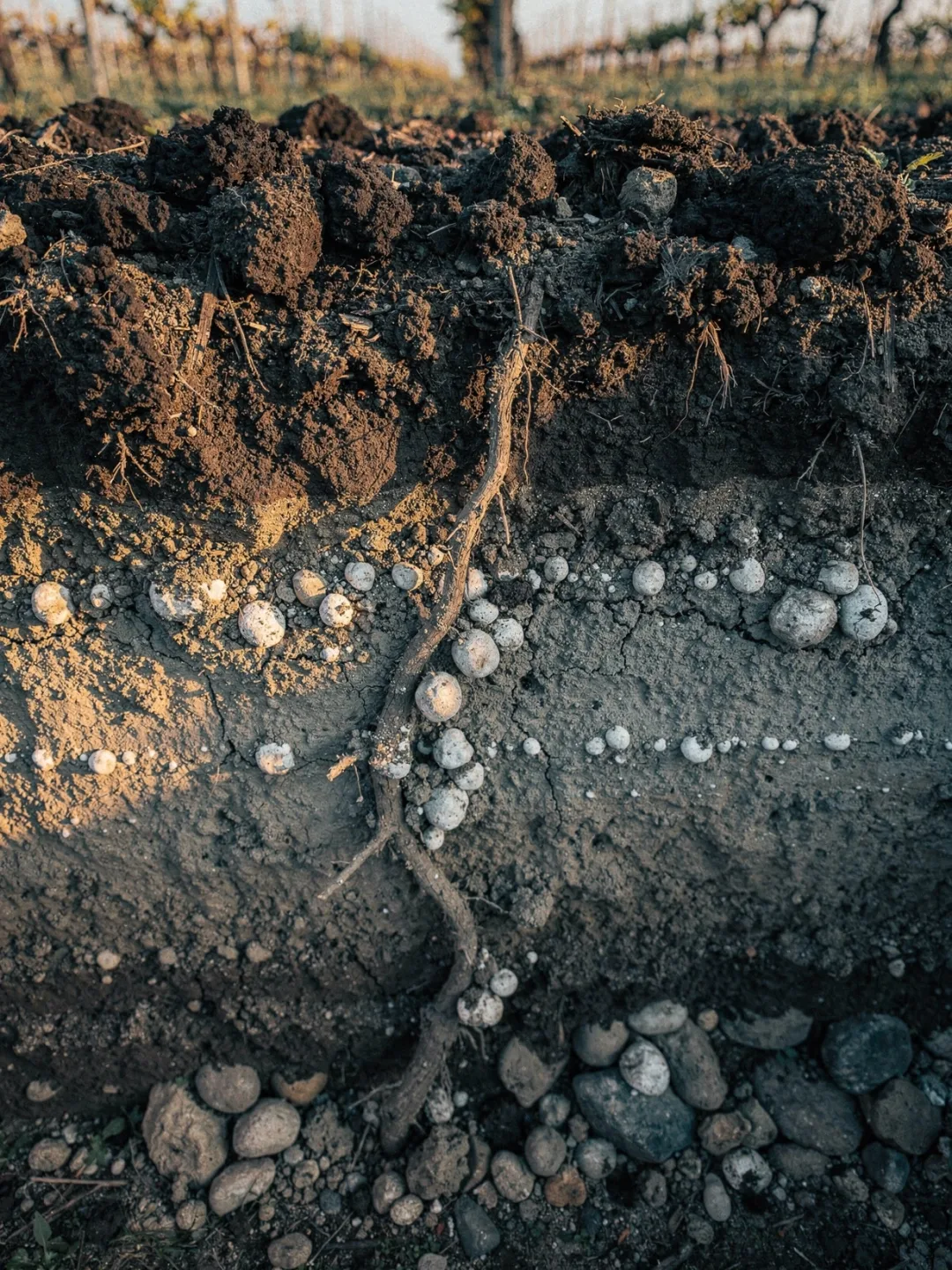
Dig a hole in a vineyard near Purcari. The first forty to fifty centimeters are almost black, dark enough that the word 'chernozem' immediately makes sense. This is cernoziom, one of the most fertile soils on Earth, and it stretches as a broad band from here all the way into the Ukrainian steppe.
Thousands of years of steppe grass built up this layer, blade by blade, root by root. Humus content reaches five or six percent in some spots, a top-tier value for farmland. For wine, though, that's actually too much of a good thing. Too rich a soil makes vines lazy, pushing lush foliage instead of concentrated berries. That's why the region's best estates prefer to plant on the leaner terraces and hills, where the chernozem runs thinner.
Below the humus, the soil turns lighter. Limestone takes over. It appears as hard white nodules that locals call 'păpuși', dolls, because their rounded shapes resemble small figures. They soak up water like a sponge in spring and slowly release it again during the dry August. On the chestnut-brown and podzolic soils further up the slope, this limestone horizon is thinner, but more clay comes in, holding water for even longer.
At the very bottom, on the terraces along the Nistru, lies a third layer: clay and gravel. A river deposited it, one that has shifted its course several times since the last ice age. Vine roots only reach this depth after years. Whichever roots get there find water that not even the driest summer can dry out. It's exactly these vines that deliver the densest grapes for Negru de Purcari.
One misconception persists stubbornly here too: that limestone gives wine a distinct flavor recognizable in the glass as 'mineral'. The vine doesn't absorb rock flavors; the amounts of dissolved minerals involved are far too tiny for that. What the soil really does is store water, release heat, and force the root downward, here along the Nistru just as in any other vineyard in the world.
Almost black humus soil, one of the most fertile on Earth, built up over thousands of years from decomposed steppe grass.
The root: Fine roots draw water and nutrients here, as long as spring stays moist.