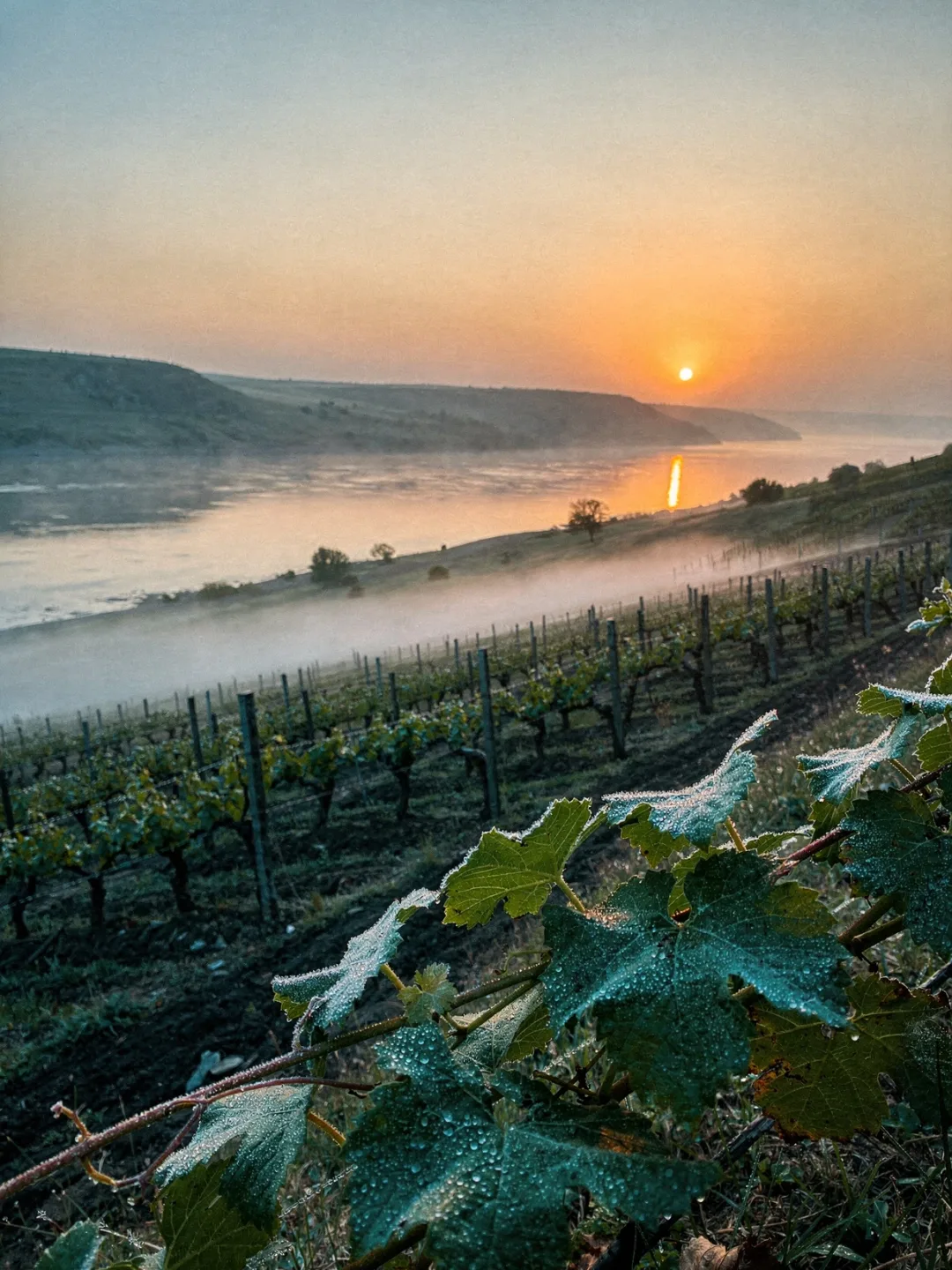
Nistru and Sea
Climate
The steppe southeast of Chișinău averages only ten to eleven degrees a year, but that says little about the summer. From April to October, the vineyards around Ștefan Vodă accumulate a good three thousand one hundred to three thousand two hundred fifty growing-degree units. This sum tells growers whether a variety can even ripen here at all. For Cabernet Sauvignon and Saperavi, that's easily enough. For the late-ripening Rara Neagră, it gets tight in weaker years.
What the number doesn't show: the river. The Nistru flows along three sides of the region. Its broad terraces store heat during the day and release it again at night, a natural stove for the vines on the slope. The Black Sea lies only eighty kilometers away, close enough to break the harshest winter frosts. For summer cooling, though, it's too far away. Between these two bodies of water lies a stretch of land that's warmer than northern Moldova, but never truly hot.
Over two thousand two hundred seventy hours of sunshine fall here each year, considerably more than is typical in German viticulture. Rain, by contrast, is rare: barely four hundred to four hundred fifty millimeters a year, a figure more commonly associated with southern Spain. Drought is therefore the bigger problem here, more than rot. Roots have to go deep to get through the summer, and that's exactly what later shapes the flavor of the grapes.
Three landscapes share the area. Plains, gentle hills and the terraces right along the river sit between one hundred twenty and one hundred sixty meters above sea level, and growers deliberately exploit the differences between them. The terraces run warmer and drier, the hills cooler and airier. The powerful red cuvées like Negru de Purcari almost always come from the warm terrace sites along the Nistru, while the finer, acid-driven white wines prefer to sit up on the hill, where the nights stay cooler.