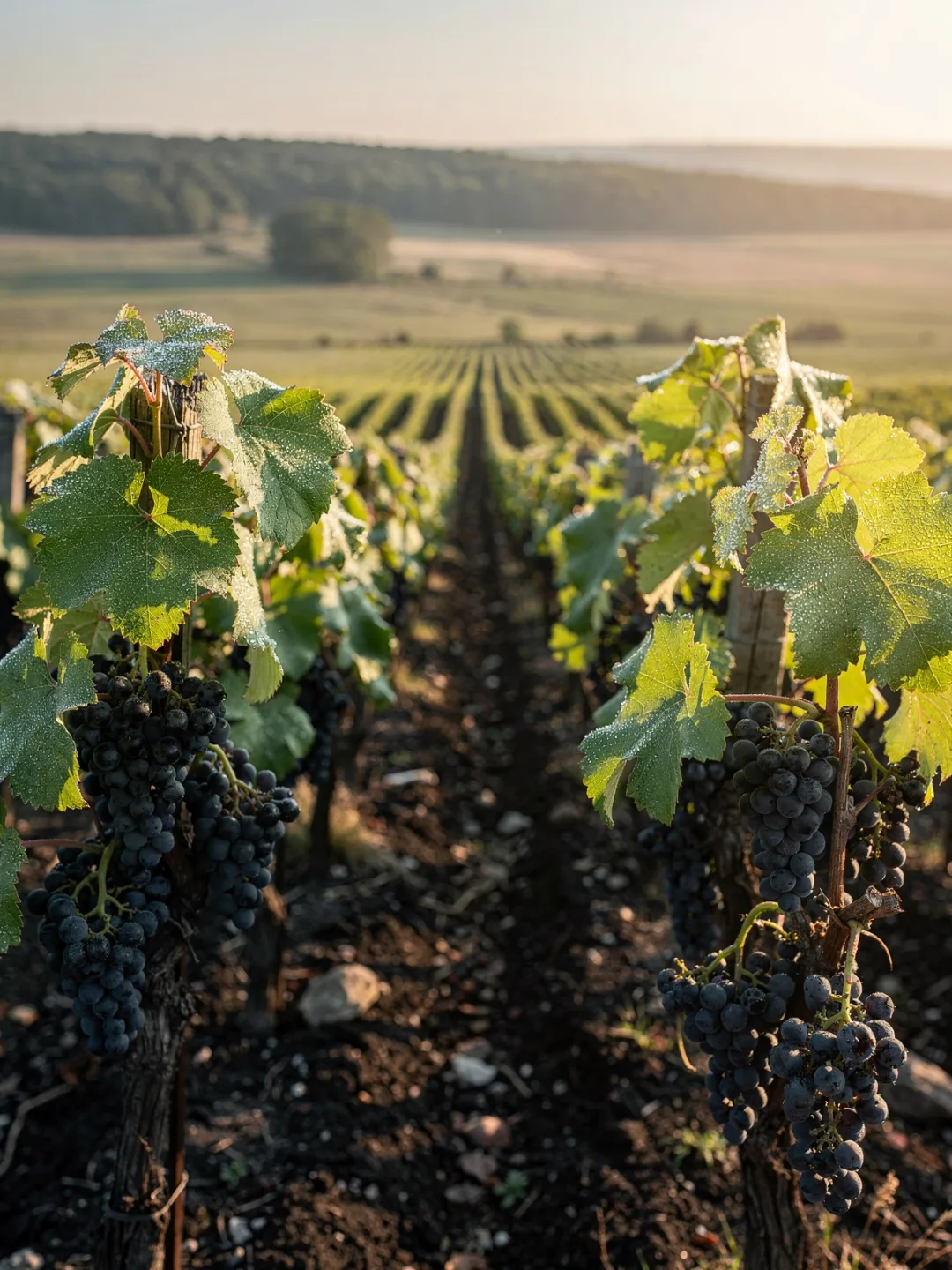
Cabernet & Rară Neagră
Grape Varieties
In Valul lui Traian, red grapes dominate. Sixty percent of the vineyard area carries dark berries, forty percent light ones. Cabernet Sauvignon and Merlot together produce the powerful, often opulent red wines for which the region is internationally known. Added to these are Saperavi, a Georgian variety with dark flesh, and the native Fetească Neagră, which gives the region its spicy, dark-berried side, and together the two shape the character of the reds here.
Fetească Neagră has its roots right here, of all places. Botanists suspect its origin lies in the Prut Valley, in the southwest of the Republic of Moldova. The grape is thought to be over two thousand years old. In the glass, it shows dark cherry, blackberry, and plum, sometimes dried fig too. Depending on the winemaking, the style ranges from light and fruity to powerful, with notes of leather and tobacco. Even older is Rară Neagră, a thick-skinned, blackberry-scented variety that already grew here in Geto-Dacian times and today is mostly used in blends, meaning mixed with other varieties.
Among the white varieties, internationally known names dominate. Sauvignon Blanc and Chardonnay grow on the Bugeac steppe and in the Tigheci forests, yielding fresh, often mineral white wines. Alongside them stands Viorica, a crossing created in 1969. Moldovan breeders crossed the grape variety Seibel 13-666 with the Italian Aleatico for this purpose. Originally it was meant only to supply cold-resistant grapes for distillation. Today it's used to make aromatic, fresh white wines with scents of jasmine, acacia, and linden, alongside flavors of grapefruit, lychee, and ripe mango.
Other varieties round out the picture of this region. Aligoté and the native Fetească Albă supply uncomplicated, acid-driven white wines for the everyday table at home. Anyone driving through the vineyards around Cahul or Comrat often sees the red and white rows growing side by side, on the same black soil, under the same sun. Yet the wines taste completely different. That comes down to the variety itself, not its position in the vineyard.