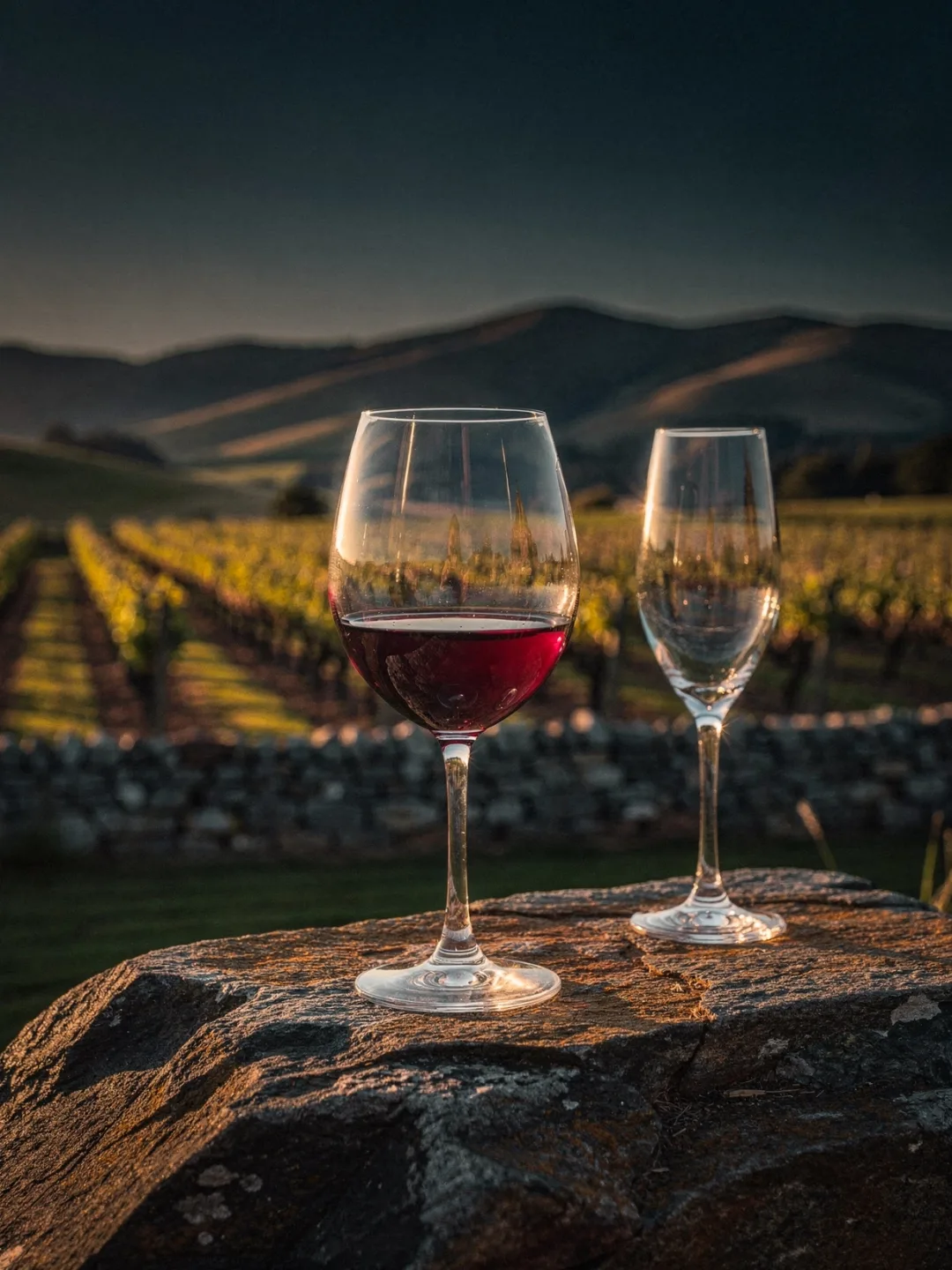
Burgundy Shape, Central Otago
Glassware
A Central Otago Pinot Noir needs more room in the glass than its pale color might suggest. The aromas are concentrated: cherry, plum, and often a spicy note of wild thyme, which grows on the hills around Bannockburn and Bendigo and seemingly passes its scent along to the grapes. A round-bowled glass with a tall bowl, the kind familiar from Burgundy, gives all of this the space it needs to unfold.
The narrow opening at the top is no accident. It concentrates the aromatic compounds on their way to the nose before they can disperse into the room. For a wine with such a layered bouquet, that makes a real difference. A glass that's too small and straight, by contrast, traps the aroma in the lower third, and it's mostly the alcohol that rises to the top.
Temperature is where most people go wrong. Thanks to the warm summer days, Central Otago Pinot Noir often carries more alcohol than its Burgundian counterpart, typically between thirteen and a half and fourteen and a half percent. Served at room temperature, it can quickly taste more of spirit than of fruit. Fourteen to sixteen degrees Celsius is right, and twenty minutes in the fridge is enough to get there from a room temperature of twenty degrees.
Young wines from Gibbston, with fine tannin and plenty of acidity, benefit from thirty minutes of air in the glass before drinking. Denser wines from Bannockburn or Bendigo, often fermented with a high proportion of whole clusters, can even handle a decanter. Their firmer tannin needs more oxygen to soften.
The region's sparkling wine follows its own rule. Central Otago produces traditionally fermented sparkling wine from Pinot Noir and Chardonnay. It doesn't belong in a flat coupe but in a slender, slightly tulip-shaped glass. Only this shape preserves the perlage, the fine bubbles from bottle fermentation, long enough to show the complexity that years on the lees have built in.