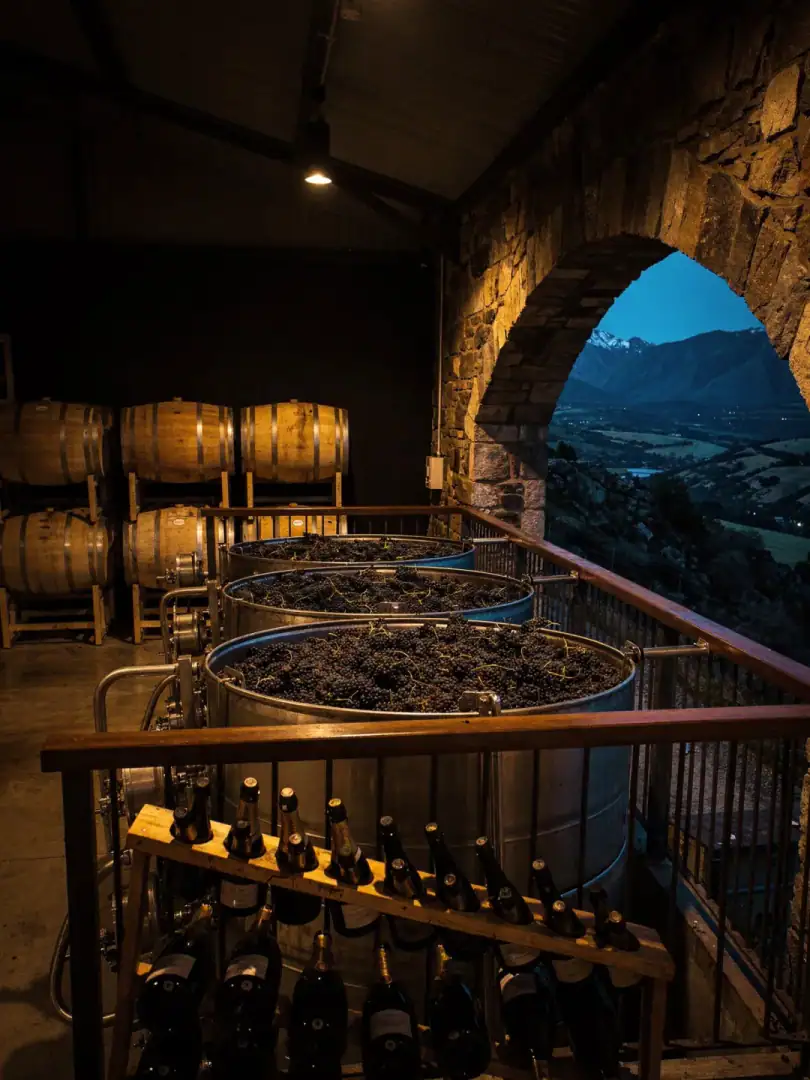
Whole Cluster, Wild Yeast
Winemaking
Many vineyards in Central Otago cling to steep terraces above the Kawarau or the Clutha, too steep for machines. That's why harvesting is done almost entirely by hand here, often on bitterly cold April mornings so the grapes arrive cool at the winery and don't start fermenting on the way.
A portion of the grapes then isn't destemmed but goes into the fermentation vessel as whole clusters, stems and all, what winemakers call whole-cluster fermentation. The stem adds extra tannin and a spicy, sometimes herbal note to the wine, though if unripe it can also taste green and bitter. Some wineries work with over thirty percent whole clusters, others skip the technique almost entirely. There's no single Central Otago style as a result.
Before fermentation proper begins, the must often sits cold on the skins for several days, a so-called cold soak, which draws out color and fruit character without yet producing alcohol. After that, wild yeasts from the grapes themselves usually take over fermentation. They work more slowly and unpredictably than cultivated yeasts but are credited with producing more complex wines. Instead of vigorous pump-overs, the cap is gently punched down by hand so the delicate aromas aren't lost.
For aging, the wine goes into French oak barrels, typically resting there for ten to eighteen months, with new oak making up between twenty-five and forty percent. Too much new oak would mask the sour cherry and thyme in the wine. The craft lies in striking a balance: just enough oak to support the fruit without smothering it.
A second handcraft tradition concerns the sparkling wine. In Bendigo, right above the old gold mines, the winery Quartz Reef bottles its base wine for a second fermentation. In this classic bottle fermentation, carbon dioxide and pressure build up inside the sealed bottle. The wine then rests on its own lees for years before being disgorged and released. The process closely mirrors Champagne, just on the other side of the world.