The Right Bowl
Glassware
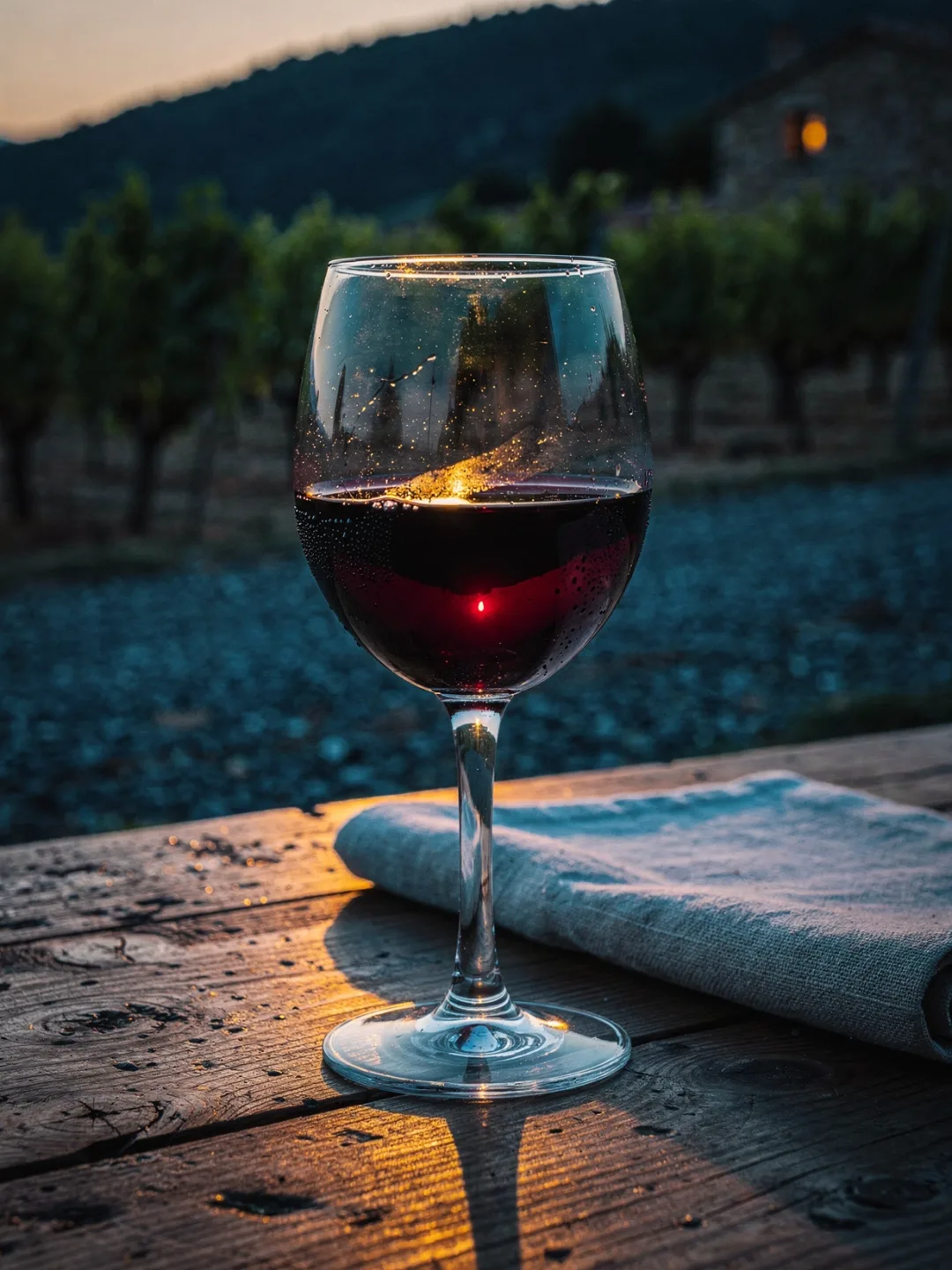
A Coleraine or any other Cabernet-Merlot blend from the Gimblett Gravels needs room, since the tannin still sits firm in a young wine. Only a tall, generously bowled glass with enough surface area lets in enough air. That's what rounds off the hard edges.
Syrah calls for something different. The peppery aroma that made the variety famous in the Gimblett Gravels is volatile, and too wide a glass scatters it into the room before the nose even catches it. A slimmer glass works better. It keeps the aroma gathered more tightly above the wine, without aerating it as much as a Cabernet blend needs.
The coastal Chardonnay from Te Awanga calls for yet another shape. Its glass needs a narrower opening than a red wine glass, so the citrus notes don't escape too quickly. Otherwise the buttery notes from oak aging can overpower the fruit.
Temperature also sets the three wines clearly apart. The Bordeaux blend belongs in the glass at sixteen to eighteen degrees Celsius. The Syrah does better at fourteen to sixteen, so the peppery note doesn't get lost in alcoholic warmth. The Chardonnay stays cooler, at ten to twelve degrees, though anything colder all but kills the toasty oak notes.
A young Bordeaux blend today often arrives under screw cap; New Zealand made this the national norm back in 2001. A mature Coleraine under natural cork, on the other hand, throws sediment after ten years and deserves a good half hour in the decanter before it's even poured.